Unknown's avatar

About Andy Jones

A retired Episcopal Priest living in Madison, Wisconsin.

Love Your Enemies and Pray for Those Who Persecute You… Seriously?

This sermon, offered on February 19,2017 at Saint Andrew’s Episcopal Church, by the Very Rev. Andy Jones, is built on the Gospel reading assigned for the seventh Sunday after Epiphany in year a of the Revised Common Lectionary.

You can find that reading here.

The blog post by David Lose referenced int he sermon is titled Epiphany 7A: Telos and appears on his web site “…in the Meantime”


It seems that there’s just no escaping it.

In the Gospel reading assigned for Martin Luther King on January 15th, in the middle Luke’s recounting of the Sermon on the Mount Jesus says:

“I say to you that listen, Love your enemies, do good to those who hate you, bless those who curse you, pray for those who abuse you” (Luke 6:27-28).

We talked about that imperative a week later in the Forum on the 22nd and you could hear it echoing through the readings again on the 29th.

It came up in our Monday night Adult Formation offering just this past week, and then today in Matthew’s account of that event Jesus says:

“You have heard that it was said, ‘You shall love your neighbor and hate your enemy.’ But I say to you, Love your enemies and pray for those who persecute you, so that you may be children of your Father in heaven” (Matthew 5:43-44).

Love your enemies.

It just won’t go away. There is a clear imperative in the Gospel to love our neighbors; even if they don’t look, dress and smell like us; even if they don’t believe and worship like we do; even if they don’t love like us. We are called to love.

That’s a pretty tall task in and of itself, but it’s not enough.

No matter how much we might want to ignore or deny it there is also a clear imperative in the Gospel to love our enemies; the people around whom we feel unsure or unsafe; the people whose beliefs, actions, or policies threaten us and those we love; the people who threaten our own beliefs, our freedom, our way of life… We are called to love them too!

It’s been hard! People spoke to me on their way out the door back on January 15th and told me that they were feeling really challenged by a call to love their enemies. I got four emails that week, and in sixteen yeas of preaching I have never had four emails in one week about a sermon, from people telling me that they were having a very hard time figuring out how to live into that call.

We have been wrestling with the call to love our enemies. And now, almost a month later, just when we thought it was safe to go back in the water… we get hit with the sequel from Matthew! That call just won’t go away!

And I just have to say… thanks be to God!

Thanks be to God that we are hearing this again today because we so need to be reminded of this central tenant of Jesus’ teachings right now. We need to be reminded again and again, because loving our enemies is a vocation, a commitment, a skill that seems to be in very short supply right now.

It doesn’t much matter which side of the argument you inhabit right now. The one thing that we seem to be able to agree on is that the tenor of our dialog is out of control. We are assaulted with a steady stream of personal invective and attack. It seems as if it’s not enough to disagree, to challenge someone’s position or opinion. If you are at odds with someone you need to publicly humiliate and destroy them.

What happened to respecting the dignity of every human being? What happened to the truth that we are all one, bound together by God’s love? How can it be that we can’t even bring ourselves to pray for the people with whom we struggle and disagree?

Perhaps if we could learn how to love our enemies, to disagree without denying, diminishing, or demeaning our opponent’s humanity, we might actually begin to find our way forward, together, through dialog, compromise, and common ground.

So let’s see what we can do about increasing our desire and our proficiency shall we?

Here’s a little exercise. I want you to imagine the person who you find it most difficult to love. That person doesn’t have to be living. It can be a historical figure. It can be someone you know personally. It can be someone you know of, or about, but have never met…

Got it? Ok. Now ask yourself, you don’t have to do this out loud or share it with the person next to you… Ask yourself, “Does God love this person? Is this person wrapped in God’s Mercy, Grace and Love?”

Before you answer I have another question to ask.

How do we justify hating our enemies?

It seems to me that the only way to do that is to say that they have lost the right to lay claim on us through our common bonds of humanity, that they are undeserving of our consideration, that they are not worthy of love.

But every time we try to make that move, asserting that someone is unworthy of love, we are confronted by St. Paul’s bold teaching in The Letter to the Romans:

“For I am convinced that neither death, nor life, nor angels, nor rulers, nor things present, nor things to come, nor powers, nor height, nor depth, nor anything else in all creation, will be able to separate us from the love of God in Christ Jesus our Lord”  (Romans 8:38-39).

When we try to justify hating our enemies we are confronted by Jesus’ words in the Gospel According to Matthew:

“for he makes his sun rise on the evil and on the good, and sends rain on the righteous and on the unrighteous” (Matthew 5:45).

When we try to justify hating our enemies we are confronted by Jesus, who experienced us at our very worst; Jesus who came to share God’s love, to teach, preach and show us how to experience eternal life; Jesus, dead at our hands, murdered, hung on a tree. When we try to justify hating our enemies we are confronted by the Jesus who refused to turn his back on us and walk away; Jesus who came back and loved us anyway.

Nothing can separate us from the Love of God! God makes the sun to rise on the evil and the good, and sends rain on the righteous and the unrighteous. Not even evil and unrighteousness can separate us from God’s love! God has experienced us at our very worst and loves us anyway!


Now let’s go back to our unlovable person. What were you thinking? Does God love this person? Is this person wrapped in God’s Mercy, Grace and Love? This is really important. How we answer this question makes a big difference in the way that we experience ourselves, one another, the world, and God.

If we can convince ourselves that the person we can’t love has done something so awful that they have lost God’s love, that has caused God to turn God’s back on them and walk away… then isn’t is just possible that we could share that same fate?

If we decide to believe, despite the scriptural testimony, that it is in fact possible to lose God’s love… we could find ourselves walking around terrified, constantly looking over our shoulder, guarding our every step, burying the master’s treasure in the ground, for fear that we might do something to lose the love that God so wants to share with us.

When we justify our failure to love by asserting that someone isn’t worthy, that they are somehow inherently unlovable, we have done violence to them, to the God who loves us all unconditionally, and to ourselves. Our failure to love diminishes us by impairing our ability to experience the love that God so wants us to know and share.

There is one more imperative in today’s Gospel that we nee to consider. In the very last sentence of our reading from Matthew Jesus says,

“Be perfect, therefore, as your heavenly Father is perfect” (Matthew 5:48).

I know that may sound even more daunting than loving our enemies and, for some of us, a call to be perfect may sound like a call to a way of being that we have been trying to outgrow. But don’t go there too fast.

In a recent blog post, David Lose, biblical scholar and President of The Lutheran Theological Seminary at Philadelphia, tells us that,

“…the word we translate “perfect” is actually the Greek word telos and implies less a moral perfection than it does reaching one’s intended outcome.”

“…which means that we might translate this passage more loosely to mean, “Be the person and community God created you to be, just as God is the One God is supposed to be.”

It is our call, our vocation, our telos, our purpose, our end… to be a people who love our enemies, who work to end the cycle of retributive hate and violence. God creates us to be a community of love.

That makes the call to love even stronger but I’m not sure that makes it any easier.

Loving our enemies requires a decision to love, a commitment, maybe even a skill that we have to learn. It will take work!

So I would like to propose that today we make a start, that we begin the journey towards the life to which God calls us and for which God created us by praying together.

Would you please open your Book of Common Prayer to page 816 and join me in a Prayer for our Enemies…


O God, the Father of all, whose Son commanded us to love
our enemies: Lead them and us from prejudice to truth:
deliver them and us from hatred, cruelty, and revenge; and in
your good time enable us all to stand reconciled before you,
through Jesus Christ our Lord.
Amen.

Do Justice, Love Kindness, Walk Humbly with your God: A Sermon for the Fourth Sunday After the Epiphany, Year A

This sermon, offered at Saint Andrew’s Episcopal Church in Madison Wisconsin on January 29, 2017 is built on the readings assigned for the fourth Sunday after the Epiphany in Year A of the Revised Common Lectionary.

You can find those readings here.


We awake this morning and read that there is a lawsuit being filed. Legal briefs have been filed already. People are lining up on one side or the other. There are defendants in this case and there is a plaintiff. But this is no ordinary lawsuit and it deserves our special attention. Thank goodness we have the prophet Micah as our courtroom reporter to help us to understand just what is happening.

Micah starts out describing the way that the jury is selected:

“Hear what the Lord says:
Rise, plead your case before the mountains,
and let the hills hear your voice.

Hear, you mountains, the controversy of the Lord,
and you enduring foundations of the earth” (Micah 6:1-2a)

The plaintiff in this case is none other than the Lord God Almighty, Yahweh. And Yahweh calls into the jury box the very foundations of the earth, things that have been true for all eternity. Yahweh goes on, or Micah goes on to tell us the Lord has a controversy with his people and he will contend with Israel.

At this moment the lawyers break in and refer us to some briefs that have been filed previously in the second and third chapters of the book of the prophet Micah. The issue that Yahweh has with Yahweh’s beloved people is this:

“Alas for those who devise wickedness
and evil deeds on their beds!
When the morning dawns, they perform it,
because it is in their power.
They covet fields, and seize them;
houses, and take them away;
they oppress householder and house,
people and their inheritance” (Micah 2:1-2).

In the second brief filed with the court Yahweh says,

“And I said:
Listen, you heads of Jacob
and rulers of the house of Israel!
Should you not know justice?—
you who hate the good and love the evil,
who tear the skin off my people,
and the flesh off their bones;
who eat the flesh of my people,
flay their skin off them,
break their bones in pieces,
and chop them up like meat in a kettle,
like flesh in a cauldron” (Micah 3:1-3).

In his briefs filed with the court Yahweh compares the judges, the ones in power to decide justice in their courts, to cannibals devouring the people for their own benefit.

And yet, even in the face of these horrible offenses Yahweh does not judge and does not seem angry. His opening statement to the jury

“O my people, what have I done to you?
In what have I wearied you? Answer me” (Micah 6:3).

Dismayed, hurt, bewildered that God’s beloved people have Lost Their Way, Yahweh Launches into a recitation of their history together.

“For I brought you up from the land of Egypt,
and redeemed you from the house of slavery” (Micah 6:4a)

Egypt was the place where the people of Israel had been in bondage and suffered under cruel task Masters, had been oppressed, had been abused, God reached in to that terrible situation, hearing the groans of God’s people and brought them out, brought them out of oppression into a land of promise.

And Yahweh didn’t leave them alone on that journey on their way to the promised land, a place of freedom and dreams. God reminds them that Moses and Aaron Miriam were there to guide them to lead them on Their Way.

Yahweh reminds them that when they were fleeing from Israel, and they entered the land of Moab, King Balak, conspired with the prophet Balaam, asking Balaam to curse the people so that Balak’s armies might defeat them. But Yahweh entered into that moment and refused to allow Balaam to curse the people, instead leading him to bless them.

Then when Joshua had the people just outside the land of Canaan, ready to pass through that entrance gate into the place that had been promised them, Yahweh stopped up the waters of the river Jordan so that they could pass from Shittim into Gilgal in peace and in safety with their feet walking on dry land.

It seems that the people of Israel have forgotten their own history, have forgotten their relationship with the Lord their God, and have forgotten how they got to the land of promise, where they now live the land; that they have dreamed of a land where they could be free. But in the face of this recitation, in the face of this accusation, they turn and they offer compensation;

“With what shall I come before the Lord,
and bow myself before God on high?

Shall I come before him with burnt-offerings,
with calves a year old?

Will the Lord be pleased with thousands of rams,
with tens of thousands of rivers of oil” (Micah 6: 6-7a)?

Wealth beyond imagining shortly this is compensation. This is what the Lord wants and desires from us. And this will put us back in right relationship. For certainly wealth is the end of all things. Perhaps beginning to sense that this isn’t enough, they even offer to sacrifice their own children:

“Shall I give my firstborn for my transgression,
the fruit of my body for the sin of my soul” (Micah 6:7b )

Micah the courtroom reporter steps in it in this moment tells us:

“He has told you, O mortal, what is good;
and what does the Lord require of you

but to do justice, and to love kindness,
and to walk humbly with your God” (Micah 6: 8).

Rams, rivers of oil, wealth mean nothing to Yahweh. It is the way we live with one another, the way that we are in relationship with one another, the way that we treat our fellow creatures all created by the hand of the same loving God. It is in this role that the prophet Micah functions, to call the people of Israel back to their true nature, to remind them who they are, and of their history, and to point out where they have gone astray. Because Micah knows, and we know if were being honest, that is dangerous to forget our history. It’s dangerous to forget from whence we come, dangerous to forget the core foundations of truth that have resided in the mountains from the beginning of time, the foundations on which God created all that is.

Among those foundations are these words that Matthew relays to us, words spoken by Jesus of Nazareth,

“Come to me, all you that are weary and are carrying heavy burdens, and I will give you rest.   Take my yoke upon you, and learn from me; for I am gentle and humble in heart, and you will find rest for your souls.  For my yoke is easy, and my burden is light” (Matthew 11:28-30).

And these words,

“You shall love the Lord your God with all your heart, and with all your soul, and with all your mind.” This is the greatest and first commandment. And a second is like it: “You shall love your neighbor as yourself” (Matthew 22”37-39).

If Micah were here today I’m sure that he would use those words to begin the history lesson that we all need to hear this morning. Those words spoken by Jesus of Nazareth are at the foundation of our story and who we are. Words which, if you really think about it, formed the basis for these words,

“Give me your tired, your poor,
Your huddled masses yearning to breathe free,
The wretched refuse of your teeming shore.
Send these, the homeless, tempest-tossed to me,
I lift my lamp beside the golden door”(The New Colossus)!

Those words comment from a sonnet called the new Colossus which was written by Emma Lazarus and they are inscribed on a plaque inside the pedestal upon which stands The Statue of liberty in New York harbor. They are part of our history, and our foundation, and they name who we are. They reflect the ideals upon which this nation was founded, ideals that have endured since the beginning of all time, ideals to which the prophet Micah calls us this morning.

A history lesson: Friday, January 20 17th, just two days ago, was International Holocaust Remembrance Day. Do we need a history lesson? We need to ask ourselves how many people the US government turned away during the Holocaust fearing that they were Nazi spies. You don’t have to look very far to find stories like that of the German ocean liner St. Louis and its 937 passengers almost all Jewish, who were turned away from the Port of Miami, the ship forced to return to Europe were more than a quarter of those 937 passengers were murdered during the Holocaust.

History indicts us. History calls us to account. And history sharpens our focus on the times in which we live and move have our being. In the face of this history we might begin to ask, “What can we do in recompense for all that has transpired? How can we make ourselves right with the Lord our God? And just like in the case of the people of Israel, God will turn God’s back on our offerings of wealth and prosperity, our burnt offerings of rams and our rivers of oil. For there is only one thing that the Lord our God demands and requires of us.

To do justice, to love kindness, and to walk humbly with our God!

The prophet Micah lived almost 3,000 years ago calling the people to account. Only his words and his spirit are with us today. But they are ours and we need to stand in the long line, the tradition of prophets that reach back to Micah, and Isaiah, and to Ezekiel, and to Jeremiah. We need to stand in that place and remind ourselves of our history, and call people to account.

There will be lots of opportunities for us to stand in that place. Today at noon at the capital there will be a vigil for Muslim immigrants and refugees. And from two until 5 o’clock this afternoon at the Monona Terrace there will be a conference to talk about the ways that we can support the immigrants, the aliens in our midst in this community. I hope that some of you will join me at that conference this afternoon and I hope that all of you will feel the prophet Micah standing at your back, urging you to speak, urging you to fulfill our unique vocation as the church; to call people to repentance, to call our people to remember our history, and to remember what can happen when we lose track of who we are, of where we come from, and of who we serve.

Amen

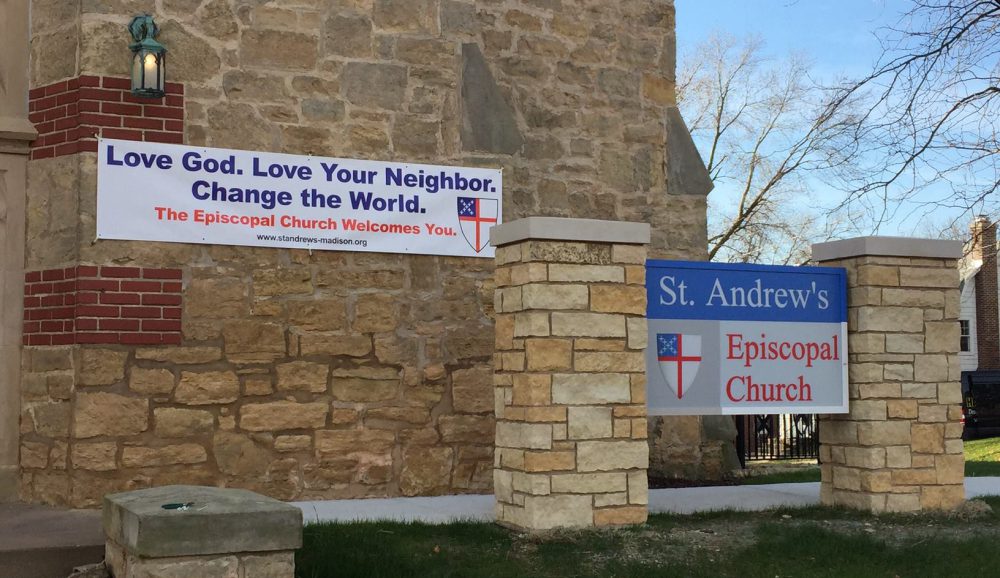
Love Your Enemies, Change the World: A sermon celebrating the life of The Rev. Dr. Martin Luther King Jr.

This sermon, delivered at Saint Andrew’s Episcopal Church in Madison Wisconsin on January 15, 2017 began with an audio excerpt from The Rev. Dr. Martin Luther King’s sermon “Loving Your Enemies.”  You can find that audio excerpt here.

The Gospel assigned for the Celebration of the Rev. Dr. Martin Luther King, and referenced in this sermon, can be found here.


“Now there is a final reason I think that Jesus says, “Love your enemies.” It is this: that love has within it a redemptive power. And there is a power there that eventually transforms individuals. That’s why Jesus says, “Love your enemies.” Because if you hate your enemies, you have no way to redeem and to transform your enemies. But if you love your enemies, you will discover that at the very root of love is the power of redemption. You just keep loving people and keep loving them, even though they’re mistreating you. Here’s the person who is a neighbor, and this person is doing something wrong to you and all of that. Just keep being friendly to that person. Keep loving them. Don’t do anything to embarrass them.   Just keep loving them, and they can’t stand it too long. Oh, they react in many ways in the beginning. They react with bitterness because they’re mad because you love them like that. They react with guilt feelings, and sometimes they’ll hate you a little more at that transition period, but just keep loving them. And by the power of your love they will break down under the load. That’s love, you see. It is redemptive, and this is why Jesus says love. There’s something about love that builds up and is creative. There is something about hate that tears down and is destructive. So love your enemies.”

Excerpt from “Loving Your Enemies,” The Rev. Dr. Martin Luther King, a Sermon Delivered at Dexter Avenue Baptist Church on November 17, 1957

In the name of the Father and of the Son and of the Holy Spirit. Amen.

Please be seated.

The Rev. Dr. Martin Luther King Jr. spoke those words in a sermon that was delivered at the Dexter Ave., Baptist Church on November 17, 1957, almost 60 years ago. Just eight years later in 1965 in the middle of the civil rights movement, as this nation grappled with his character and nature, we watched in horror, the world watched in horror, as a group of peaceful protesters attempting to march to Selma were set upon by dogs and billy clubs on the Edmund Pettis Bridge. Dr. Martin Luther King and the movement that focused around him, the movement in the center of which he stood, brought this nation to its senses and a lot has changed since that time. Tomorrow all across this country, in state houses all over this land, here in Madison, people will gather to celebrate the witness, and the life, and ministry of Dr. King, and his achievements, and the progress that we have made.

But even as songs are sung, and prayers are prayed, and speeches are spoken tomorrow, we all have some concern and perhaps even some fear in the back of our minds. We have come a long way but we had not yet reached the finish line. We have seen in this nation that racism still exists, that inequality still exists; that people are oppressed, and held back and held down, because of the color of their skin, the faith that they hold, the people that they love. So we know that there is still work to be done.

Dr. King in his sermon tells us to love our enemies and he is in that moment harkening back to the gospel reading that we just heard, The gospel of our Lord Jesus Christ according to Luke. And so in this increasingly secular age we might find some comfort and maybe even some humor in the fact that the entire nation will take the day off tomorrow to celebrate a preacher who is telling the story of God’s saving grace and love for this world.

But even in the midst of that solace, and comfort, and or humor, our concern persists for all the work that has been done, for all the time that has past, for all the people who have gone before us pressing this fight.

How can we pick up that agenda and carry it forward.

Make no mistake it is ours to forward. We stand in this place, we kneel in this place, and we proclaim that we are all one; children created at the hand of the same loving God. And we proclaim that nothing we can do can ever separate us from that love. Nothing that separates us by birth, faith, loves, tradition, country of origin, color of skin, can ever separate us from God’s love and should never separate us one from another. We are one! We proclaim that here. This is our call and our vocation, the narrative that lies at the core of who we are, and we should be proclaiming that truth and telling that narrative in every place where two or three are gathered. It is our vocation and our calling to work to realize the vision, the dream that God holds for all creation, the vision and the dream that Jesus made manifest in this world, the vision and the dream that Dr. Martin Luther King worked so hard to realize.

How can we do that? How can we, in this time that seems to be so polarized, where our public discourse is so extreme and angry, how can we make a difference? How can we move the needle? How can we bring people together again?

Jesus tells us to love our enemies, to be good to those who hate us, to pray for those who abuse us. He said this pretty early in his ministry and I don’t know that these are the commandments that I would have led with in trying to gather a following or to win over people’s hearts and minds. These are perhaps some of the hardest things that Jesus says to us. But then as we watch and listen to his story he lives them out.

I’m going to conflate the words for forgiveness or forgive and love here. I think that we might argue a little bit about the chicken and the egg. Do we have to love someone before we can forgive them or do we have to forgive someone before we can love them. I think that probably Jesus, and even Dr. King, would argue with us that these two behaviors, these two ways of being, are one and the same. You can’t have one without the other. And so I am confident in this conflation this morning.

Jesus hangs on a cross. He allows us to betray him to humiliate and torture him. And then to hang him on a tree and watch him die. He does all of this so that we know without a doubt when he comes back and continues to love us, despite the very worst that is within us, that there is truly, as Paul will say later, nothing that can separate us from the love of God in Christ Jesus. Having experienced us at our very worst we are left with no, no fantasies to harbor that we somehow live outside of the grace and light of God’s love.

Charles Hefling, biblical scholar and theologian, in an article entitled Why the Cross, published in the Christian Century in March of 2013, says this about forgiveness, about what Jesus does on the cross, and in his resurrection:

“Forgiveness would mean the remission or cancellation or cessation of (deserved) punishment. It comes down to taking away the taking away.

Certainly Jesus had every right, in our anthropomorphized sense of God’s justice, to insist that those who had abused him, and abandoned him, and murdered him be punished. And certainly people who were on the Edmund Pettis Bridge had the right to insist that those who had so injured them punished and held to account. But Hefling goes on to tell us:

“If you choose to retaliate, you perpetuate the evil by causing a new injury. The choice may be wholly justifiable, but it is no less injurious for that.   If instead you choose to hold a grudge, to brood on your injury and cultivate your dudgeon, you will still perpetuate the evil, internally, by diminishing yourself, souring your character and becoming your own victim as well as mine.”

Hefling seems to be telling us that it is in our best interest it’s a rather pragmatic step to forgive and to love our enemies because to failed to forgive and love them we will be somehow damaging ourselves.

But even here that understanding of forgiveness and love sell short the way that Jesus loved us and the way that Dr. Martin Luther King and the people who walked on that bridge that day prosecuted their movement.

Hefling tells us:

“On the other hand, if you choose to forgive, you are choosing to absorb the infection, as it were; to contain its self-diffusion, to forgo the gratifications of revenge, resentment, self-vindication and righteous indignation.”

You are choosing to absorb the infection, to contain its self diffusion, to end the cycle of retributive violence that holds us thrall. To end the violence that perpetuates itself, begetting violence, violence begetting hatred, hatred feeding violence.

What Jesus did on the cross some two thousand years ago changed the world and offered us a different way to be, a different way to live in community with one another. And what The Rev. Dr. Martin Luther King and Rev. John Lewis and the people who marched on their way to Selma and marched in countless other cities changed this country. And in fact, changed the world.

Loving our enemies, loving our neighbors as ourselves has that potential change to world. We are not just called to love the people who are lovable, the people who look like us, dress like us, believe like us, and love like us. We are called to love everyone. And that includes the people who we find challenging and difficult. It includes the people who disagree with us, and the people with whom we disagree. Loving those people means listening with open ears and open hearts. Listening not to respond but to learn, to understand.

Jesus speaks to us through Luke’s gospel some 2000 years ago and the Rev. Dr. Martin Luther King speaks to us from 60 years ago in a Baptist Church, and tomorrow he will sing and pray and give teaches all of which should be calling us love, to love our neighbors as we love ourselves and even, even in this time of the fear and division, to love our enemies.

Amen.

A Sermon for the First Sunday after the Election

This sermon was offered on November 13th, 2016 at Saint Andrew’s Episcopal Church in Madison, Wisconsin.

As you will hear, or read, November 13th was the date of this year’s Annual Meeting.   Our practice at Saint Andrew’s has been to offer the State of the Parish Report in lieu of a sermon on that day.  We decided to break with that practice this year and address the emotions we are all feeling around the presidential election results. 

While the sermon itself does not directly reference the readings assigned for the day you could feel the room react to the Gospel text.  It is my prayer that the sermon was heard in the context of that reading form the Gospel of Luke.  You can find that reading here.

The sermons I post on line are usually a cleaned up transcription of an audio recording.  I take the liberty to correct my grammar and syntax, to reduce the number of times I use the word “and.”  And to make small adjustments here and there to preserve my own vanity.  In this case, and in honor of my CPE instructor who worked very hard to help us understand that when we are willing to be vulnerable and stand with someone who is in pain, “We are enough,” I have allowed the text to mirror exactly the words I spoke form the center aisle at the 8:00 service.  I have also attached an audio recording of the sermon.

Peace,                                                                                                                        Andy+

Those of us who wear this collar often joke that ours is a ministry of interruption. You arrive at the church in the morning with a to do list, a well-planned day, lots of things to accomplish, and then it starts. You have to decide what’s more important, the thing on my to do list or fixing the copier, the thing on my to-do list or repairing the network, or speaking to the cleaning company about the contract. There are lots of mundane and silly things that interrupt your day when you are a parish priest. But there are other things that interrupt our days that aren’t so silly, and things which immediately rise to the top of that priority list. When we get the call for pastoral care, when we learn that someone is hurting or is in pain, we immediately drop all of our plans, set aside our to do list, and we go.

Now that’s not an easy thing to do, to walk into a room or into a space where people are hurting, where people are in pain, and where people are struggling to make sense of what’s happened to them or to the people that they love. It’s a challenging and difficult thing to do. When I was in seminary I participated in a program called Clinical Pastoral Education. This is a summer long program designed to give aspiring clergy an opportunity to experience what it’s like to be a pastor, and to learn how to live in that place. I’ll never forget our principal teacher during that summer telling us that he wasn’t there to fill our toolbox with techniques, and things to say, and tricks to use to help ameliorate the discomfort and pain when we walked in to that space. What he told us was that we just needed to be present, to show up, to listen deeply and carefully, and that we were enough.

This morning it was our plan to offer the state of the parish report in lieu of a sermon. Today is our annual meeting and for the last several years, in order to save more time for the business at hand, we’ve offered that report at this moment during both liturgies on Sunday morning. But we have set that to do list aside this morning because we are in pain.

I want you to listen very carefully to my choice of pronouns here; we are in pain, we the people, we this community, we all of us.

Some of us are in pain because the words that have been used to malign us seem to have been validated by the election on Tuesday. Some of us are in pain because our vote is being maligned and motivations are being assigned to that vote and that action that are not ours. Some of us are in pain because the difficulties with which we struggle day after day seem to have been found less important than some other agenda. And some of us are in pain because the results of this election continue to be challenged through protest and demonstration. All of us have reason to feel pain right now.

I think for me, and I hope for all of you, the greatest pain in this moment is the recognition… the thing that we can no longer ignore… that we are so deeply, deeply divided. And that there is such a great distance between us. No matter what your politics, no matter where you stand on these issues, I think as Christian people for us the deepest source of pain is the recognition of our disunity, our dismemberment, and the polarities at which we find ourselves.

So I go back to the teachings of my CPE instructor in search of a way to manage and to address, to be pastoral in the midst of all of this pain, and I think that the first thing that we need to do is to be willing to listen to one another.

It’s difficult because this moment is so emotionally charged that it doesn’t take much at all to put us on the defensive, or to make us angry. And I think that it’s our tendency to assign motivations, and intent, and feelings to large groups of people when what we really need to be doing is listening to each other as individuals. “What is it that you’re feeling in this moment? I’m not trying to fix you. I’m not trying to change your mind. I’m trying to understand who you are and what you’re feeling so that this gap, this chasm that exists between us can be reduced. We need to listen, but listening won’t be the end of where we need to be and what we need to do.

You walk into a place where there is pain and you listen deeply and you stand in solidarity with compassion and grace with the person who is hurting and then you begin to work to ameliorate that pain. We as followers of Christ, as a baptized people, gathered together and formed as a community by our baptismal vows, have promised to seek and serve Christ in all persons and to love our neighbors as ourselves; to work for justice, to respect the dignity of every human being. And we know, because we are a people of the book, that words matter. Words matter. Words shape our understanding of ourselves and others. Words form the lens through which we interpret the world around us. And words can either lift up, and heal, and set free, or words can wound, and hurt, and oppress and destroy.

It’s time for us to pay attention to our words. It’s time for us to speak up. We have seen an increase in the incidence of hate crimes. I know of a Muslim woman in town whose child is being taunted on the playground, being told that their family will be deported. I’ve seen the pictures on the social media and the news of racial epithets being spray-painted on cars, and churches, and synagogues, and ugly notes being left people who are simply trying to live their lives here in this community. I’ve also seen the pictures of storefronts and car windows being smashed. There is too much violence in our community right now and we are all hurting.

As we go forward we need to live in to the promises that we have made to one another, and to God, and to this community; and use the words that have been given to us to begin to bind up the brokenhearted, to pour oil on the wounds, to replace the ashes with a garland of victory; to say we are all, all of us beloved children of God, that all of us are due the respect that comes from being the beloved child, that all of us deserve and need to be honored and held up; and that no one should be held down, held back, or pushed out because of the color of their skin, or their background, or the people whom they love, or where they are from. We are better than that.

You can argue that this is a political statement. And any time three people come together it’s about politics, but this is just who we are and what we believe, and no matter where we stand on the policies of our government, or of this land, we all need to agree that in this country we are all created equal; that we all have a place in this nation and in God’s kingdom. And we need to begin to work to re gather the children who have been scattered and to close the divide that exists between us.

Listen to one another. Listen to someone to whom you have never listened before. And hear their pain. Hear who they are. And then when the moment is right share your own story.   It’s in these one-on-one interactions and conversations that we begin the work. We’ll be taking a little bit of an opportunity later this morning after the 10:30 service and offering one another an opportunity to just sit, and to listen, and to share. If this isn’t a safe place to do that then there is no such safe place. So please, please, as we come to this railing this morning allow yourself to shed the tears. And have compassion on the tears of the person whose kneeling next to you. Know that in this act we are made one, we are proclaiming our identity as one, and we are beginning two walk together once again.

Amen.

Terror and the Kingdom of God: A sermon for Proper 7C

This sermon, offered at The Church of the Atonement in Fish Creek Wisconsin, is built around the Gospel reading for Proper 7C in the Revised Common Lectionary. 

You can find those readings here


In today’s Gospel reading Luke the Evangelist drags us right into the middle of what, for the disciples and for Luke’s readers, would have been a real nightmare.

On the other side of the Sea of Galilee, in a country populated by a foreign people, people who looked different, who spoke another language, people who neither valued or observed their religious traditions and customs, Jesus and his disciples are confronted by a man, bloodied and bruised by the chains used to bind him, who can’t even speak his own name because he is so tormented by the demons that afflict him.

In just a few short sentences Luke has set up a horror story better than most of the movies we’ll find on late night TV.

Now I don’t know where a boat trip across the water to a foreign land, populated by people who look different from us, people who speak a different language and worship differently than us, people who have spent time among the dead bound by chains would rank on your hierarchy of horror…

Come to think of it… I guess there are a lot of people today who do in fact find that pretty scary prospect…

But the demons, I think that the demons we encounter in this story have to rank up there pretty high on our list of scary stuff.

Now, that may be a hard line to swallow, talk about demons in church can make Episcopalians pretty squeamish, but just let’s just run with this for a few minutes.

We could spend a lot of time talking about what Jesus and his contemporaries meant when they referred to demons. And we could spend a lot of time talking about what we mean when we say a person is tormented by demons, and yes we do still use those words… but I’m not sure that either of those conversations would result in consensus or even general agreement. I am however, willing to bet that we could all agree just what those demons, whatever they are, just what the demonic, whatever that is, do to people and to communities where they manifest themselves.

Luke describes it pretty well. This man that we encounter today doesn’t live in a house. He lives in the tombs. He is separated from his family, from the community into which he was born, and is living with the dead. If the demons weren’t enough to drive him from his home, to disrupt his relationship with the people around him, his contact with the dead makes him ritually unclean and so people now want to do everything they can to avoid him. This man’s demons, the demonic within him have alienated him, driven him from his community. They have ruptured his communion with the people whom he loves and whom we may suppose once loved him. That should sound familiar to all of us. We’ve all seen that happen. And we all know that it gets worse!

When Jesus asks this man his name he can’t answer. The best that he can do is offer the number of demons that were torturing him… Legion… “Legion” was a unit of 3,000 to 6,000 men in the Roman Army. Those demons, the demonic, had obliterated his very identity, he no longer knew who his own name, he had lost his sense of who he was. The demons had ruptured his communion even with himself.

And now unable even to utter his own name this man is alone, in the dark, living among the dead.


It’s important to focus on the effect that these demons have had on this man rather than on the demons themselves because it is the person, the child of God standing before him with whom Jesus is concerned. He is much less interested in the demons than he is in the person in need… And by placing the emphasis on the effect that the demonic has on people we are better able to see just what it is that Jesus is does in the midst of a terrible nightmare like this.

Luke tells us:

“Then the people came out to see what had happened, and when they came to Jesus, they found the man from whom the demons had gone sitting at the feet of Jesus, clothed and in his right mind.”

Sitting at Jesus’s feet. In his right mind… By casting out whatever it was that was tormenting him Jesus has called him to remember who he was, Jesus has given him back his name, identity. He has restored this man to communion with himself and, as he sits there at Jesus’s feet, with God. In so doing Jesus has given him the opportunity to be restored to communion with his family, with his community, and with the world around him.

That’s not really surprising because that’s exactly what Jesus came to do. Jesus came to teach us a new way of being together, a new way of being in communion with God and with one another, a communion founded on the willingness to take care of, to sacrifice for one another; a communion that grows out of loving God with all our heart, soul, mind, and strength, and loving our neighbors as ourselves. Communion, community, establishing the kingdom of God… that’s what Jesus is about. Bringing God’s vision, God’s dream for creation to fruition here and now.

Confronted with this broken community and this man who was estranged, alienated, cut off from himself and the people around him… Jesus was bound to do something to reconcile them all, to themselves, to one another, and to God.


So now I have to ask… What do you think? Did it work? Was Jesus able to restore this person to the life God wanted for him? Was Jesus able to bring this tormented person back into communion with himself and with his neighbors?   The Gospel leaves that question unanswered. We know that the man, having been relieved of his torment, wanted to follow Jesus and Jesus sent him home to tell people all that God had done for him… but we don’t know how he was received by the people who had cast him out. Luke leaves us to wonder…

But while Luke doesn’t tell us the conclusion of the possessed man’s story… he does tell us something about the way the people in the city and the surrounding countryside responded to what Jesus had done. And their response leaves us with some pretty profound questions…

Luke tells us:

“Those who had seen it told them how the one who had been possessed by demons had been healed. Then all the people of the surrounding country of the Gerasenes asked Jesus to leave them; for they were seized with great fear.”

Why weren’t they ecstatic that one of their own had been healed of the demons that tormented him? Why weren’t they celebrating the fact that someone who had been lost was found, that someone who had been living among the dead was now restored to life? Why in the world would they be afraid and ask Jesus lo leave? Why weren’t they lining up to bring others to Jesus to be restored to the life of the community?

Maybe, maybe it was that herd of swine that rushed down the steep slope and was drowned. Maybe the financial cost of saving someone, of rescuing them from the demons that tormented them, of restoring them to communion with themselves, with God, and with the community was just to high. Maybe they weren’t willing to make that kind of sacrifice for someone else’s sake.

Maybe they were afraid of the way that restoring this person to the life of the community might change the dynamics of the community itself. How would he fit in? What would he expect from them? Would his presence in their midst call them to change? How were they supposed to relate to this person whom they had so recently tried to bind with chains?

And speaking of those chains… If this person were restored to the community how would they live with the fact that they had, for years, tried to imprison and chain him? If it was actually possible to restore someone like this to communion with the community… why didn’t they seek help for him, why didn’t they do all in their own power to heal him? Why did they compound his misery by tossing him out and locking him away?

They were seized by fear and asked Jesus to leave. It seems pretty clear that the demons in this story were having an impact far beyond the individual person they were inhabiting. They asked Jesus to leave them.


Let’s be clear.

The threat posed by someone who is tormented by demons is real. That person may be a Gerasene who lives among the tombs or they may be a tortured, self loathing, hate filled person with an assault rifle. Either way, the immediate danger that person poses to us is real.

But the story of the people of Gerasene’s response to Jesus healing, Jesus restoring, Jesus reconciling someone who had been identified as a threat reveals an even greater danger.

God calls us to communion with God and with one another; a communion founded on the willingness to take care of, to sacrifice for one another; a communion that grows out of loving God with all our heart, soul, mind, and strength, and loving our neighbors as ourselves. That’s what the kingdom of God looks like and that’s what Jesus came to bring.

The real danger in outbursts of the demonic and the terror they cause is that we will all become infected.

That rather than work for reconciliation and communion we will build walls that further divide us.

The real danger in moments like this is that we will hold tight to what we believe is ours, refusing to make the sacrifices necessary to protect ourselves and our children because we deem the cost too high. The danger is that we will pull back into our entrenched positions, allowing the status quo to continue to consume the innocent.

The real danger in a moment like this is that we will find ourselves too afraid to seek and serve Christ in all persons loving our neighbor as ourselves because someone has labeled that neighbor a threat.

The real danger in moments like this is that we will become so fearful and defensive that we refuse to examine our own culpability in our failure to strive for justice and peace and to respect the dignity of every human being.

If we succumb to these dangers then the Demons, the terrorists, have won. Demons and terrorists aren’t nearly as concerned with their immediate victims as they are with the ripple effect of their deeds. Their real goal is to infect entire communities with terror, fear, anger, and hatred; to disrupt our communion with one another and with God. To make us forget who, and whose, we are.


We have to remember who we are and whose we are. We have to remember why Jesus came among us and what he taught us. We have to remember the promises we make every time we renew our baptismal vows. We have to fight to keep loving God with all our heart, with all our soul, with all our mind, and with all our strength and our neighbors as ourselves because…

Because the greatest danger of all,

in a moment like this

is that we will be so seized with fear

that we ask Jesus to leave…


Amen

If this Man were a Prophet: A sermon for Proper 6 C

This sermon offered at Saint Andrew’s Episcopal Church on June 12, 2016, is built on the readings for Proper 6 in year C of the Revised Common Lectionary.  You can find those readings here.


I remember sitting with Suzanne and her family at her Grandmother’s house one day when someone went to the coat closet in the front hallway and pulled down a large square package. Inside was a beautiful old bible bound in tooled leather, with a metal clasp that clipped into the cover to hold the book closed. That bible, deposited in my lap must have weighed at least ten pounds and I am sure it cost a small fortune when it was new.

Gently opening the cover we discovered an ornately ornamented announcing the date the Bible was given, the presenters and the recipients. There were pages that allowed you to keep track of important family dates: births and baptisms, marriages and grandchildren, and the deaths of members of the family. Having been printed by a Methodist press the family record and genealogy pages were followed by a page that offered the family the opportunity to sign a temperance pledge… interestingly blank in this bible… and then a piece of thin tissue paper, protecting the first full page illustration in the volume…

There he was. Jesus of Nazareth, a first century Palestinian of Semitic origin, a descendant of Abraham and Sarah, Isaac and Rebeca, Jacob and Rachel, staring back at me with beautiful blue eyes and a head of long wavy blonde hair that would make any high fashion model proud!

I am sure that we have all seen this image of Jesus. He may be sitting peacefully under a tree with his hands in his lap looking at directly at us. He may be coming towards us with the newly recovered lamb on his shoulders. Or he may be standing there with his arms outstretched in welcome, a heavenly backlight ensuring that we know exactly who this attractive and welcoming figure is.


While Jesus, born to Mary and Joseph, in first century Palestine, in a town called Bethlehem, almost certainly didn’t look like the model in the shampoo ad that seems to adorn so many of the bibles on our bookshelves it’s really not surprising that we would portray him this way. Jesus, Emmanuel, God among us as one of us, belongs to all people, for all time, and his identity as the Son of God transcends any boundaries of race, ethnicity, culture, or country.

Google “faces of Jesus” and you will find representations of the one we call the Christ with the physical and cultural characteristics of pretty much every people in the world.

How do we experience Jesus today? It is only natural, and I might argue appropriate, that we would experience and depict him as one of us.

Natural and appropriate, that is of course, as long as we don’t try to claim that our representation is the only one that is valid and deny other people’s representations… as long as we don’t find ourselves feeling indignant or offended by portrayals of Jesus as black, and Hispanic, as Hmong… That is a real danger against which we need to be vigilant and aware.


I think that there is another danger though, one that is highlighted in our gospel reading from Luke today but in order to see it we need a quick review of Jesus’s ministry up to this point in the story.

At twelve years old Jesus stayed behind in the temple in Jerusalem while his family headed for home. Three days later when his panicked parents finally found teaching the teachers his response to their distress was, “Why were you searching for me? Did you not know that I must be in my Father’s house?”

After his baptism in the river Jordan and temptation in the wilderness Jesus arrives in his hometown of Nazareth where he proclaims that in him, Isaiah’s prophecy describing the restoration of the kingdom, the year of jubilee is fulfilled. His people are understandably excited and proud.

But when Jesus points out that the people of Nazareth don’t have any special claim on him, and that God’s grace, mercy, and love extend beyond the people of Israel his hometown crowd tries to throw him off a cliff!

During his ministry in the Galilee Jesus regularly comes into contact and interacts with lepers defying the purity laws and risking being declared ritually unclean.

Word that Jesus is in town healing people, and the crush of the crowd to see him, leads a group of folks to tear the roof off a house in their efforts to bring their paralyzed friend to Jesus and in healing him Jesus claims the authority to forgive sins.

Jesus eats with tax collectors, Israelites who are collaborating with Rome and calls one of them as a disciple.

Jesus defends his followers for plucking grain on the Sabbath and claims to be the Lord of the Sabbath.

Jesus heals the servant of the ultimate outsider, a Roman Centurion, and holds the centurion up as a paragon of faith.

And he offers harsh critiques of the people of Israel and their lack of faith.


Jesus has been pushing the envelope, breaking the rules, challenging people to examine themselves and their beliefs. He has been defying convention, disregarding tradition, and creating conflict between the people and the authorities.

I am sure that people were struggling with this man. Who is he? By what authority does he do and say these things?

I would guess that these were the questions on the mind of the Pharisee who invited Jesus to dinner today. He invited Jesus to his home so that he could see for himself, so he could question and examine this troublemaker who was gaining such a following among the people.

Given Jesus’s history to this point the Pharisee shouldn’t have been too surprised that Jesus’s presence at his dinner table caused a ruckus: allowing a woman to touch him in a public place, a woman who was notorious in her community. If Jesus was a true prophet he would have known all of that and rejected her.

But Jesus didn’t send her away. His actions made the Pharisee and his friends uncomfortable, he rocked the boat, he pushed them to, and eventually beyond their limits… He kept pushing them right up to the moment that they abandoned and crucified him. How could Jesus be a prophet, the Messiah?


Some two thousand years later, we are here today affirming Jesus as “The Prophet.” We are here today affirming Jesus as The Messiah: “God from God, Light from Light, true God from true God, begotten not made, of one being with the father.”

So here’s the danger in our blonde haired, blue eyed Jesus.

Do the blonde hair and blue eyes of a Jesus who looks like “us” mean that we have domesticated him, taken away the rough edges, anything that might be threatening?

Have we made him so beautiful and benign because we are afraid of a prophet who pushes the envelope, breaks the rules, challenges us to examine ourselves and our beliefs? Are we ready to embrace a Messiah who defies convention, disregards tradition, and creates conflict between the people and the authorities?

What if the full-page color illustrations in our bibles depicted Jesus wearing a hoodie with six inches of his boxers showing above his jeans? What if they depicted Jesus with tattoos on his arms and a mohawk, hanging out on the street corner talking to the homeless and the unemployed? What if those illustrations in our bible depicted Jesus in dirty ragged clothes eating at a soup kitchen, washing the feet of people who were in danger of losing hope…

If that’s the way our bibles depicted him would we be less likely to embrace the words of our creed: “God from God, Light from Light, true God from true God, begotten not made, of one being with the father.”

If Jesus didn’t look like “us,” but instead looked like “them” might we be quoting the Pharisee… “If this man were a prophet he would have known who and what kind of people he is associating with… He would have known that they are people who make us uncomfortable, who aren’t like us, who don’t get invited to dinner parties…”


Do we come to this table to be affirmed as we are and loved by a God who looks just like us, a God who just wants to fit in…? Or are we prepared to come to this table to be challenged, to be made uncomfortable, to have our boat rocked, to be changed and to be driven into the wilderness, called to live out our faith in the public arena; proclaiming by word and example the Good News of God in Christ; seeking and serving Christ in all persons, loving our neighbor as ourselves; striving for justice and peace among all people, respecting the dignity of every human being?


Ok. So maybe I have a bigger problem with the blonde haired, blue eyed Jesus than I realized. Because if that’s the Jesus we had our hearts set on when we came here this morning then I am afraid we are going to be sorely disappointed.

If, however, we have our hearts set on the Jesus who walked the earth in first century Palestine, the Jesus whose presence calls to us through the Holy Spirit today, the Jesus who is still out there pushing the envelope, breaking the rules, challenging our understanding of ourselves and of God, and working to touch all of us, all of us, especially the lost and the broken, the disenfranchised and the forgotten, the marginalized and the oppressed… Then our hopes today will be met.

Because that Jesus, the first century Palestinian Jew shoes life, death, and resurrection changed the world is here, calling us to follow him into the neighborhood where we can ask folk who don’t look like us what Jesus looks like to them.

Amen

A Sermon for Ascension Day

Andy Jones's avatarA Mad City Episcopalian

The readings for this day offer us some interesting images….

In the Acts of the Apostles we read:

“When he had said this, as they were watching, he was lifted up, and a cloud took him out of their sight” (Acts 1:9).

From the Gospel of Luke we read:

“While he was blessing them, he withdrew from them and was carried up into heaven” (Luke 24:51).

Hmmmm….  Rising up into heaven on a cloud or slowly fading into the mist…  Do either of those images work for you?  How about Albrecht Durer’s wood cut showing the disciples gathered around looking upward, with Jesus’ feet just visible inside the frame at the top of the image?  Does that work any better for you?

There is a real risk that the difficulty that we experience with these images will keep us from exploring the meaning behind them.  That would be very sad…

View original post 843 more words

Jesus said to her, “Mary!”: A Sermon for Easter Day

This sermon, offered at Saint Andrew’s Episcopal Church in Madison Wisconsin on Easter Day 2016 is built around the reading form the Gospel according to John appointed for Easter Day in year C of the Revised Common Lectionary.

You can find that reading here

Alleluia! Christ is risen!

The Lord is risen indeed! Alleluia!

What powerful and wonderful words they are that we claim and proclaim this morning; words that change everything.

Words that change everything…

It was just three days ago that we gathered to celebrate the last Supper and watched, and participated, as Jesus washed our feet and we washed the feet of others. We listened as Jesus instituted the sacrament, the bread and wine, the Body and Blood, the sign and symbol of Gods ongoing presence among us.

It was just three days ago that we stood numb and then fled in panic as Jesus was arrested and taken from us.

We gathered the next day at his trial and we shouted “away with him! Away with him! Crucify him! Crucify him!” And then we stood in shock as he died on a cross and was laid in a tomb.

But today we come here to this place, we duck down and walk through that threshold, and entering the tomb. Upon finding it empty we proclaim,

Alleluia! Christ is risen!

The Lord is risen indeed! Alleluia!

And everything is changed. Where we have been, what we once were, no longer defines or limits us, because the light has shined in the darkness and the darkness did not overcome it. Love freely given has proven to be the greatest power of all. We are beloved and nothing

“neither death, nor life, nor angels, nor rulers, nor things present, nor things to come, nor powers, nor height, nor depth, nor anything else in all creation, will be able to separate us from the love of God in Christ Jesus our Lord” (Romans 8:38, 39).

Those words… the words that change everything, come at the climax of a story; a story that we have claimed and proclaimed for almost two thousand years; a story that today features some supporting characters with whom we are very familiar…

First there is Peter, one of the first to follow Jesus; Peter who was the first to name Jesus as the Messiah; Peter who was there at the Transfiguration; Peter who didn’t want Jesus to wash his feet; Peter who cut of the ear of the slave of the High Priest with a sword; Peter who denied Jesus three times in order to save himself…

Peter, who isn’t the first to arrive at the empty tomb but somehow manages to be the first inside…

Then there is the beloved disciple, the one who was reclining on Jesus’s breast at the last supper; the Beloved Disciple who Jesus, as he died on the cross, named as Mary’s son; the Beloved Disciple whom Jesus told to take Mary as his mother… The Beloved Disciple who was the first to arrive a the tomb and was apparently shouldered aside as Peter stumbled… first through the door…

And yet neither of these central figures get a speaking role in John’s Gospel today. John seems anxious to move them off the stage so that someone else can step into the light, Mary Magdalene.

Mary Magdalene from whom Jesus had expelled seven demons; Mary Magdalene who was one of the women who followed Jesus and the disciples; Mary Magdalene who was one of the women who helped to bankroll the movement; Mary Magdalene who was there at the foot of the cross as Jesus died; Mary Magdalene who sometime in the middle ages acquired a reputation for a notorious, less than virtuous that is nowhere supported by the Gospel accounts…

It is Mary Magdalene who gets the starring role in today’s story, and it is her part in the story to which we, some two thousand years later, need to attend.


Mary is out in the dark, alone, in the middle of the night, before the sun has come up.   And she clearly expects to find the stone still blocking the mouth of the tomb. She hasn’t brought anyone to help roll away the stone. She hasn’t come with spices or ointments to anoint the body. She doesn’t seem to have a plan of action. She is there grieving, lost, in despair. All she can think to do in this moment is to come to the place where Jesus’s is laid in a desperate attempt to be near him.

When she finds that the stone is rolled away she doesn’t look inside. She doesn’t know that the body is gone but she runs to the Disciples and she says, “’they’ have taken the body away.” Mary’s greatest fear in this moment is that the powers of this world, that ill defined “they,” have triumphed once again; that the movement towards freedom that she had sensed; that the light that she thought she was seeing in the person of Jesus of Nazareth, had been extinguished. Mary is there in this moment fearing that all of the promises that she has heard and felt have come to naught. Mary is afraid that the light has come into the world and that the darkness has overcome it once again.


John tells us that Peter and the Beloved Disciple race one another to the tomb. He doesn’t tell us whether or not Mary runs back with them, but when Peter and the Beloved Disciple leave to go to their homes, Mary is there, weeping… It’s not until Mary is alone at the tomb that things really begin to get interesting.

Mary looks into the tomb, maybe for the first time, and sees two angels sitting on the bench where Jesus’s body had been laid. Angels! Dressed in white! Angles who speak to her and ask her why she is weeping!

Mary, confronted by this miracle, seems completely unmoved… She doesn’t fall to her knees. She doesn’t cover her eyes. She doesn’t flee in terror… She responds to them as if their presence was as commonplace as meeting a stranger in the market…

Then she turns and sees Jesus, her teacher; the one who had rescued her from a life of pain, suffering and misery; Jesus, the friend she had watched die a terrible and shameful death on the cross… and again, she seems completely unmoved. She doesn’t recognize his appearance or his voice, and she speaks to him in the same way she had just addressed the angels in white!

It’s not until Jesus “touches” her by speaking her name that she finally “sees” The Truth, but when she does… everything is changed!


We don’t know what was going in on the minds of the other two people who visited the tomb that morning. John tells us that the Beloved Disciple, when he finally gets inside, “saw and believed,” but he also tells us that Peter and the Beloved Disciple

“did not understand the scripture, that he must rise from the dead.”

How much did they understand? Was The Truth beginning to creep into their imaginations? We don’t know for sure because John moves them offstage right away. What we do know is that they left the tomb and they went home… They went home.


What was going on in Mary’s head? Why didn’t she react to the angels in the tomb? Why didn’t she recognize Jesus right away? It is possible that her grief had blinded her; that she was so numb, so worn down, that she wasn’t herself, and couldn’t see clearly…

But I think a better explanation lies in what happens next.

Jesus asks her to go and tell the others that he has been raised from the dead and is going to ascend to the God who loves us all. Mary becomes the messenger, the evangelist, the interpreter that we need to understand, to grasp, to believe.

Mary lived in a world where the dead were dead. Jesus was crucified, died and was buried. End of story. Full stop. She couldn’t see the Angels, she couldn’t see Jesus, because they were outside the realm of possibility, they were unimaginable. Her grief, her pain, and her understanding of the way the world works, kept her from seeing The Truth.

It was her name… her name, gently and lovingly uttered by The Truth that changes everything; that reshapes her imagination; that reshapes her understanding; that reshapes her world. And it was Mary Magdalene who was given the task of sharing The Truth that would reshape, re-imagine… that would change the world. She accomplished that task by sharing what Jesus had shared with her.


So here we are, sitting in the empty tomb. It doesn’t matter who we were when we came in… Peter, the Beloved Disciple, Andy, Dorota, Martha, Don…. We need to leave here this morning as Mary Magdalene!

Peter and the Beloved Disciple are out there; in the people we know, at home, at work, in the marketplace, filled with grief, remorse, shame, anger, dismay… blinded to The Truth that we proclaim. They are out there, in a world for which the dead are dead. End of Story. Full stop. A world in which a love so powerful that even death cannot destroy it is outside the realm of possibility, unimaginable…

This morning, gathered together in a tomb that has been empty for almost two thousand years, a tomb that will never again hold sway over us, we are called to be Mary Magdalene, to go out into the world and to proclaim in a loud and joyful voice

Alleluia, Christ is risen!

The Lord is risen indeed. Alleluia!

To Testify to The Truth: A Sermon for Good Friday

This sermon, offered at Saint Andrew’s Episcopal Church in Madison Wisconsin on March 25, Good Friday, 2016 is built around the Passion of Our Lord Jesus Christ according to John.

You can find that reading here


“What is truth?”

I wonder how Pilate spoke those words.  Was he sincere?  Did he utter them with a plaintive longing in his voice?  Was it merely a rhetorical question?  Or…. Did he ask it with a derisive sneer?

The story would seem to indicate that, at least at first, Pilate was in search of the truth. He goes out to meet the crowd that is clamoring for Jesus’s death and asks, “What accusation do you bring against this man?” He comes back inside to question Jesus and asks, “Are you the King of the Jews?”  “What have you done?”

He goes back outside and tells the crowd that He can find no case against him and offers to release him, but the crowd continues to insist that Jesus be put to death.

So, seeking to placate the crowd, Pilate has Jesus flogged, and, understanding Jesus to be innocent, again tries to release him.

But the crowd roars for Jesus’ death and tells Pilate the Jesus has claimed to be the Son of God.

Pilate returns to Jesus and continues to ask him questions, still trying to understand, still seeking the truth, almost begging Jesus to respond and spare himself the fate the crowd demands.

Pilate is frightened. The crowd’s charge, Jesus’ responses have him beginning to recognize that there is something going on here that is beyond him, something that he doesn’t understand… and he continues to work the crowd trying to find a way to have Jesus released…

And then something devastating happens… The crowd finds a way to turn their threats against Pilate…

“If you release this man, you are no friend of the emperor. Everyone who claims to be a king sets himself against the emperor.”


Pontius Pilate was a mid level bureaucrat, a career military man and politician whose position rested on his ability to curry favor with those above him, especially with the Emperor.

If word got back to Rome that he had released someone who was undermining Caesar’s claims to divinity, Caesar’s claim to divine kingship, if he released someone who was seeking to usurp the basis of the Emperor’s power… Pilate’s career, maybe even his life, would be over.

The fear that Pilate felt as he began to approach the truth about Jesus was suddenly supplanted by fear for his own career, fear for his status and rank in society, fear for his position in the only hierarchy he knew and understood.

So in this moment of crisis, Pilate turns his back on truth and condemns an innocent man.

He turns his back on truth…

Jesus told Pilate, “For this I was born, and for this I came into the world, to testify to the truth. Everyone who belongs to the truth listens to my voice.”

Apparently Pilate wasn’t listening.

Jesus told us that we are all, all of us, beloved of God. The truth he proclaimed has the power to break down the walls that divide us, the instinctual tribalism that causes us to see the world as “us” and “them.”

Jesus told us that we are all, all of us, children of the same God and that we are called to care for the weak and the poor, the disenfranchised, those on the margins, even those who have harmed or wronged us!

The truth that Jesus proclaimed has the power to bring our conflict, our police actions, our wars to an end.

Jesus said, “I give you a new commandment, that you love one another. Just as I have loved you, you also should love one another.”

And he taught us that the way to true life, a life that is shaped by and infused with the eternal, comes through loving God with all of our heart, mind, soul, and strength, and through loving our neighbor as ourselves.

When push come to shove, and the harsh political realities of listening to, and living by the truth to which Jesus testified became clear… Pilate stopped listening to the truth and bought into the false promises of demagoguery and empire…

Demagoguery and Empire cannot abide this truth and so, when it is confronted by The Truth, it seeks to destroy it…


It seeks to destroy The Truth

Jesus didn’t just give voice to truth… he himself IS truth.

Jesus, Emanuel, God among us. Jesus, The Truth manifest in our midst, trying to help us to grasp the reality, that we, all of us, with all of our scars, imperfections and flaws, are beloved of God, have value in God’s sight, and are worthy of dignity, respect, of love.

Jesus’s words, his testimony, his teaching countered the claims and lies of empire. Jesus, The Truth’s very presence among us, represents a challenge to the fear, competition, scapegoating, and the tribalism that fuels and under girds empire… so empire had him killed.

Rome killed The Truth to suppress its voice and oppress a people.

Pilate killed The Truth to suppress its voice and protect his own position, status, and power.

The temple authorities killed The Truth to suppress its voice and protect a way of life, their traditions, their religion, their heritage, … all of which supported their power and their privileged place in society.


Today, standing at the foot of the cross we look upon the work of empire and we are called to acknowledge and confess

The evil we have done

The evil that enslaves us

And the evil done on our behalf

Whenever we fail to care for the poor, the hungry, the naked, or the prisoner, we are here, standing at the foot of the cross.

Whenever we diminish, degrade, or dehumanize another in order to maintain our power, status or privilege… we are here, standing at the foot of the cross.

Whenever we scapegoat a person, or a people, in order to justify their oppression and our own acts of aggression… we are here, standing at the foot of the cross.

Whenever we deny our connection to, and responsibility for one another, whenever we deny a child of God the dignity and respect that, by virtue of our common origins, belong to all of us… we are here standing at the foot of the cross.


In just a few minutes we will sing, “Where you there when they crucified my Lord?” I think that we want to hear that song as filled with pathos and shared grief. We sing those words in search of others who share our pain and dismay at the spectacle of The Truth, dead, nailed to a tree, its side pierced, its breath stolen away.

But even as we stand at the foot of the cross and sing these words the voice of demagoguery and empire is ringing out, telling its lies, looking for people to devour in its insatiable appetite for destruction and death.

Where you there? Against this backdrop of fear mongering, of incitement, of tribalism; against empire’s howl of rage and confusion at the threat to its power and privilege, we must hear the words of this hymn as a call to action.

Will we be there when they try, again and again, to crucify our Lord?

Will we raise The Voice of Truth in protest?

Will we risk the wrath of empire and proclaim the kingship of The Truth?

Will we begin to heal the wounds inflicted on the Body of Christ…. by following his commandment and loving one another as he has loved us…

Or will God’s people someday look back at us and ask, “Where were they, when they crucified our Lord?”

Andy+

Remember Who You Are: A Sermon for the First Sunday in Lent, Year C

This was one of those weeks that preachers love to hate…  It is wonderful when the spirit strikes but it sure would be nice if it didn’t wait until Saturday night.

I thought I was finished with this sermon on Thursday but on Saturday it was broken open, maybe even shattered, by a sudden insight and inspiration.  I went to bed thinking I had it under control and ready to go but on Sunday morning the revelation continued.  I was still struggling to put all the pieces together when I delivered it at the 8 am service.  It went a little more smoothly at the 10:30 service but was still evolving.

This text is a further refinement of the recording of the sermon I delivered at the 10:30 service on February 14th, the first Sunday in Lent 2016 at Saint Andrew’s Episcopal Church in Madison, Wisconsin.

It is built on the readings for the First Sunday in Lent in Year C of the Revised Common Lectionary.

You can find those readings here.


“After his baptism, Jesus, full of the Holy Spirit, returned from the Jordan and was led by the Spirit in the wilderness, where for forty days he was tempted by the devil” (Luke 4:1).

“Full of the Holy Spirit.” Just imagine how full he was! He goes to the river Jordan where he is baptized. And the Holy Spirit descends upon him in bodily form like a dove; and he hears these words,

“You are my Son, the Beloved. With you I am well pleased” (Luke 3:22).

If that’s not enough to fill you with the Holy Spirit I don’t know what is!   So here is, glowing, absolutely glowing with the Holy Spirit and he walks into the wilderness where the devil is waiting for him. Now this probably presents somewhat of a problem for the devil. You can’t have the Son of God, the Beloved, the one with whom God is well pleased wandering around so full of himself. And so the devil steps in to try and take care of this difficulty.

Luke tells us that Jesus is out there for 40 days being tempted by the devil but then Luke says,

He ate nothing at all during those days, and when they were over, he was famished (Luke 4:2).

He hasn’t eaten for forty days and then the devil shows up to tempt them with these three questions. So he’s vulnerable. He’s tired, hungry. He’s famished.  If you are looking to attack someone then that’s the time to do it.  Right?  So the devil shows up and says,

‘If you are the Son of God, command this stone to become a loaf of bread’ (Luke 4:3).

And Jesus says

‘It is written, “One does not live by bread alone” ’ (Luke 4:4).

And the devil has to move on to plan B…

It seems in this first exchange there is a temptation and there is a response tells the devil that this line of attack isn’t going to work.

What is the temptation? It’s hard to figure that out. Is the devil saying “Display your magical powers. Subvert the laws of nature and change the stone into bread?” Is the devil saying, “Feed yourself. I know you’re famished. You are hungry. If you are the Son of God you can do it. God wouldn’t want you to suffer… Take care of yourself. Just wave your hands and meet your own needs…”

I think we find our answer about the temptation in Jesus’s response.

“It is written ‘One does not live by bread alone…’” (Luke 4:4).

That’s what we hear, but it’s almost like Jesus is speaking in shorthand. Jesus has only quoted half of a verse from the book of Deuteronomy here. His listeners, Luke’s audience would have know how to complete that sentence…

“One does not live by bread alone, but from every word that comes from the mouth of the Lord” (Deuteronomy 8:3).

So how does this shed light on the devil’s temptation? Think about this for a minute…

Jesus has been to the river Jordan and he’s received this “word,” “You are my Son the Beloved; with you I am well pleased.”

In that moment his identity, and his vocation, his “belovedness” is established… And the devil, and the word devil, by the way, means “the slanderer” or “false accuser,” is trying to undermine that sense, that understanding, that identity that Jesus has received in that word.

So he says, “prove it!” “Prove it”? The devil knows who Jesus is! The devil doesn’t need any proof!   What the devil is doing, what the slanderer, the accuser is doing in this moment, is trying to sow some doubt. “If you really are… prove it to yourself… that you are the Son of God.”

Jesus responds, “I don’t need to do that because I am fed, I live on the word of God which I just received in my baptism. My identity is secure. I know that I am beloved.


So the devil tries again… Oh, okay don’t really believe it huh? Not willing to change this stone to bread…” still trying to sow that doubt… “because I tell you what. Let me give you something more concrete… Worship me and I will give you all of this, authority over all the world.”

Jesus response to him

“It is written, ’Worship the Lord your God, and serve only him’” (Luke 4:8).

Again, Jesus answers with a quote from the book of Deuteronomy. This time it’s from chapter 6 where Moses is speaking to the people of Israel, giving them God’s instructions. He tells them “once you arrive in the promised land, the land of Cana, remember who brought you and don’t go after other gods, the gods of the people who live there. But worship only the Lord your God.

Jesus recognizes what’s happening. The devil is asking him to redefine himself, not as God, not as God’s beloved, but as the slanderer’s, the accuser’s, as one who belongs to the devil. Jesus declines.


One more time the devil attempts to tempt Jesus. He takes him to the highest tower on the Temple and says, “Throw yourself off. If you are who you say you are… prove it prove it to me and prove it to yourself.”

Once again Jesus quotes the book of Deuteronomy chapter 6.

“It is said, ‘Do not put the Lord your God to the test’” (Luke 4:12).

Jesus is speaking in shorthand again. This is only half the verse and while the rest of the story might not come immediately to mind for us today, it certainly would have for Jesus’ followers or Luke’s audience. The full line from Deuteronomy reads:

“Do not put the Lord your God to the test, as you tested him at Massah” (Deuteronomy 6:16).

“Massah”? Jesus’ followers and Luke’s audience would have known this reference right away. This time we are directed to the book of Exodus. Moses is leading the people in the wilderness and they are ready to stone him because there is no water. He strikes the rock with his staff, water comes out and,

“He called the place Massah and Meribah, because the Israelites quarreled and tested the Lord, saying, ‘Is the Lord among us or not’” (Exodus 17:7)?

There in the desert, in the wilderness, the people of Israel were asking, “are we really beloved of God? Is God really here with us in the wilderness?”

Jesus’s response to the devil is saying, “don’t put the Lord your God to the test in the wilderness by demanding evidence that he is there with you and that you are beloved.”

Well the devil apparently understands the Old Testament Scriptures, the Scriptures of the people of Israel, because this response does him in, and he leaves until an opportune time.


Jesus makes his way into the wilderness full of the Holy Spirit and he survives this time in the wilderness, these temptations, this trial, by refusing to let go of the word that he received in his baptism, by refusing to let go of his identity, by refusing to relinquish the truth that he is the Beloved, the Son of God with whom God is well pleased.   He goes into the wilderness “full of the Holy Spirit.” Luke tells us that he comes out of the wilderness

“…filled with the power of the Spirit” (Luke 4:14).

During that trial, his time of testing and temptation in the wilderness, by claiming his identity and refusing to let it go, Jesus grows.


Every year on the first Sunday of Lent we hear this story of Jesus in the wilderness.   In this season we are called to a time of self reflection and examination. Lent is a time when we are asked to look within ourselves for the places, the times, and the ways in which we distance ourselves from the God who loves us, and from the God with whom we long to be in relationship. Every year during this season we are asked to do this difficult work so that when we arrive at Easter we might start again, setting aside some of the barriers that are of our own making and, come even closer to the God who loves us.

The wilderness is a dangerous place because when you’re in the wilderness the slanderer, the accuser is always close at hand, ready to try and steal away from you what you know, the word given you at your baptism.

A couple of weeks ago, when we celebrated the feast of the Baptism of our Lord we rejoiced in the fact that we participate in Jesus’s baptism and that the words spoken to him are also spoken to us.   When mother Dorota and I, at the peace, walked up and down the aisles with those branches and splashed water on people and said, “You are beloved. You are beloved,” everyone in this room was glowing, full of the Holy Spirit. That truth and that identity is something that fills us up and can light the whole world.

Here in the wilderness, when we’re examining the places where we’ve fallen short, the accuser will be standing there on our shoulder whispering, “Really? Prove it! Prove it!”  The accuser will be trying to sow doubt, trying to get us to relax our grip on that truth, in that identity, in that word; trying to steal it away from us… But maybe… maybe stealing is the wrong verb. That word on which we live, that feeds us in the wilderness can’t be taken from us unless we open our hands and let it go. So maybe the accuser, the slanderer is trying to trick us into giving it away! Here in the wilderness we need to remember who we are whose we are.

Last week I stood in this place and I invited us to add one practice to the practices suggested in the Invitation to the Observance of Holy Lent found in our Ash Wednesday liturgy. I suggested that this might be a good season for us all to listen, to work really hard to quiet the internal noise, to separate ourselves from the noise around us, and to sit quietly, attentively, patiently waiting for what God has to say to us. That is the way to be with Jesus in the wilderness; vulnerable, open, and ready to hear.   But we need to make sure that we remember who we are in case the accuser starts to whisper his little nothings in our ear.

So here’s a way to safeguard yourself, to prepare yourself for that listening. Whether you’re sitting in the perfect chair with the speakers positioned exactly right so you can hear the music that God is playing… Whether you’re sitting somewhere else trying to quiet the noise… Do this first.

Take a deep breath in, and while you breathe in pray, “I am a beloved child of God.”   Then as you let that breath out, let your body relax. Feel the tension drain from your shoulders and your neck. Feel yourself sink into that truth; “I am a beloved child of God.” Feel yourself relaxing into the embrace of the God who loves you.

Any time in this season when we’re doing this holy work, this work of self reflection and examination, when the accuser rears his ugly head and begins to whisper in our ear that we are unworthy, that we are unlovable, take that deep breath again. Claim the word, the identity, given to you at your baptism. Cling to it. Because if we can do that we will come out on the other side of this wilderness, into the light of Easter, filled with the power of the Holy Spirit, having grown in the love of God.

Amen