Saving Our Lives by Losing Them: a Call for Restorative Justice

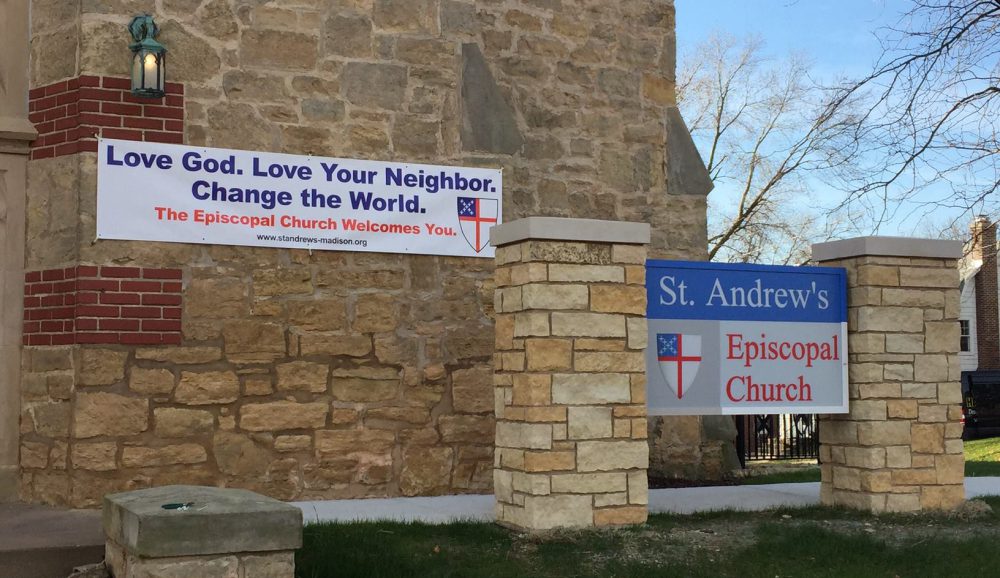
This sermon, offered at Saint Andrew’s Episcopal Church in Madison Wisconsin by the Very Rev. Andy Jones, is based on the readings for the Proper 17 in Year A of the Revised Common Lectionary.

You can find those readings here.

This text is a transcription of the recording made at the 9:30 Celebration of the Eucharist. I have made a few adjustments in the transcription, mostly where my proclivity for compound run on sentences began to border on the absurd.  There is a link at the end of the text to the article by Charles Hefling that is quoted in the sermon.

Here is the recorded version:


This is a big weekend here in Madison just like it is in college towns all over this country. Students are returning for their second, third, fourth, fifth, sixth, seventh, eighth year of school. First time students are arriving on campus, finding their roommate assignments, making their way through the dorms, learning the layout of campus and where the dining hall is. It’s a tremendously exciting and terrifying and important moment in the life of any young person. I think it’s a very similar; it doesn’t matter where you’re going to school; it doesn’t matter who you are; there’s a lot that’s shared in this moment. But I think there’s something very different about college today than there was when I started in 1978. That year at Juniata College, a small private liberal arts school in central Pennsylvania, room board intuition for a whole year cost a whopping sum of $4800. I don’t know that you could even get a meal plan for a year for that much money today! We had gone to great lengths to plan for a college education, to research, to find the right place to go, and then over the four years that I was there cost of that tuition tripled. It was almost $15,000 the year that I graduated. Sometime during my senior year I was home and we were having a conversation at the dinner table and someone said something that caught my ear and I asked for clarification and my father said “uh… no. I sold the sailboat.”   Really? So why did you do that? He looked very uncomfortable for second and then he said, “Well tuition has gone up quite a bit since you started school.” I felt all the breath rush out of me. I thought uh oh, now is to be mad at me. Now I’m going to find out what this really costs. I was stunned that he just went on… changed the subject. He almost looked embarrassed that it had come up at all. And I was flabbergasted by that. I really didn’t understand how that could have been; that this thing that was so precious to him was gone and he never even mentioned it; wouldn’t have mentioned it unless it had come up in this conversation.

I think I started to have some understanding of how all of that worked for him about 15 years later when our son Daniel was born. When we were expecting Daniel I went to church and I told all of these older men there at the parish that we were expecting a baby and there was almost a universal response from them. They would come up and put their arm around my shoulder and they’d go, “Oh man… Your life is about to change…” And I’d say “Yeah! I know! We’ve been trying for a long time to have a baby! We’ve planned for this and were prepared and I know what’s coming and I’m glad of it.” The Sunday after Daniel was born I went back to church and went back to the same guys and I said, “Oh man my life has changed! Why didn’t you tell me?”

Here I was with this defenseless infant who couldn’t feed himself, couldn’t clean himself, couldn’t clothe himself, or protect himself… I was responsible for him, and for all of the things that he needed.   And so suddenly things that I thought were mine, rightfully mine, had to get set aside. You know my sense that I deserved eight hours of sleep a night, the idea that I would get to choose when I slept, that I would get to choose when I ate… All sorts of things that I thought were under my control and mine to decide suddenly became his to decide. I had to give up things that I thought were important to me, that I thought made me who I was, in order to be a father to this child.

I think that my dad was doing much the same thing only on a different scale and at a different point in my life when he sold his boat. He was helping to launch me from college into the real world.

So Jesus in the gospel today tells us that if we want to save our lives we have to lose them. I think that as we consider the ways that we change, the ways that we give of ourselves for the people we love, we have some sense of what he’s talking about here. In order to be in relationship with those who are close to us we make concessions. We allow ourselves to be vulnerable and to change. We give up pieces of ourselves that we thought were crucial to our identity and who we are, and in doing so we find something much greater. We find a gift of life in the light that we couldn’t have expected or experienced until we were willing to make ourselves vulnerable and give up something in that way.

Now, I think that’s an easy thing to picture and this is a great metaphor to understand all this but it’s kind of limited because it’s easy to give of our life in this way for our children, our parents, our siblings, our family, our tribe, our community. It’s a little more difficult when it’s a stranger for whom we have to give. It’s a little more difficult when we are asked to change or to give up something for someone we’ve never met and may never meet again. We all know on some level how difficult this is and you see evidence of that in the way that we honor those stories and those moments. I can sit in the evening at 5:30 at night and watch 25 minutes of terrible horrible news from all over the world. But you get the last five minutes and the news anchor is going to show you something to lift your heart, and make you smile, and show you someone in the world who has reached out and done something spectacularly generous in giving for a stranger. Those moments we treasure and we value. They give us an insight into something that we claim and proclaim that is awfully difficult to do.

All right so take it another step and we see the limitations of this metaphor in describing what Jesus is talking about. It’s easy for your family its more difficult for a stranger. But what about for someone you don’t really like that much to begin with; someone who rubs you the wrong way; someone who you find to be challenging and difficult; or even someone who has hurt you; someone who you believe owes you the gift and not you them.   That’s where the story gets really difficult and that’s where we find ourselves finally able to circle back to the beginning of today’s gospel passage.

Jesus says if you want to save your life you must lose it but that’s buried pretty deep in today’s reading. The reading today starts out with Jesus telling his disciples that he must be crucified, die, and rise again. Jesus is talking about losing his own life and in the shock and dismay that the disciples express after that moment, after Peter likens himself to Satan and says “No Lord this can never happen to you!” Jesus tells us that we have to follow him and be willing to lose our life in order to find it. So I think at this moment we need to dig in just a little bit to see what it is that Jesus is losing.

Jesus dies on the cross at our hands. Now if someone were to harm us, to wrong us in some way, it would be normal, I’ll say natural for lack of a better word, expected for us to expect compensation.   Justice would say that we are owed retribution, compensation, even revenge.   And so punitive justice, retributive justice would say that we respond to that evil with evil because punishment is by its definition depriving someone of something they value: liberty, possessions, time, acquaintances, even their life.   Retributive justice, the justice that the world, in which the world deals, says that we repay evil with evil and we only repay good with good.

Jesus on the other hand places himself in our hands and allows us to nail him to a tree, to crucify him, to kill him. He experiences the very worst that we have to offer and instead of repaying that evil with evil he comes back and loves us anyway.

Now the Gospels tell us, Jesus has said himself, he could if he wanted summon 12 legions of angels who would fight for him and save him from this fate. He could have fled.   He fact in came over the Mount of Olives into Jerusalem to face this conflict, to find himself in this moment. He didn’t flee, he didn’t fight, he didn’t summon a legion of Angels to rescue him. He repaid the evil that was done to him with good and broke the cycle of violence; violence to repay violence, to repay violence, to repay violence by showing us something different.

I think that this is so difficult for us because we want to be compensated. We want to find recompense. When someone wrongs us of justice calls for us to be repaid and it’s very difficult to forgo that compensation or retribution in order to find something different.

I’ve quoted from this article before and I’ll post a link to it when I post the sermon this afternoon. Charles Hefling in the Christian Century, March 20 of last year, has an article called “Why the Cross?” and he says,

“punishment by definition takes away from an offender something valuable – liberty, property, physical well-being, companionship, possessions. Forgiveness would mean the remission or cancellation or cessation of deserved punishment. It comes down to taking away the taking away.”

He goes on to say that,

“If you choose to retaliate you perpetuate the evil by causing new injury” and he says “If instead you choose to hold a grudge, to brood on your injury and cultivate your dudgeon, you will still perpetuate the evil, internally, by diminishing yourself, souring your character and becoming your own victim as well as mine”

the decision to forgive to forgo the righteous revenge, resentment, self vindication, righteous indignation is to rise above that retributive justice that perpetuates the cycle of evil and to participate in the justice of God which is restorative. Hefling tells us,

“If you choose to forgive, you are choosing to absorb the infection, as it were; to contain its self-diffusion, to forgo the gratifications of revenge, resentment, self vindication, and righteous indignation.”

This is what Jesus did on our behalf in coming back and repaying evil with good, loving us anyway; breaking that cycle of violence and showing us a different way; something that will build community, break down barriers and walls, and draw us one to another in a community that realizes God’s vision and dream for all of us. But it is an incredibly difficult crucified place to stand.

Now I just have to offer one caveat in all of this because I know that this passage has been used to cause great harm and I hear people say, “it’s my cross to bear in life.” I don’t believe that God inflicts suffering on us and I don’t believe that God wants us to suffer. God is asking us to be willing to give our lives in order that community might grow, that light and love might grow, that people will all be restored to light and life. But God is not asking us to sacrifice ourselves in order that someone may continue their abusive behavior, or that someone might continue down a dark path that doesn’t lead to life but leads to death. Jesus didn’t allow the crowds to throw him off the cliff when he returned to Galilee, to Nazareth and began to preach to them that, in him, the kingdom of God was fulfilled. He chose his moment in a way that would restore light and life to the world. He did not cast his pearls before swine and allow himself to be trampled into the dust.

Jesus does not call us to be doormats. Jesus does not call us to remain in abusive and life demeaning situations. But he does call us to be prepared to give up our own agenda, to sacrifice our own sense that we are central to this universe and to the world in order that other people might find themselves uplifted, might have what they need, and that we might ourselves break the cycle of violence that drags us all into the depths.

I had a conversation with Ken Stancer (our Music Director) this week. This was the day after an in-service for all teachers in the Madison public school system and he was very excited to tell me about a new program that is designed around restorative behaviors in the classroom. I thought this was a stunning statistic that he told me, and I’ll get this number wrong because I didn’t write it down, but there were somewhere in the area of 4,470 days of suspensions and expulsions in the Madison school system K through 12 last year. He told me that the graph that they showed the teachers said that 68% percent of those days were served by African-American males and that the remaining 32% were divided up equally between all of the other ethnicities and genders present in the school system. The school system is working to balance the need to maintain order in the classroom with the need to restore people to community and to attack the roots of those problems.   So if you pull a child out of class, if you send them from the room, you have to balance that act of justice with another act of justice that is designed to restore them to the community and to resolve the issues that resulted in their being suspended or expelled.

I want to applaud the Madison school system for this effort I want to commend this kind of thinking to all of us. We are called save our lives by losing our lives, by being willing to give to and for one another, to change and be changed by our interactions with one another much the same that we are willing to be changed by our interactions with the people that we love who are closest to us. We are called to this behavior because it has the potential to break that cycle of violence, to become a lamp shining on the hill, and to help create and bring to fruition God’s vision and dream for all of us.

Jesus tells us that he must be crucified and die and rise from the dead, and he tells us that we must walk in his footsteps and be willing to lose our lives in order to find true life. Thanks be to God that we don’t have to hang on that same cross. But we need to be ready and willing to follow him, to recognize others’ needs and rightful demands, we need to be willing to take ourselves out of the center of our own spinning universe and to stand side-by-side with our brothers and sisters in this community and beyond, to call for an end to the violence, to pray for and demand peace, and to bring all of God’s creatures into the light where we ourselves long to stand.

Amen


This sermon is indebted to Charles Hefling and his article “Why the Cross” published March 20, 2013 in the Christian Century.  You can read his article here.

I also made extensive use of Hefling’s article in my sermon for Good Friday 2013.

When Jesus came to the district of Ferguson, Missouri he turned and asked us…

This sermon, offered at Saint Andrew’s Episcopal Church on August 24, 2014, by the Very Rev. Andy Jones, is based on the readings for Proper 16 year A of the Revised Common Lectionary.

You can find those readings here

When Jesus came into the district of Caesarea Philippi he turned and asked his disciples who do people say that I am…. I can’t tell you how many times I’ve heard those words; how many times I’ve read that passage; how many times I’ve worked to understand this passage where Peter confesses that he knows Jesus to be the Messiah the son of the living God. But the way that I read, understand and hear that passage now has been marked changed by my trip to Israel this past year. Having stood in the place where the church celebrates Peter’s confession, there at the headwaters of the River Jordan on Mount Herman, my understanding of this passage has been changed forever. So what I’d like to do this morning is to tell you the story again and try to give you some sense of the visuals that have so impacted the way I hear these lines.

We’ll start a little earlier in the story.  Jesus is still on the Sea of Galilee. If you picture the Sea of Galilee shaped as a hand he’s down here on the southwest corner in the place where the church celebrates the multiplication of the fish and loaves. He’s just performed a miracle, thousands of people have been fed, and in the immediate aftermath of that miracle Matthew tells us that the scribes and the Pharisees show up and they say shows a sign to prove who you are. What are you kidding? Were you not just here? What kind of a sign do you want? Jesus says to them that no sign will be given to them; that they know where the wind blows, that they can read the signs of the day and of the world around them. But they are so blind that no additional sign will be given to them.

Then he and his disciples get into the boat and they travel from the southwest corner of the Sea of Galilee all the way to the north, land their boat, and travel way up into the mountains to Mount Hermon, to a place that’s now called Banyas. This is the place where Peter makes his confession.   Going to Banyas you travel by bus up a steep winding Road, rocky dry terrain, multiple switchbacks on the road. It’s pretty terrifying because its two-way traffic and the road is very narrow and the turns are very sharp. You get to the top and suddenly you break out into this lush green landscape. There’s a parking lot and there’s water, lots and lots of water in these carved channels that have been prepared to preserve the site. You look up onto the hill and there’s a big cave in the face of this mountain. At least 200 years before Jesus we know that there was a shrine to the Greek god Pan in that cave.   One of the nature gods: goats legs and feet, a human torso, head, and arms Pan was the God of pastures, and of shepherds and of flocks. Two hundred years before Jesus was even born the Greeks were worshiping pan in this place. In fact our earliest reference to the spot in 200 BC calls it Paneas and the name that we have for today is a corruption of that name Banyas.

Well in the year 40 BC Caesar Augustus conquered this land and he gave it to Herod the Great. Herod the Great built on this site a plain white marble temple to Caesar.   So now you have two communities, two sets of beliefs, two approaches to the world represented here in this beautiful spot where the most important river in that part of the world originates. Here is a cave with the shrine dedicated to Pan and a temple, a marble temple, dedicated to Caesar who was thought to be divine. This is the place to which Jesus brings the disciples to ask them the question who do you say that I am?

Now he could’ve asked him this question there where we celebrate the miracle of the multiplication of the loaves and fishes. He could have taken them to Capernaum, just a little north along that western shore of the Sea of Galilee, to where they had their base of operations and many of the disciples had their homes. He could have asked them there. But he didn’t. He took them way out of their path, way up into the mountains to a place where there are two starkly competing worldviews. that’s where he asked him the question.

The Greek pantheon of Gods, always competing with one another, using humanity as a chessboard, each demanding their own form of sacrifice their own form of prayer, human beings were merely play things to the gods and our fates were all wrapped up in their gamesmanship, and their battles, and their competitions. Over here, a plain white marble temple to Caesar, a place, a world view, a theology that our says that power and oppression the world, that people are merely chattel in service to the Emperor and to the power structure and the hierarchy that is.   Here with these two worldviews in stark competition with one another, Jesus the one who tells us that we should love the Lord our God with all of our hearts, soul, mind, and strength; and to love our neighbors as ourselves asks the disciples, “Who do you say that I am?”

I think it’s important for us to recognize the conflict that Jesus has created by bringing the disciples here. Because when Peter answers his question Jesus called him and the disciples to action. If you believe that Jesus is the Son of God, the Messiah then the way that you interact with creation, with the people around you, with all of the world changes dramatically. No longer are human beings the playthings of the gods with fates that are set and sealed and beyond our control. No longer are people chattel to be used and oppressed in order to service the rich and the mighty. If you say that Jesus is the Messiah and the son of God then we are all beloved children of God, equal in God’s sight, and deserving of one another’s love and respect, of dignity, and of life.

This is the place, this is the context where Jesus asks his question. I think that if it Jesus were to come here today and to ask each of us who we say he is… he would manufacture exactly this kind of conflict, this kind of context in which to ask the question. He wouldn’t come here. He wouldn’t come to the church because the answer would be too easy. It would roll off of our tongue without a second thought. We are surrounded by the symbols of our faith. We’re surrounded by the sacraments of Christ continued presence among us and to ask us that question here would just get the same answer over and over again.

If Jesus were to come back today and to ask each of us this question I think he would take us to the place where we are most conflicted, where there are the most competing elements, competing powers, competing theologies for our attention, our loyalty, and our imaginations and hearts. Jesus would find that place for each and every one of us and of ask that question in that place. He would ask us there because if we are to declare that Jesus is the Messiah the son of God then our lives, the way that we interact with one another, the way that we interact with the world will be changed; because we will understand and know beyond a doubt we are all beloved of God, God’s children worthy of dignity, respect and life.

I don’t know if your minds have wandered off here looking for that place, wondering where Jesus would confront you with this question, where Jesus would ask you if you’re willing to change your behavior and life and proclaim that he is the Messiah.   But as I have pondered this question over the last week I have been convicted of the truth that if Jesus were to ask me this question today he wouldn’t take me to Banyas, to the headwaters of the River Jordan, he would take me to Ferguson, Missouri.

We have seen images coming out of that place that we can scarcely believe; images that seem like they belong in a foreign land, in a foreign country. How can these things happen here? I think if Jesus were to come back and ask that question today he would ask me in Ferguson, Missouri.

Think for a minute about our Old Testament lesson today. Pharaoh has decided that the people of Israel are a threat and so he burdens them with incredible labor. And when that doesn’t oppress them and keep them down he says that all male children who are born need to be killed by the midwives.   And when that doesn’t work he says that they should go out and kill all male children who are already born.   A whole generation of young men were in danger of being slaughtered in order to appease this worldview that people are chattel, that they exist to service those who are in power.

I think that even though this happened hundreds and hundreds of years before Jesus was born the response of the two midwives in today’s reading from Exodus was a response to Jesus’ question, “who do you say that I am?”   They refused to submit to that power structure. They refused to embrace that worldview and they subverted the system.   And they saved that generation of boys.

I think that in Ferguson, Missouri we have seen evidence, we have been shown in a way that we cannot avoid, that there is a generation of young men in this country who are in danger, who are in danger of being lost. I believe that Jesus is asking us who we believe he is, and challenging us to do something about it.

Ferguson Missouri is awfully far away. The more I think about this the more I realize that Jesus wouldn’t have to take me that far in order to confront me with this situation and ask me this question. With the Race to Equity Report that came out earlier this spring, the Annie E. Casey Foundation’s report: both of which tell us that this is the worst state in the country for young black men to grow up; that in this county and in the city you have a exponentially greater chance of being suspended or expelled from school if you are black, and that our prisons are populated by a disproportionate number of black men; that if you are a black man in this county and in the city you are far more likely to be stopped by the police than if you are white, Jesus stands here in our midst this morning and asks us who we say that he is. And our answer is crucial. How we answer that question will determine how we behave as we walk forward from this moment. Peter was given the keys to heaven, told that on the rock that he had become as he made this confession Jesus would build the church, and at what he’ll loosed and bound would be loosed and bound in heaven. Our vocation as the body of Christ, as the Church is to stand in the midst of these competing values and worldviews and to proclaim that Jesus is the Messiah, the Son of the living God, and to allow that truth statement to change the way that we behave, and to work for change in the world around us.

I started this sermon this morning by quoting the first line of our Gospel passage, “When Jesus came to the district of Caesarea Philippi he asked the disciples…” I think that when I post the sermon on our website this afternoon the title that I will give it will be, “When Jesus came to the district of Ferguson, Missouri he turned and asked us…”

The Parable of the Sower: Finding God at the Center of the Story

This sermon, preached at Saint Andrew’s Episcopal Church in Madison Wisconsin on July 13, 2014 is based on the Gospel reading for Proper 10 in Year C of the Revised Common Lectionary.

You can find that reading here.


I don’t know if you all had a chance to see the email it didn’t come out until Friday it was too late to get into the bulletin announcements. Leanne Puglielli, who is here with us this morning, has been attending Christ the Solid Rock Baptist Church on the east side of town for many months in an attempt to establish and deepen the relationships between our parish and theirs. She is inviting folks to go with her on the Sundays that she attends that church on the east side of town. The announcement that we sent out had a schedule of dates and opportunities for you to go and also asks for other folks who might be willing to be ambassadors in an effort to address the racial disparity in the city that was identified by the race to equity report and the report of the Annie E. Casey Foundation. So I hope that you will keep that in mind and that you will watch your calendars and look for an opportunity to join the many folks from this parish who have already visited Christ the Solid Rock and become a part of this effort to get to know folks who are in different circumstances and look different than we do but who are in fact our brothers and sisters in Christ.

As part of this effort Leanne and I had lunch with Christ the Solid Rock’s Pastor on Tuesday over here at Brokaw’s and in the course of that conversation he invited me, and maybe the right verb would be challenged me, to come and preach at his church. Now I went and visited Christ the Solid Rock on the last Sunday of my sabbatical back in March and I know that Everett stood up and preached for a solid 25 minutes. And that he was yelling for at least 18 of those 25 minutes! Leanne told me later, sitting next to me there on the bench of Brokaw’s when Everett issued that challenge, she could just feel the fear radiating off of me.

In that moment Everett and I were laughing and talking about preaching and how that works for us.   He told me that he doesn’t preach according to a lectionary and that I would be allowed to pick any passage I wanted to preach on when I’m there. I told him that we use a three-year lectionary cycle and while I get to choose between the Old Testament and the New Testament and the gospel I am confined to those readings for any given Sunday.   Then I said, “you know I’ve been ordained for 12 years now that means I probably preached on the Parable of the Sower four times and this Sunday I’ll get the preach on it for the fifth time. I’m struggling to come up with something new to say.” As the week went along I realize that that was about as far from the truth as I could’ve gotten in that moment.

I think part of the beauty of our Scripture is that we can come back to the same stories over and over and over again: and because we have changed and grown, because our context has changed and we are in different places in our lives, every time we read those stories we can hear something new. Different words will jump out at us. Different layers of meaning will reveal themselves. Different aspects of the story will catch our attention. This is true of all scripture but I think it’s especially true with a parable.

Jesus taught almost exclusively in parables. Some of those parables, at east on the surface, seem pretty easy to understand. Others are very confounding and confusing. But we need to wrestle with those parables in order to understand what Jesus is saying.

I think that parables lend themselves very well to the repeated approach, repeated encounter, repeated sense of joy and discovery that our lectionary offers us.

The great Welsh New Testament scholar and theologian C. H. Dodd gives a great definition of parables in his book The Parables of the Kingdom.   He says

“At its simplest, the parable is a metaphor or simile drawn from nature or common life, arresting the hearer by its vividness or strangeness, and leaving the mind in sufficient doubt about its precise application to tease it into active thought.”

To tease it in two active thought… That’s the goal of any good teacher; to tease the minds of their student into active thought so that they will grapple and wrestle and explore on their own. If you give somebody the answer right away they don’t own it. All they have to do is regurgitate it. So what you do is tease your student’s minds so that they will explore and wrestle. Then they can own their discoveries and truly learn and be changed. That’s why Jesus teaches in parables, to tease our imaginations into active thought. So let’s try that exercise with The Parable of the Sower this morning.

To begin with we need to recognize and understand that as we enter the 13th chapter of Matthew’s Gospel Jesus has just been in conflict with the religious authorities and with people who refused to hear and accept his message. So he’s coming out of this experience where people have rejected him, scorned him, and have looked down on him. And I’m sure the disciples were really confused. I’m sure they were thinking. “We’ve heard these words and we recognize their power, their depth, and their meaning. We’ve been changed. Why isn’t everyone experiencing the same conversion, the same transformation that we are?” So Jesus tells this parable to explain a very real and present experience in the life of his disciples. People are different and some people won’t understand. Other people will grasp immediately but not deeply and they’ll wither away.   Other people will understand then be distracted by other cares and needs.   So you shouldn’t be surprised that everyone doesn’t respond the same way that you do.

Okay. So we step back and we turn our imagination loose on this passage again and see that there’s another layer of meaning to explore. I’ll wager that this is one that all of you have already spent time exploring. Jesus is describing different responses to his word comparing those responses to different kinds of soil and we start to wonder and worry what kind of soil owe are. We launch into a cycle of self-evaluation and concern about judgment. We start to wonder how it is that we can be good soil … Our imagination has brought us pretty far and maybe this is a productive place to be, but it’s not a productive place to stay, so we let our imagination keep working.

Let’s imagine that maybe Jesus isn’t judging here. Maybe he’s lamenting the state of the world as he’s experiencing it and instead of judging he’s offering us a way to be good soil. We need to work to learn and to understand so that we don’t become the rocky path where the seeds are immediately snatched away by the birds of the air. We need to continue to work to persevere even when persecutions arise, even when it gets difficult to proclaim and to live out what we are learning. And we need to recognize that there are things in life which can distract us, lure us in the wrong direction.   We need to continue to listen to grow and to allow those seeds to sprout deep within us.

So by using our imagination we have identified several layers of meaning in this parable. But we’re still not done because all three of those layers of meaning position us, you and I, as the central characters of the parable. So far we have people who are responding to Jesus’ presence and teaching at the center the story. We have people being described as as good or bad soil at the center of another layer of meaning. We have ourselves needing to learn and to behave differently in order that the seed being scattered in us might sprout and bear fruit.   But when we find ourselves at the center of a passage of scripture, when the story seems to be about us, we know we have more work to do. We can’t stop until we have come to see God at the center of the story. God needs to be the focus of the gospel. So let’s put our imagination back to work and see if we can figure out where God is in this parable.

Here’s where the parable becomes more challenging. Good teachers will use a parable, a metaphor or a simile to explain something new by relating it to something that we already know. Good teachers can help us to grasp new concepts by drawing on our experience and the things that we already understand. C. H. Dodd said that a parable is used to tease the mind into active thought by “arresting us with its vividness and strangeness…” Vividness and strangeness indeed! Jesus’ parables often seem to cloud our understanding, to confound our attempts to discern. Sometimes they don’t seem to relate to want we know at all… The Parable of the Sower is a prime example.

In an agrarian economy where people are, for the most part subsistence farmers, that seed is a precious resource. A farmer in that context would walk out into the fields having tilled the ground knowing exactly where to place that seed so that it had the greatest prospect of growing, coming to fruit, and feeding him and his family. That’s not how Jesus describes God in this parable. God is out there casting seeds in all directions irrespective of the ground that it lands on. God is casting that seed on the rocky path, on the ground amongst the stones, on the good soil and the bad. God is so generous and his sense of abundance is so great that the seed just gets cast everywhere. That’s a remarkable way to hear this story and a remarkable shift in focus if we can let our imagination take us there.

Why is it so important to let our imagination continue to work, to continue to wrestle, to continue to dig into these stories? It’s not until we get to that last a layer of meaning that we recognize the true power and beauty of this story. So having worked through the parable to the point where we have God squarely in the center we are ready to go back and reexamine the other levels of meaning we found. Jesus is talking about the people in his presence, the people that his disciples are experiencing, some of whom hear the word and respond and some of whom don’t. He’s talking about the conditions that affect the way that we hear and respond to the Good News of God in Christ. And he’s also talking about us: as individuals, as a parish community, and as a larger community here in Madison and beyond. Jesus is talking about the human condition. And, most importantly, Jesus’ is talking about God’s response to that human condition.

What kind of soil am I? Am I the good soil, the path, the rocky ground… Have I let weeds grow within me? The answer to all of these is yes! What day of the week is it? Have I had enough to eat? Have I had enough sleep? Have I just experienced some devastating loss?   Have I become ill? During the course of our lives, through the years, even within an individual day we can go from being rocky soil to good soil back to rocky soil to being the path to finding ourselves surrounded by thorns. That is the human condition and the true beauty of this story is that God is going to continue sewing those seeds in us, all of the time, regardless of the kind of soil we are at any given moment!   So I might find myself in a desert time: my soil closed, packed tight, unable to accept those seeds that God is sewing. I don’t need to worry that God is going to stop, that God is going to give up, that God is going to say, “well enough of this dry patch of earth I’m going to go plant over here in this fertile soil that’s been tilled and well-kept.” God is casting seeds everywhere all of the time in all of us!

When we dig into the story, when we allow our imagination to wrestle with the images, to view them from different perspectives, to work our way through the narrative and inhabit the different characters we find great joy and meaning. We find a God who loves us beyond measure, even beyond our ability to understand. We know that God is with us always and that no matter how dry our soil gets nothing… nothing can separate us from the love of God in Christ Jesus. We thought this parable was about seeds and soil.   It’s really about God! And when we find God at the center of this story the story has the chance to transform our lives.

I said earlier that I have probably preached on this story four times before today and that this makes the fifth time I have visited this passage since I have been ordained. I am pretty sure that I have yet to exhaust the possibilities, that I have yet to plumb the depth of meaning in this parable. And I have to tell you that I am looking forward to revisiting it again three years from now. I hope that you all are too!

Thanks be to God!

Amen

Dancing with Your Hair on Fire: a sermon for Trinity Sunday

This sermon, preached on Trinity Sunday 2014 at Saint Andrew’s Episcopal Church in Madison Wisconsin is built around the Gospel Reading For Trinity Sunday in the Revised Common Lectionary,

You can find that reading here.

Here is an audio file of the sermon as preached at the 9:30 service on June 15th        Dancing With Your Hair on Fire


Happy Father’s Day! To all of you who are fathers or father figures, happy Father’s Day as we remember the who have nurtured and raised and sustained us.

So I have this Father’s Day story that I need to share. And I am guessing that if the exact details don’t match your experience it will at least sound familiar to you.

Father’s Day is approaching and this is the year to get a new gas grill. But you can’t leave a decision like that up to chance. So you go on line. You check the stores, and you make sure that you’ve got the right one picked out and everyone knows which one it is. You get home from church on Sunday and there it is, in the box, and its so exciting. You carry it out back onto the patio and you rip the cardboard apart. You look at the picture on the box a couple of times, look at the parts, and dive right in; putting things together, assembling stuff. You’ve got it going right and left… yeah there’s a couple of places where it doesn’t work quite right and you have to pull things back apart, hoping you don’t break them. and put them back together the right way. You’re getting closer and closer. And then you get to the part where there are these… gas connections. And you think “Well… I’m not so sure about this. I really hate to do it but maybe… I’ll look at the instructions. And then you get the instructions out and you discover, much to your chagrin, that they are clearly written by someone who has assembled this grill so many times that it is patently obvious to them how it should be done. Their minimal descriptions and instructions don’t work very well and you are pretty convinced that these instructions have been written by someone whose native language is not English.

This is a risky place to be! It’s scary because you are playing with fire here! There’s gas! And there’s a big tank of it sitting right there… Fire!

Ok so have you figured it out? That’s right where we are today right? It’s clear, patently obvious why I have told you this story today.

We went through the drama and passion of Holy Week, Jesus was arrested and taken from us, tried, and crucified. Three days later he rose from the dead. It was beyond our wildest expectations. He appeared to his Disciples for forty days and then ascended into heaven, back to his Father. Then last Sunday we celebrated the coming of the Holy Spirit, the birth of the church, flames of fire appearing above the disciple’s heads. We the church have been set on fire to go out and to change the world… Fire! Holy cow where’s the instruction book?

So we turn back in the manual. We go back to a post resurrection appearance of Jesus, an appearance before he ascended to the Father, before the coming of the Holy Spirit, looking for a little guidance. And what we find today in Matthew’s Gospel, the very last words of Matthew’s Gospel is The Great Commission.

“Go therefore and make disciples of all nations, baptizing them in the name of the Father and of the Son and of the Holy Spirit, and teaching them to obey everything that I have commanded you. And remember, I am with you always, to the end of the age” (Matthew 28:19-20).

Ok… clearly Jesus has done this so many times that it’s patently obvious to him how this works and his description makes sense to him but not to us… And to make matters worse we have this commandment and instruction in English when originally they weren’t written in English at all. So maybe in order to figure out, now that we are on fire, how to follow these instructions and to go out and change the world we should look at a different language. Greek is where we are going.

The early church had a word that they used to unpack the code language that we have just heard: Father, Son and Holy Spirit, the three in one, the Holy Trinity, Three persons yet one… “perichoresis.” That word means to rotate, to move forward, to move together, beautiful imagery describing the inner life of God that we have lost, mostly I think, because of our geometric obsession with the triangle…

You’ve seen those pictures, those diagrams. God the Father at the top, God the Son and God the Holy Spirit at the bottom corners of a triangle.   It does make some sense… The triangle is a weight bearing shape. You use a triangle to build buildings and bridges because it is strong, it is rigid, it distributes the weight evenly over its base. When you want something to last for a long time you use triangles.

But there is a problem, I think, with that triangle. It doesn’t really describe perichoresis, rotation, moving forward, moving together. So I am going to suggest that just for a second we all set our triangles aside in favor of another shape that “breathes” a little better: a circle.

Imagine if you will three persons standing in a circle with their arms loosely linked. Dancing together around and around, rotating, moving forward, moving together. One of those dancers dips and the other two, on either side, move and flow with them. One of those dancers stumbles or struggles and the other two lift and support. After a while, moving together in that way, those three seem to be one living, breathing, organism; together moving seamlessly, around and around, flowing into and from one another, without effort, without thought. “Perichoresis,” what a beautiful image…

Go and baptize in the name of… the Perichoresis. Ok, maybe we’ll stick with The Father, Son and Holy Spirit. It does sort of have a rhythm and a flow, and its familiar… And there is another good reason for using that formula to describe God. Father, Son and Holy Spirit… We have those three persons dancing in a circle moving as one, but this description and image leaves us in danger of believing that the unity was created when the three separate beings, persons, came together to dance. And that’s not really quite accurate.

The way that we understand God is that the three persons of the Trinity give and receive their identity, one to another, in this eternal dance. A person needs a child in order to be a father. So the Father’s identity as the father is given, made possible by the Son. The Son can’t be progeny or a child without the existence of a parent and so that identity as the “Son” is both given and received in relationship the Father. The Holy Spirit is that relationship that binds them all together as one. All three persons of the Trinity are established, or have their identity in their relationship one to another.

So as if it weren’t difficult enough to imagine this swirling, breathing, moving unified dance, now we have to picture it as identity being given and received, created and defined, lover, beloved, and love all moving together.

If we had gone back to the instructions today with our hair on fire from the coming of the Holy Spirit, looking for some guidance and help and we had found a description of this swirling, moving, breathing mass… I’m just not sure that would have been especially helpful. It’s a very long description and after all we are in a hurry to start cooking our hamburgers and brats on this brand new grill… We need to get to work.

But I think that having this deep understanding of what we mean when we talk about the Holy Trinity; the Three in One; Father, Son and Holy Spirit, will allow us to invite people to join us in a way that isn’t possible unless we have this picture in our minds. Baptize in the name of the Father, Son and Holy Spirit. It is our baptism that creates the church, that creates this body of which we are all members. And so when we baptize someone in the name Father, Son and Holy Spirit the Three in One, we are inviting them to join us in that eternal dance that is happening in the heart of God.

As we pour water over the head of the next person to be baptized here and we say “I baptize you in the name of the Father and of the Son, and of the Holy Spirit” imagine the three persons in that dance loosing their arms and inviting that person to join with them, to dance, to move, to receive and give their identity in that relationship, to know and to be known, to love and to be loved.

Suddenly it doesn’t seem like such a bad thing to have your hair on fire. Suddenly we have a clearer sense and a more joyful appreciation, a deeper understanding of what it is we have been called to do as the church. The Day of Pentecost has come and gone and we move now into what is often called “Ordinary Time” but these are no ordinary times. We are called to model and to create a world that is bound together by God’s love, dancing in the circle, adjusting, compensating, lifting supporting, loving, upholding, nourishing, feeding, and all the while being fed.

Trinity Sunday is often a day when Rectors abandon the pulpit in favor of other folks whom they can assign the task of preaching on a theological construct rather than a passage of scripture. But I look forward to this Sunday and I hope that you will too, to this expression of who we are, and as Mother Dorota will say later in her blessing “whose we are.” We are defined by our communion with one another and with God, we are given and receive our identity in relationship with the Holy Trinity and in knowing who we are and whose we are as together we dance for all eternity.

Thanks be to God.

Amen


Alleluia! Christ is risen! A sermon for Easter Day 2014

What powerful and wonderful words they are that we claim and proclaim this morning; words that change everything. It was just three days ago that we gathered to celebrate the last Supper and watched, and participated, as Jesus washed our feet and we washed the feet of others. We listened as Jesus instituted the sacrament, the bread and wine, the Body and Blood, the sign and symbol of Gods ongoing presence among us. It was just three days ago that we stood numb and then fled in panic as Jesus was arrested and taken from us. We gathered the next day at his trial and we shouted “away with him! Away with him! Crucify him! Crucify him!” And then we stood in shock as he died on a cross and was laid in a tomb.

But today we come here to this place, we duck down and walk through that threshold, entering the tomb and finding it empty we proclaim

Alleluia! Christ is risen!

Christ is risen indeed! Alleluia!

So maybe… that’s enough… Maybe at this moment, having claimed and proclaimed those words, we are all ready to come to this altar, to this table and to share the sacrament so that we can hurry home to our brightly colored eggs, and to our piles of chocolates, and to the ham that is warming in the oven. But I think that before we allow ourselves to do that we need to grapple a little bit with the story that we have been given for this morning.

The story that we read this morning is a gift.   A story rich with drama, with surprise, maybe even a little comedy. In this story we have three people running back and forth to and from the tomb, three people who are already very familiar to us.

First there is Mary Magdalene. Now we know Mary as a person of great status and stature among the Disciples. We know this because she is named as one of the women standing there at the foot of the cross as Jesus dies. She is there with Jesus’ mother and his Aunt. Her status is affirmed by he presence in such company and because she is mentioned by name (John 19:25). Mary Magdalene is someone who was there right to the very end standing on the “inside” with the people who were closest to Jesus.

But there is something very familiar about what she is doing in this story. She is out in the dark, in the middle of the night, before the sun has come up.   And she clearly expects to find the stone still blocking the mouth of the tomb. She hasn’t brought anyone to help roll away the stone. She hasn’t come with spices or ointments to anoint the body. She doesn’t seem to have a plan of action. She is there grieving, lost, in despair. And all she can think to do in this moment is to come to the place where his body is laid in a desperate attempt to be near to Jesus.

Now we know what her despair is about in this moment by the way that she interprets the open tomb. She doesn’t look inside. She doesn’t know that the body is gone but she runs to the Disciples and she says, “they,” they have taken the body away. Mary’s greatest fear in this moment is that the powers of this world, that ill defined “they,” have triumphed once again; that the movement towards freedom that she had sensed, that the light that she thought she was seeing, in the person of Jesus of Nazareth, had been extinguished. Mary is there in this moment fearing that all of the promises that she has heard and felt have come to naught. Mary is afraid that the light has come into the world and that the darkness has overcome it once again.

We have two other people who are running in this morning’s story. The first is the Beloved Disciple, the Disciple whom Jesus love, and he is so upset and so anxious that he outraces Peter and arrives at the tomb first. Here is a person who has felt God’s touch, who has felt God’s favor and God’s love in his life. And in this moment when Jesus lies dead in the tomb he must long beyond reason and beyond hope to feel that love once again. He is in the dessert… He is lost and alone. He races to the tomb trying to re find that connection, to be reconciled, to be in communion once again with his Lord and Master and friend.

Then we have Peter who is probably in a very different place as he runs towards the tomb. Having denied Jesus three times before the cock crowed he is rushing to the tomb with some level of guilt and shame and remorse. Maybe he let the Beloved Disciple get there first so that he could evaluate the situation before he went in. But in his inimitable fashion Peter arrives at the tomb and blunders through the door, probably elbowing the Beloved Disciple out of the way.


All through this season of Lent, and especially now in Holy Week, as we have listened to these stories and we have participated in them, we have been invited to see ourselves, to feel ourselves as part of the action; to make these stories present for ourselves here and now; to make them present and true for the world in which we live. So I think that there might be a temptation here to identify too closely with any one of the three characters in this story. We have all arrived here at the tomb this morning with a different stance, a different posture, a different pain or grief that we are bearing. Some of us may have arrived worrying that the powers of this world have indeed triumphed and that the darkness has overcome the light. Some of us may have arrived here this morning in the midst of a dessert, dry experience, longing to feel once again the connection with God that we have felt at other times. Some of us may have arrived here with some sense of remorse or guilt, or even shame, hoping to find release and forgiveness.

I would like to invite us to avoid the temptation to identify too closely with any one of these three characters and to recognize that, in fact, we should be identifying with all of them.

Now, and at different moments in our lives, we will arrive at the tomb bearing different burdens carrying different crosses. Gathered together in this room today bring we bring with us a vast variety of experiences. The journeys that have brought us here are all different and uniquely our own. We come from different backgrounds and different places and when we arrive at the tomb together we need, we long for, we are seeking different things.   What we need, long for, seek this year is different from what we needed, longed for, and sought when we came to this place last year and is likely different that what we will seek when we come again an year from now. So identifying to closely with Mary, or Peter, or with the Beloved Disciple is limiting in a way that is not reflective of our experience of life and the ways that we grow and change. When we experience and participate in this story we are not one particular character in the story. We are every character in the story.

I think that recognizing that this is not “my” story, or “your” story,” or “this person’s” story, or “that person’s story,” but recognizing that this is in fact “our” story also brings us much closer to the way that the early church and the disciples saw these stories and with the way that the early church saw themselves as being in communion with one another, as one Body. This remarkable story, with all of its layers of meaning, all of its possibilities, is “our story” as a community, as a people, as the Body of Christ.

Now there is some danger, risk and discomfort in seeing this as “our” story. Because we may not want to bear the cross or the burden that someone else has carried to the tomb this morning. We are busy enough carrying our own. And to see this story, every bit of it as “ours” means that it is not the Jews who crucify Christ. It is not the Romans who crucify Christ. It is “we!” Because every character in this story is each and every one of us! Multi faceted and multi layered, complex and irreducible to one experience, event, or story line.

So this is “our” story to tell and to bear, with all of its pain, with all of its cruelty, and with all of its betrayal. But it is also our story with all of its joy. Because when we see this as “our” story, when we see ourselves as every character in the story, then grace, relief, and release that each and every person in this room feels today also become “ours.” Mary Magdalene arrives here in the empty tomb worrying that darkness has overcome the light and she discovers that the light has prevailed. Jesus has risen and he stands here in the garden and calls her by name.   So we know that the light has come into the world and the darkness has not overcome it. Her fear has turned to joy.

It hasn’t happened here in this moment yet but “our” story will go on show us that the Beloved Disciple will again feel that touch, that communion, that closeness with his Lord, Master, and friend, with the God who loves him.

Peter, who denied Jesus three times will be invited to breakfast and told three times to feed God’s sheep. Peter will find that absolution and forgiveness for which we all long.

No matter which cross, no matter which burden we carried into the tomb with us this morning, all three of these redeeming story lines are ours for the claiming. And that is the source of our joy, celebration, and hope.

If this story, every bit of it is “ours” then this story shows us that, having found the tomb to be empty, we need to stand and bear witness, to testify to one another about our own journey, about our own path, about the burdens that we brought with us today, and about the way that they have been lifted.

Mary Magdalene has an encounter with the risen Lord and she runs to tell the disciples. The first evangelist, spreading that word in a way that will change the world and set it on fire. We are called to do that same thing; to describe our experience standing in the open tomb, discovering that Christ has risen and explaining to people how that has changed our lives.

So I am going to pass the microphone around and ask everybody to take a turn and tell us your story…. No? OK. I’ll tell you what. We’ll give you a little time to think that through and to rehearse it; to work on it so that when you are given the opportunity to testify about the empty tomb you are prepared and in t a place to do that with joy, and with passion and with conviction.

In the meantime as we work on our story, as we listen to the people around us and and let their stories enrich our experience and our understanding, as we let their testimony lift us up when we fall, and support us as we walk this path… We will just speak in shorthand to one another.

We will stand here in the doorway of the empty tomb, looking out into the world that is now illumined by the new light of Christ and we will say

Alleluia! Christ is risen!

Christ is risen indeed! Alleluia!

Amen!

A Sermon for Good Friday 2014

This sermon is based on the readings and the collect for Good Friday in the Revised Common Lectionary.

You can find those readings here.

You can listen to an audio recording of the sermon by clicking the player below.


Almighty God, we pray you graciously to behold this your family, for whom our Lord Jesus Christ was willing to be betrayed, and given into the hands of sinners, and to suffer death upon the cross; who now lives and reigns with you and the Holy Spirit, one God, for ever and ever. Amen  (The Collect for Good Friday BCP p. 276).


It was just five days ago, at about 10:15 in the morning, as we were preparing to go downstairs for The Liturgy of the Palms, that one of our most engaged and involved parishioners asked me a very good question. “Why do we process outside and carry palms on this day?” I explained to him that during this season Jesus rode into Jerusalem on the back of a donkey and that the people gathered and cried,

“The crowds that went ahead of him and that followed were shouting,

‘Hosanna to the Son of David!
Blessed is the one who comes in the name of the Lord!
         Hosanna in the highest heaven!’”  (Matthew 21: 9)

Then this person asked me a great question. “I know that” he said. “But why do ‘we’ process outside and carry palm branches?”  Now just for the record, this involved and engaged parishioner was Ray Hutchinson, who is five and three quarters years old… but this was a great question. Why do “we” participate in this way?

I explained to him, standing right here in his space, that we participate in the story this was because this is not a story about people who lived two thousand years ago and who were engaged in a series of events that is distanced from us by both geography and time. I explained that this is a story that describes and defines “us,” that these stories that we read and participate in during Holy Week are “our” stories. We claim them as our own and we proclaim them as the stories of our very lives and being, the stories of identity as a community. We participate in them to make the real, present, here and now, for us, today here in this world.

Now I’m not sure… I think maybe he was a little grumpy about having to go outside into the cold… so I’m not sure that my explanation gave him cause to be excited about participating. But I’m sure that by the time we finished our parade and had come into the church he was enjoying his participation in the story and was appreciating my rather lengthy explanation to his very short question….

I think that if he had been here on Wednesday as we read the story of Jesus’ betrayal by Judas and Jesus’ commitment to remain faithful to his mission and to us by sending Judas on his way, Ray would have appreciated his participation in that story too. I am sure that when he was here last night he appreciated our participation in the act of washing feet, of receiving Jesus’ unconditional love, offered to us despite our warts and unwashed feet. And I am sure that he appreciated our ability and willingness to share that love with others.

I am sure that he and all of us, having heard the reading from Paul’s First Letter to the Corinthians, the story of the institution of the Eucharist, came to this table with a greater sense of appreciation,as we participated with all of our hearts, and souls and being.

Today, however, that participation takes on a different cast. Today our participation in the stories of Holy Week includes our coming to the garden to arrest Jesus. Our participation in this story today includes our choosing a bandit over the one who just five days ago we declared to be our Lord and King. Our participation in this story today has us crying, “Crucify him! Crucify him! Away with him! We have no king but Caesar!” Our participation in this story is a little more difficult for us to sit with, to experience, and to claim and proclaim.

Now just to be clear, our participation in all of these stories doesn’t create something new. It is our claiming of a truth that has always been, is now, and will be forever. We are claiming and proclaiming and participating in a story that transcends this moment and these details.  And which transcends us as individuals and as a body.   So this special way that we recollect and participate in these stories isn’t imposing anything upon us. It is in fact describing our experience, our perception and understanding of the truth, of reality, of the way life is. If we think about that statement for just a moment we will recognize its truth even in the face of our uncomfortable and painful participation in the story today.

When we fail to love one another, to love out neighbor as ourselves as we have been loved; when we objectify one another and see God’s children as a means to an end, to the advancement of our own agendas, to the meeting of our own needs; when we fail to work for justice and peace among all people and to respect the dignity of every human being… we are participating in Jesus’ crucifixion. We are denying the vision and dream that God holds for all of creation and the way of being one in Christ that God longs for each and every one of us to recollect, claim, and proclaim.

Our participation in this difficult, ugly, and violent story of betrayal is not something that is being imposed upon us but is something that we are realizing, recognizing, and holding very carefully about who we are, who it is that we have been, and who it is that, without the grace of God’s help, we will continue to be.

There is another change in the story today that is worth pointing out and recognizing. The collect that we heard at the beginning of today’s liturgy, and which I read again just a few minutes ago, has for this entire week been the prayer that we use at the conclusion of our Holy Week liturgies. So having gathered as a community of faith, having participated in these powerful and formative stories, and having shared in the Eucharist, we have knelt just before going out into the world to continue this journey through Holy Week, and we have heard these words.

“Almighty God, we pray you graciously to behold this your family, for whom our Lord Jesus Christ was willing to be betrayed, and given into the hands of sinners, and to suffer death upon the cross; who now lives and reigns with you and the Holy Spirit, one God, for ever and ever. Amen”  (Holy Week Prayer Over the People Book of Occasional Service p. 26).

In the context of a closing prayer, in the context of a journey that is ongoing, these words sound and feel like a plea for help, for strength, for companionship along the way. O God, we are on the road to Golgotha. We are on the path and this journey is a difficult one. We ask you graciously… graciously to behold us, to apprehend us, to see. This is a prayer for God’s presence and favor on the journey. Oh, and God, just in case you have forgotten who is asking… we are your family, the ones for whom Jesus was willing to go to the cross.   So we are not making this request out of the blue. We are yours and you are ours… So please be with us.

Today we shift that prayer from the end of our liturgy to the very beginning and it feels very different. Knowing why we are here, knowing where the story is going, and knowing how this will end… we have the temerity to pray, “Almighty God, we pray you graciously to behold this your family? “

We hear these words differently now… for whom our Lord Jesus Christ is “about” to be betrayed, and “about” to be given into the hands of sinners, and “about to suffer death upon the cross…

And just in case you have forgotten who it is that is asking… it is we who are about to do these things to Him, who are asking you to behold us in this moment.

That seems very counter intuitive. That seems like a strange request to be making, knowing what it is that is about to happen. What is going on here? I think that there is an important piece here that we need to recognize and grapple with.

I used to see this in my own children. They would behave in ways with Suzanne and me that we wouldn’t see from them in any other setting or context. They are our family.   And I believe that they were, as families are wont to do, testing us. “Yeah you say that you love us but what if we do this? What if we push this buttons right here…” There is a fabulous children’s book by Barbara M. Joosse and Barbara Lavallee called Momma, Do You Love Me? in which a young Inuit girl describes all sorts of ingenious and outrageous tests for her mother in an attempt to see if she is truly loved… What if I put fish in your mukluks? What if I put holes in our canoe? Momma, would you still love me?

Last night we participated in a great act of intimacy and love; joining our Lord and Master by following his example and allowing another to see our naked feet; allowing them to hold them, to wash them, to caress them. And then we turned and offered that same love to another. We claimed and proclaimed the truth; that God loves us unconditionally despite out warts, despite out bunions, our ingrown toenails, our hammertoes, and those strange little pinkie toes that turn on their side and don’t have a nail…    Last night we claimed and proclaimed that God loves us despite all of that.

But you know… our feet are only a small part of who we are. Today God has experienced us at our absolute and very worst. There is nothing more that we could do to prove the depths to which we can sink, the awful deeds of which we are capable. And so here in this moment, with Jesus having died in our presence on the cross, and having been laid in a tomb, having manifested the worst that is in us… we hold out our hands and ask God to behold us, God’s family. We pray that God will do so, will behold us graciously, that the truth that we claimed and proclaimed last night will in fact turn out to be the Truth.

Our worst and ugliest warts are now on display.

And so we wait.

And we watch.

And we hope.

And we pray.

Amen.

A Sermon for Wednesday in Holy Week

This sermon, given at Saint Andrew’s Episcopal Church on April 17, 2014, is based on the Gospel reading for Wednesday in Holy Week. 

You will find that reading here.

Here on Wednesday in Holy Week we sit riveted as the pace of the unfolding drama picks up speed. Today we hear a story that is part John’s account of the Last Supper. We hear the story that sets the machinery of the world into motion and that will finally result in Jesus hanging dead on the cross on Good Friday. It is story of terrible juxtaposition. We have the beloved disciple, the one whom Jesus loved leaning against his breast as the Disciples share this last meal together; and we have Judas, one of the twelve, leaving to summon the temple guard to the place where Jesus will be arrested. This juxtaposition heightens the anxiety we feel when we hear Jesus say, “Very truly I tell you, one of you will betray me,” and we begin to wonder if those words are directed at us.

The study Bible that I use, a New Revised Standard Version, labels this story, “Jesus Foretells his Betrayal.” The NIV uses a similar heading, “Jesus predicts his betrayal.” And the RSV calls this story, “Jesus dismisses Judas Isacriot his betrayer.” Those labels say something very clear.

We do not like this story and we don’t like Judas.

We don’t like it because it is a story about the worst that is in us, betrayal in the face of unconditional love and we don’t like Judas because he hold up a mirror fomr which we cannot avert our eyes.

But if we are driven by our discomfort to turn away from this story too quickly we will have missed a great treasure. For in this story there is good news. In fact John, in the telling of this story, has given us reason to hope and to rejoice. So perhaps a better name for this story in the Gospel of John would be, “Jesus commits himself to being faithful.”

Jesus commits himself to being faithful.

That is certainly good news. Jesus’ faithfulness to us is cause for great celebration. But why is that an appropriate name for this passage and where do we find such good news here in this story of Judas’ betrayal?

The story of the Last Supper, in which we hear this story about Judas and Jesus, appears in all four Gospels. In the three synoptic Gospels, Matthew, Mark, and Luke the story of Jesus predicting Judas’ betrayal is pretty much the same. In all three he tells the apostles that one of them sitting at the table will betray him. In all three Gospels the apostles become upset and wonder who it will be. And in all three: Matthew, Mark, and Luke Jesus says, “woe to the one by whom the Son of Man is betrayed.”

In John’s Gospel we have all of those elements but we also have a very important addition. John’s Gospel is the only one that has Jesus tell Judas, “Do quickly what you are going to do” (John 13: 27).

To understand why this little addition is so important we need to think for a moment about the Jesus of John’s Gospel. John takes stories from among the the opther Gospels and from the oral traditions and sayings of Jesus and crafts a narrative that portrays a Jesus who is in complete control of his destiny from the beginning to the end. John makes very it explicit; nothing is happening to Jesus that is beyond his ability to stop.

Earlier in John’s Gospel Jesus is talking about himself as the Good Shepherd who lays down his life for his sheep. He says,

“No one takes it from me, but I lay it down of my own accord. I have power to lay it down, and I have power to take it up again. I have received this command from my Father” (John 10:18).

In the chapter following the one we read from today Jesus says,

“I will no longer talk much with you, for the ruler of this world is coming. He has no power over me; but I do as the Father has commanded me, so that the world may know that I love the Father. Rise, let us be on our way” (John 14:30-31).

Again, in John’s Gospel, when we read the story of Jesus’ interview with Pilate, we suddenly understand that it is not really Pilate who is in control of the interrogation process. Pilate is the one asking questions but it is clear that Jesus is in charge. Pilate becomes flustered, frustrated, and angry and John’s Gospel tells us,

“Pilate therefore said to him, “Do you refuse to speak to me? Do you not know that I have power to release you, and power to crucify you? Jesus answered him, ‘You would have no power over me unless it had been given you from above…’” (John 19:11).

Jesus is clearly in control of what is happening here…

Now if we were reading this story for the first time, never having heard it before and not knowing how the story ends, we would be caught up in the tension of the moment. What will he do? The powers of the world have conspired to silence the voice of Emmanuel, “God with us.” Will he put a stop to it? Surely he knows what is coming. Jesus has seen in the life of the Prophets how the world treats those who tell the truth in love and seek to bring us to a greater awareness of God’s presence in our lives. Surely he knows what fate awaits him if Judas leaves on his dark mission.

He has told the apostles that one of them is about to betray him. Will he tell them who it is? “It’s Judas! He is the one! Quick, tie him up and lock him in the closet!” Jesus is in control. What will he do? Will he abandon the humanity that he has taken on, assume his full glory and power and smite those who would arrest, torture and kill him? He is in control here… what is he going to do?

What he does is almost unthinkable. He says to Judas, “Do quickly what you are going to do” (John 13: 27).

 As we sit here reeling from the choice that he has made the story goes on. Judas leaves and the Gospeller reports, “And it was night.” Darkness had fallen on the world.

Hmmm… maybe the heading, “Jesus foretells his betrayal” isn’t strong enough. At this point in the story we might be feeling that a more appropriate heading for this story would include some really nasty epithets for Judas.

But the story isn’t over yet…

 “When he had gone out, Jesus said, “Now the Son of Man has been glorified, and God has been glorified in him. If God has been glorified in him, God will also glorify him in himself and will glorify him at once’” (John 13:31-32).

Now the son of man has been glorified? Now? At once? In this moment when Judas has gone off to betray him? Now before he has been crucified and risen? Now, before he has even been arrested? Why is Jesus saying this here?

Remember that Jesus is in charge, in control here. I made a funny reference a minute ago to the apostles tying Judas up and locking him in the closet. I hope it sounded funny at the time but the point is a serious one. Jesus had a choice to make. Did he look at what was about to happen to him and say, “Hey Let’s just put a stop to this right now before someone gets hurt!” Or did he,

“humble himself and became obedient to the point of death–even death on a cross” (Philippians 2:8).

John wants us to know that Jesus is in charge and he does have a choice. We did not take his life. He gave it for us.

Jesus said, “Do quickly what you are going to do” (John 13: 27) and in that moment he set the terrible machinery of death into motion. He refused to stray from the path. He refused to abandon his humanity and pull himself out of an awful and deteriorating situation.   Instead he remained obedient to the Father and to the task that he had been sent to accomplish, the reconciliation of our relationship with God and the drawing of the whole world to himself.

So this was indeed the moment in which to say,

“Now the Son of Man has been glorified, and God has been glorified in him” (John 13:31) for, “…he humbled himself and became obedient to the point of death–even death on a cross. Therefore God also highly exalted him and gave him the name that is above every name, so that at the name of Jesus every knee should bend, in heaven and on earth and under the earth, and every tongue should confess that Jesus Christ is Lord, to the glory of God the Father” (Philippians 2:8-11).

“Jesus commits to being faithful.” That is the heading that I proposed for this story. I am not sure that I will submit that name for the next scholarly translation of the Bible./ Aside from being a little “clunky” there are many moments in the scriptures where we can say that Jesus has made that commitment. But I hope that we can see that this story is not so much about Judas as it is about Jesus.

It is important to see this as a story about Jesus because an interesting thing happens when we read the story that way. Instead of squirming in our seats wondering who he is talking about when he says “One of you will betray me” we can finally begin to admit that he is, in fact, talking about us. We are the ones who betray him. We all betray Jesus in little, and sometimes in not so little ways. When we create idols for ourselves, when we put anything in our life before our relationship with God we are betraying the Son who came to show us that it is our relationship with the God who creates, redeems and sustains us that is the most important thing in our lives. When we place more importance on things than we do on relationships with each other, when we fail to hold up the most vulnerable among us, when we exploit one another as a means to advance ourselves… we are, in those moments and actions, consigning Jesus to the cross.

When the story that we have been talking about today stops being about the betrayer and starts being about the redeemer, the one who chose to be faithful to us even when we were not faithful; who chose to love rather than abandon us, even in the face of unspeakable pain and suffering, suddenly we see that we have been given an invitation to come back to that upper room, to come back to the table.

When we read this as a story about Jesus and not as a story about Judas the betrayals that have haunted us and have kept us from approaching the throne of mercy become a little lighter. Jesus has chosen to stay with us, through the betrayal into the hands of Pilate, through the pain and suffering of the cross and through the pain and suffering of our betrayals. He has chosen, and he shows us, that he will not abandon us. We may approach and ask for the forgiveness that has been promised for he has chosen and,

“neither death, nor life, nor angels, nor rulers, nor things present, nor things to come, nor powers, nor height, nor depth, nor anything else in all creation, will be able to separate us from the love of God in Christ Jesus our Lord” (Romans 8:38-39).

Amen

Can These Bones Live? A sermon for the fifth Sunday in Lent.

This sermon, given at Saint Andrew’s Episcopal Church in Madison Wisconsin on April 6, 2014, is based on the readings for the Fifth Sunday in Lent in year A of the Revised Common Lectionary.

You can find those readings here.


It was five weeks ago that we followed Jesus into the wilderness of Lent. As Jesus walked into the desert to be tested by Satan we began our annual sojourn here in a place where the predictable patterns and routines of home of home, the landmarks and road signs that help us to navigate our lives, and the things that we often turn to for security, comfort and solace are gone… The wilderness is a challenging place, one that has the power to disorient, to confuse, and to discourage us.   It is a place where our reliance on God is tested and emphasized; a place where there is no where to run, nowhere to hide.

It would be very difficult for us to leave everything behind and follow Jesus into the desert for forty days so we have made some changes to this space and to our worship that are all intended to disorient us and to keep us from being too comfortable as we look for the wilderness in our lives. We have removed the flowers from the altar. We have stopped saying or singing “alleluia” for the season. We have changed the words of our liturgy so that we can’t say them by rote and so that their unfamiliarity might slow us down, trip us up, and cause us to pause and reflect at a deeper level.

I don’t know how effective those measures have been. It may be that for some of us who are more protestant in our leanings the appearance of the stations of the cross in our worship space this morning has finally created that desired sense of disorientation and discomfort. But I am willing to bet that for most of us none of these changes have been as effective at driving us into the wilderness as a three point shot in the waning minutes of last night’s basketball game… Actually even that heartbreaking loss in the Final Four isn’t enough to move us into the wilderness that we need to inhabit during this season. I think that the closest we can get to the king of wilderness we are seeking happens in those few moments of disorientation when we awake in the middle of a powerful and disturbing dream.

Awakening in the dark, unsure where we are, unsure whether the things we have just seen and experienced were real; before the glow from the clock radio and the nightlight in the bathroom help to orient us; so disoriented that for a moment or two we aren’t sure who we are… which character in that dream am I? Am I all of them, one of them, or none of them? There in our bed we wonder desperately how to get back to something familiar, something we recognize, something that will help us to locate ourselves in the world, in time, and in reality. There is the wilderness that we are seeking… There is the wilderness of Lent! And it is just that wilderness from which the Prophet Ezekiel addresses us this morning.

Our reading from Ezekiel starts out,

“The hand of the Lord came upon me, and he brought me out by the spirit of the Lord” (Ezekiel 37:1).

“The hand of the Lord came upon me” indicates to us that Ezekiel is in a trance or a dream like state. He has been removed from the confines of normal space and time and has moved into a world where the normal “rules” no longer apply, where the landmarks and road signs are either nonexistent or are written in a foreign language and script. Ezekiel is in the wilderness.

Here in the wilderness Ezekiel is set down in the middle of a horrifying landscape; bones as far as the eye can see; legs, arms, ribs, and skulls; drying under the hot desert sun; so old and dry that even the marrow has turned to dust. Ezekiel is set down in the middle of this wreckage and then is led by the Spirit of the Lord round and round the perimeter of the valley so that he can see the extent of the devastation and death that the bones represent.

This would be a pretty terrifying place to awaken. We might sit up in bid, sweating, shaken, our pulse racing and our breath ragged, unsure of who and where we are . But I think that Ezekiel, if he had awoken from his dream at this point in the narrative would have known exactly where he was and where he had been because up to this point Ezekiel’s dream mirrors his, and the people of Israel’s experience in Exile.

In the year 608 BC King Nebuchadnezzar of Babylon defeated the Egyptians in the battle of Carchemish.   He then turned his attention and his armies towards the people of Judah and their capitol city, Jerusalem. They arrived and were prepared to lay siege to the city when, in order to avoid the devastation that the neighboring nations had experienced at the hands of the Babylonian armies, the people of Judah, the Nation of Israel, agreed to become a vassal state to Babylon and promised to pay taxes and tributes to Nebuchadnezzar. In order to secure payment of this protection money Nebuchadnezzar took into exile, or ransom, many of the young nobles of the courts of Jerusalem.

This arrangement worked for a few years but in 599 BCE Israel revolted against Babylon, Nebuchadnezzar and his armies returned and in 597 the city fell to the Babylonian armies. This time The Babylonians took into exile the wealthy, the educated, the nobility and the leadership of the nation of Israel. It was here, in the second deportation that the Prophet Ezekiel was taken into captivity and sent into exile.

Exile was a true wilderness experience for the people of Israel. They had been separated from the land which God had given them as a symbol and a sign of their covenant and right relationship with God. They were in a foreign land among a foreign people. They were hearing stories that the folks who had been left at home were beginning to worship the gods of the land of Canaan and that they were beginning to occupy and claim the homes of the wealthy landed gentry who had been taken into captivity.   Anyone at home who had any means, any method of supporting themselves that was at all portable was leaving, going into voluntary exile in Egypt. What was left at home was disintegrating rapidly.

As if that wasn’t bad enough, those who had been taken into Babylon were being tempted by the relative wealth and cosmopolitan world in which they now lived and they were beginning to adopt the dress, foods, customs… even the songs and stories of the people and nation that had taken them captive. It could hardly have gotten worse… and then it did…

While they were in Babylon the people looked back at Jerusalem and took comfort in the one thing that Nebuchadnezzar had not destroyed, the temple of Solomon still stood. It was there, in the temple, that God came to dwell among God’s people. It was there, in the temple, that the people of Israel offered sacrifice to the Lord. And it was the presence of the temple that proved that the Lord their God had not been overthrown and defeated by the gods of the Babylonians. The temples presence in Jerusalem meant that God was still there, still reigning from God’s footstool, still working God’s purposes out and waiting to restore the people to their rightful place in the world.

Then the unthinkable happened. Zedekiah, the king appointed by Babylon to rule over Jerusalem revolted against the Babylonians, Nebuchadnezzar returned, defeated the armies of Israel and this time not even the temple was left standing! The city was razed, most of the remaining citizens were deported, and the temple was burned to the ground. It seemed that The Lord, the God of Israel, had in fact been defeated by the Babylonians and their gods, that the people of Israel would die, exiles in a foreign land, unnamed, unremembered, and un mourned in the heavens.

So if Ezekiel had awoken in the middle of the field of bones he would have recognized them, even before God identified them to him, as the whole House of Israel, scattered, dry and desiccated, their identity lost to the dust of the desert. Ezekiel and the people of Israel were losing their land, their way of life, their religion, their identity. They were as good as dead, dry dusty unnamed bones bleaching in the scorching heat of the sun.

Fortunately for Ezekiel, and for us, this is not the point at which Ezekiel awakes. This is not where the dream ends. God directs Ezekiel to prophecy to the bones, to what is left of the House of Israel and those dry and forgotten bones, with a loud clatter begin to knit themselves back together. As Ezekiel watches they are wrapped and bound by sinew, covered by flesh and then finally by skin!   Here in this vision or dream God shows Ezekiel a restored and revitalized Israel, brought back from the dead, her identity restored and her place in the world assured! This prophecy, delivered to the people of Israel while they were in captivity in Babylon might have seemed something beyond their reach, the promise of a great miracle that seemed, at this late date in their exile, to be an impossibility. They should have been paying more attention to Ezekiel.


Twenty six chapters earlier Ezekiel had shared another vision with the people. In that vision, which we may recall in the Sunday School song,

“Ezekiel saw the wheel, way up in the middle of the sky…”

Ezekiel described his vision of a great chariot with four wheels like gleaming jewels. A chariot carried by four winged cherubim. In this chariot God had ridden forth from the temple, stopping briefly at the east gate, and then proceeding to accompany God’s people into exile. Now I read several scholars reflections on this passage this week and they all used a similar line. “The prophet Ezekiel gave God a set of wheels.” Yeah. Not a great one liner but an important point. God was not confined to the temple in Jerusalem. God had not let God’s people go into the wilderness alone. God had accompanied them into the exile, into a foreign land, into the wilderness where they had sojourned for so long. Perhaps the people of Israel were so busy looking back to the temple for comfort, support and as a source of strength that they didn’t, or couldn’t see that God had been there with them the whole time!

This understanding of God as “portable,” as a companion in the wilderness, would become even more important to the People of Israel as their fortunes waxed and waned through the rebuilding and destruction of the second temple period. The sense and understanding that God is with us no matter where we are, that it is not the “house” or temple where we worship in which God lives but with and within us was instrumental in the recovery and reestablishment of the people of Israel’s identity and sense of place in the world. Knowing that the temple resides within the community no matter where it is gathered is a powerful and liberating truth about God’s ongoing presence among us, and this is an important story for us to hear no matter who or where we are.

This is also an important story for us to hear as we head into the last week of Lent. I was very intentional at the beginning of this sermon to describe our Lenten wilderness experience as something that we need, something that we enter with intention, something that we work to create. That is because we know, from our own experience and from other people’s stories, that we will at times me thrust into the wilderness against our will. Loss, grief, pain, illness, even other people’s losses and pain can all, through no fault of our own, and against our will, result in the disorientation, confusion, challenge and distress that mark time spent in the wilderness.

We also know that the way that we respond to those unbidden wilderness experiences can be shaped and formed by the time that we intentionally spend in the wilderness; measuring our own responses, examining our reactions, and developing our reliance on the one who can help us find our way to the other side. We have created our current wilderness to hone our attention and to focus our intention on God’s presence with us here even as we make our way from Ash Wednesday to Easter Day and the light and life that awaits us when that new day dawns. God is both our destination in the wilderness and our companion on the way!

If we are tempted to flee the wilderness here in these last days of our journey it may be that we have lost sight of the God who is walking this path with us. If we are tempted to run back to the things that we have given up this season; the flowers, the alleluias, the familiar words of the Book of Common Prayer; if we are ready to bail on our Lenten discipline, indulging in that chocolate bar or glass of wine, or giving up on the rule of prayer or study that we have adopted, it may be that we have turned our eyes once again to some fixed temple, some idol in which we have vested our own comfort, security and ease. It may be that we are so busy focusing on that temple or idol that we have failed to recognize that our true security has been right here with us the whole way.

For the people of Israel the joy of God’s presence in the wilderness couldn’t come until the last vestiges of the temple, the thing in which they had placed their hope and faith had gone. Only then did they lift their eyes and recognize the one who was walking beside them. As we work to find our way in this wilderness, exposing ourselves to its ability to disorient and confuse, we need to hear the story of Ezekiel’s powerful vision and hear God’s words spoken to us.

Can these bones live? Yes, we now that they can! Because we have learned through the stories of our scriptures and the stories of the countless others who have gone before us that God will be with us even in the darkest the wilderness. All we have to do is to lift our eyes and see.

Amen.

A Sermon for a very snowy Fourth Sunday of Advent

There was so much snow, and the roads were so bad that we cancelled both services this morning.  Here is the sermon I was prepared to deliver this morning.

This Sermon is based on the readings for the fourth Sunday in Advent in Year A of the Revised Common Lectionary.

You will find those readings here.

Isn’t this just great…  You plan and prepare.  You spend all this time making sure that everything is arranged and ready.  You’re finally confident that you know how it will play out…  and then something like this happens.  Mary gets pregnant!

Imagine ho Joseph must have felt.  Beginning his career, trying to make a name for himself, betrothed to a young woman named Mary…  Everything was in place.  Life was moving forward in a predictable and safe way.  The future seemed bright.  And then things changed.  People were beginning to stare.  They were whispering but the voices were getting louder and it was hard not to hear them.  He needed to do something and he needed to do something fast before the whole thing crashed and burned…

And what about Mary?  How could she do this to him?  They were betrothed, as good as married.  There was only one explanation.  She had betrayed him.  And she had done it in a pretty significant and public way.  How could he face her after what she had done to him.  She had hurt him badly.  And in the process she had brought shame upon him and upon his family.  How could he face her?  How could he face his family?  How could he face his friends and community?  This was such a mess!

There was a way to save face, to assert himself, to show that he was in charge.  The law allowed him to publicly condemn her and to have her…  But no that was just too awful to think about.  How could he live with her blood on his hands?   It’s just so hard…  The only thing to do is to send her away, to dismiss her quietly, let her own family figure out a way to deal with the shame and the pain.  This is just so terrible…  What an awful mess…

An awful mess…  What kind of place is this for a savior to be born?  We’ll talk a lot in the coming days about the stable, about a child born in poverty and laid in a manger.  But today we are called to consider something else.  A child, a son, born amidst a storm of controversy, under the scornful gaze of neighbors and the wounded eyes of family; a child born to a mother who was not yet married, disgraced, dismissed, set aside…  Into this awful, wounded, painful mess…  Emmanuel is born?

An angel of the Lord comes to Joseph in a dream and tells him something pretty remarkable, unbelievable really, that the child Mary is carrying has been conceived by the Holy Spirit; that the son she bears will save his people from their sins.  In the dream the angel tells Joseph not to be afraid to take Mary as his wife and the angel tells Joseph to name the child.

Name the child!  To name him would be to claim him, to accept him, to adopt him as his own.  What Joseph wants and needs most at this moment is to distance himself from this terrible mess; from the scornful eyes of his neighbors, from the wounded and apprehensive faces of his family, from the woman who had hurt him so, and certainly from the child who would be a constant reminder of this painful and awful mess.  Name the child?  Forgive the girl?  Live into the mess?  How could he possible do that?

It’s important to note that there is more than one story being told here, more than one voice speaking.  We have the story of a young couple whose life has been thrown into chaos and a decision that Joseph must make.  We have the narrator Matthew telling the audience, but not the characters in the story, that the child that Mary is carrying is the fulfillment of an ancient prophecy and a promise made to the people of Israel.  And we have the story of God breaking into the world in a new and unique way, as a child, conceived out of wedlock, to a girl betrothed to be married.  It’s this last story that calls out for our attention on the fourth Sunday of Advent.

Emmanuel, God with us, isn’t born in a palace to wealthy and influential parents; isn’t born into a life of privilege; isn’t born into an antiseptic birthing suite as the climax of a fairy tale romance.  The story of the birth of Jesus, the Messiah, of Emmanuel, God with us, is a messy story filled with the real people, real lives and real pain.  It is a story that is “real” in so many ways that it is hard to deny.

Hard to deny…  Our collect for the days asks God to purify our conscience so that “Jesus Christ, at his coming, may find in us a mansion prepared for himself” but today’s Gospel reading begs the question.  Into what kind of mansion is Christ born?  It seems pretty hard to deny.  Christ, Emmanuel, God with us, is born into real mansions, real lives, filled with confusion, hurt, pain, even doubt.  God comes to us where we live and move and have our being, into the messiness of our lives, and places God’s very self in our hands, a child to tend and nurture and love.

We need to pay attention to those other stories too; to the young family thrown into chaos and the decision Joseph makes, his decision to expose himself to the mess and the pain that results in the creation and not the destruction of family, community, and life; to the fulfillment of the promise, of the ancient prophecy, and the faithfulness of God that will draw all of creation into the light saving us from ourselves and from the darkness that threatens us.  But we may never get to hear, or tell those stories if we aren’t ready to embrace the “real” story in today’s Gospel reading.

God isn’t waiting for us to finish all of our preparations and planning.  God doesn’t need us to have everything arranged and ready.  And God certainly doesn’t care whether or not we have a clear vision and understanding of how everything will play out in the end.  What God wants us to do is to be still, to remember the dream, and to acknowledge the pain, the hurt, the frustration, the woundedness, the messiness of our lives and to be ready and willing to meet God there, in the middle of it all, as a child to tend, nurture, and love.

Amen.

A Sermon for the First Sunday of Advent 2013

This sermon, given at Saint Andrew’s Episcopal Church December 1, 2013 is based on the readings for the First Sunday in year A of the Revised Common Lectionary.

You can find those readings here.

What a great opportunity for the preacher, to be able to offer these instructions straight from the texts right here at the beginning of the sermon!  Jesus speaks to us from our Gospel reading and says, “Keep awake!”  Paul tells us that this is the time to awaken from our sleep…  So no nodding off during the sermon this morning!

Paul says, “You know what time it is, how it is now the moment for you to wake from sleep” (Romans 13:11).  He wants us to wake up because we are about to begin something remarkable.  It’s the first Sunday of Advent, the first Sunday of a new liturgical year.  We begin our walk through the Gospel of Matthew today.  The crèche is out.  Today we will begin to fill it with animals and shepherds.  We have blue on the altar.  The Advent wreath is out and the first candle is lit.  We are about to begin again.

Once again we will tell the story of a young woman who says “yes.”  We will tell the story of the life to which she gives birth.  And we will tell the story of the light that life brings into the world.  We will tell the story of a child born in a manger, the story of a star leading the Maggi through the desert.  We are about to begin again and Paul tells us that now is the time to awake from our sleep.  Jesus tells us in Matthew’s Gospel to keep awake.  We know that something truly wonderful is about to begin.

And so, just like we do every year in the church, we are going to begin this wonderful adventure, we are going to start this new season… by waiting.

Waiting.  Here we are.  The table is set, the scene is prepared, the stage is ready but we won’t hear the story about that miraculous birth for another month.  We will hear lots of other stories, stories that help us to prepare for the story of Jesus’ birth.  But that moment when the star comes to rest, when the light enters the world, when the moment to which all of history points and from which all of history flows… We are going to have to wait.  Advent is about waiting.  And waiting is an important thing.

Every year about this time people ask me why we can’t sing Christmas Carols during Advent.  I tell them, “Well because it isn’t Christmas yet.  We have wonderful Advent hymns and we will sing those.  But we don’t sing Christmas carols or hymns until the season of Christmas which will begin on Christmas Eve.”  When I say that people often look at me like they are being punished, it’s like I am withholding something from them that should already be theirs.  But there is a real importance, a real value to the waiting that we are about to begin.

While Jesus came some two thousand years ago, and gave us a sense of “already” we are still a church of the “not yet.”  Listen to what the Prophet Isaiah says that we are waiting for:

“For out of Zion shall go forth instruction,
and the word of the LORD from Jerusalem.
He shall judge between the nations,
and shall arbitrate for many peoples;
they shall beat their swords into plowshares,
and their spears into pruning hooks;
nation shall not lift up sword against nation,
neither shall they learn war any more” (Isaiah 2:3b-4).

We are waiting.  We have been waiting since way before Jesus’ time.  We have been waiting for a long time for the world to be made new according to God’s vision and dream for creation.  We have been waiting for a long time for that reality and that truth to be ushered in and for God’s justice, compassion, and God’s light to reign in all of the world.

That is our experience of life.  That’s what we know.  We are waiting.  So we spend the season of Advent acknowledging that it is so.  Jesus has come once and has ushered in the “already,” but we are still living in the “not yet.”  We are still waiting.

That’s an important thing for us to acknowledge.  It is also important for us to acknowledge how long we have been waiting because this kind of waiting can really grind you down.  When we have been waiting this long our attention can begin to drift, our focus becomes a little fuzzy, we might even begin to fall asleep.  The danger is even greater when we don’t know how much longer we are going to have to wait.

We don’t know how long we will have to wait.  Jesus is pretty clear:

“Jesus said to the disciples, “But about that day and hour no one knows, neither the angels of heaven, nor the Son, but only the Father” (Matthew 24:36).

When we have been waiting for something for this long, and we don’t have any idea when it will actually come… there is a real danger that we will begin to settle for the “already” and stop looking towards, hoping for, and working to realize the “not yet.”  That would be a real tragedy.

So in this moment Paul is telling us to wake up, to fix our attention, to sharpen our focus, and, while we are living with the joy of the already, to keep watching, waiting, working, and striving for that which has yet to be realized.

OK.  Big picture, cosmic metaphors…  We are waiting, longing for Jesus to come again and for the whole world to be changed.  Let’s bring it a little closer to home.

There is another waiting and longing that we all experience and which we need to acknowledge this morning.  We are beginning again this morning and we are acknowledging that we are still waiting.  It is also true that some of us here today have experienced this “beginning again” quite a few times…  Year after year Advent arrives, Christmas comes and goes, and we are still waiting; waiting for Christ to be born in us in a way that transforms us and changes our lives.

We may have had a taste.  We may have experienced some of that new birth.  On occasion we may feel that we have made a lot of progress on the journey towards a life in Christ… But we have to acknowledge, and we don’t have to dig very deep to know that this is true… that there is a lot of “not yet” still within us.

Jesus and Paul are both urging us to keep awake because when we have been waiting this long, and we don’t know how much longer we will have to wait there is a danger that our focus will attention will drift, that our focus will become fuzzy, that we might even fall asleep…  And there is the danger that we will turn our attention to other things and focus our sights on other, nearer horizons.

It isn’t easy to wait.  And it is especially difficult to wait alone in the dark with no company other than our selves.   It is not easy to wait, hurting, broken and longing, for something that will make us whole.  When we have been waiting this long there is the danger that we will begin to chase after “not yets;” shadows and fantasies; things that will never make us whole and which, at best, will only distract us from the vigil that we sit.

This is a season when we are particularly susceptible to the temptation to settle for an “already” that will never help us to achieve the “not yet” for which we long.  Black Friday become Black Thursday and stretches into Cyber Monday.   Endless to do lists, thing after thing, task after task, the busyness that we experience this time of year don’t really address the longing.  They don’t give us light and life.  They drag us down and make us forget who we really are so that we end up replacing our Facebook picture with a picture of the Grinch!  The endless shopping and to do lists may in fact be nothing more than a diversion from the acknowledgment that, despite the distance traveled, the time that has passed, the several new beginnings…  we are in fact still waiting.  And if that is the way that we spend Advent, busily avoiding the truth, then when it is all over, when we finally stop shopping, stop doing, when Christmas has come and gone, we are likely to find that we are still… waiting.

We need to spend this season waiting and acknowledging that we are waiting.  We need to hear Paul tell us in the Letter to the Romans:

“We know that the whole creation has been groaning in labor pains until now; and not only the creation, but we ourselves, who have the first fruits of the Spirit, groan inwardly while we wait for adoption, the redemption of our bodies” (Romans 8:22,23).

We need to acknowledge that there is a lot of “not yet,” yet to go.  Only then, when we have come to that realization, can we look back at the “already” and realize the comfort, the support, the light, the life and the warmth that lies there for us in that manger.

It is a difficult and strange place to stand, with one foot in the past and one foot in the future, and to think of the gap between the two as the present in which we live.  So, make sure that you “mind the gap”  this Advent.

That’s where we are… waiting.  It’s not a punishment or a withholding of something that is already ours.  We are waiting intentionally trying to acknowledge and embrace that uncomfortable gap space that we inhabit where we have no choice but to acknowledge our need and our dependence on God alone.  We wait in hope and thanksgiving for the moment when Christ will be born into the world and into us.

Amen.