Unknown's avatar

About Andy Jones

A retired Episcopal Priest living in Madison, Wisconsin.

A Sermon for the First Sunday of Advent 2013

This sermon, given at Saint Andrew’s Episcopal Church December 1, 2013 is based on the readings for the First Sunday in year A of the Revised Common Lectionary.

You can find those readings here.

What a great opportunity for the preacher, to be able to offer these instructions straight from the texts right here at the beginning of the sermon!  Jesus speaks to us from our Gospel reading and says, “Keep awake!”  Paul tells us that this is the time to awaken from our sleep…  So no nodding off during the sermon this morning!

Paul says, “You know what time it is, how it is now the moment for you to wake from sleep” (Romans 13:11).  He wants us to wake up because we are about to begin something remarkable.  It’s the first Sunday of Advent, the first Sunday of a new liturgical year.  We begin our walk through the Gospel of Matthew today.  The crèche is out.  Today we will begin to fill it with animals and shepherds.  We have blue on the altar.  The Advent wreath is out and the first candle is lit.  We are about to begin again.

Once again we will tell the story of a young woman who says “yes.”  We will tell the story of the life to which she gives birth.  And we will tell the story of the light that life brings into the world.  We will tell the story of a child born in a manger, the story of a star leading the Maggi through the desert.  We are about to begin again and Paul tells us that now is the time to awake from our sleep.  Jesus tells us in Matthew’s Gospel to keep awake.  We know that something truly wonderful is about to begin.

And so, just like we do every year in the church, we are going to begin this wonderful adventure, we are going to start this new season… by waiting.

Waiting.  Here we are.  The table is set, the scene is prepared, the stage is ready but we won’t hear the story about that miraculous birth for another month.  We will hear lots of other stories, stories that help us to prepare for the story of Jesus’ birth.  But that moment when the star comes to rest, when the light enters the world, when the moment to which all of history points and from which all of history flows… We are going to have to wait.  Advent is about waiting.  And waiting is an important thing.

Every year about this time people ask me why we can’t sing Christmas Carols during Advent.  I tell them, “Well because it isn’t Christmas yet.  We have wonderful Advent hymns and we will sing those.  But we don’t sing Christmas carols or hymns until the season of Christmas which will begin on Christmas Eve.”  When I say that people often look at me like they are being punished, it’s like I am withholding something from them that should already be theirs.  But there is a real importance, a real value to the waiting that we are about to begin.

While Jesus came some two thousand years ago, and gave us a sense of “already” we are still a church of the “not yet.”  Listen to what the Prophet Isaiah says that we are waiting for:

“For out of Zion shall go forth instruction,
and the word of the LORD from Jerusalem.
He shall judge between the nations,
and shall arbitrate for many peoples;
they shall beat their swords into plowshares,
and their spears into pruning hooks;
nation shall not lift up sword against nation,
neither shall they learn war any more” (Isaiah 2:3b-4).

We are waiting.  We have been waiting since way before Jesus’ time.  We have been waiting for a long time for the world to be made new according to God’s vision and dream for creation.  We have been waiting for a long time for that reality and that truth to be ushered in and for God’s justice, compassion, and God’s light to reign in all of the world.

That is our experience of life.  That’s what we know.  We are waiting.  So we spend the season of Advent acknowledging that it is so.  Jesus has come once and has ushered in the “already,” but we are still living in the “not yet.”  We are still waiting.

That’s an important thing for us to acknowledge.  It is also important for us to acknowledge how long we have been waiting because this kind of waiting can really grind you down.  When we have been waiting this long our attention can begin to drift, our focus becomes a little fuzzy, we might even begin to fall asleep.  The danger is even greater when we don’t know how much longer we are going to have to wait.

We don’t know how long we will have to wait.  Jesus is pretty clear:

“Jesus said to the disciples, “But about that day and hour no one knows, neither the angels of heaven, nor the Son, but only the Father” (Matthew 24:36).

When we have been waiting for something for this long, and we don’t have any idea when it will actually come… there is a real danger that we will begin to settle for the “already” and stop looking towards, hoping for, and working to realize the “not yet.”  That would be a real tragedy.

So in this moment Paul is telling us to wake up, to fix our attention, to sharpen our focus, and, while we are living with the joy of the already, to keep watching, waiting, working, and striving for that which has yet to be realized.

OK.  Big picture, cosmic metaphors…  We are waiting, longing for Jesus to come again and for the whole world to be changed.  Let’s bring it a little closer to home.

There is another waiting and longing that we all experience and which we need to acknowledge this morning.  We are beginning again this morning and we are acknowledging that we are still waiting.  It is also true that some of us here today have experienced this “beginning again” quite a few times…  Year after year Advent arrives, Christmas comes and goes, and we are still waiting; waiting for Christ to be born in us in a way that transforms us and changes our lives.

We may have had a taste.  We may have experienced some of that new birth.  On occasion we may feel that we have made a lot of progress on the journey towards a life in Christ… But we have to acknowledge, and we don’t have to dig very deep to know that this is true… that there is a lot of “not yet” still within us.

Jesus and Paul are both urging us to keep awake because when we have been waiting this long, and we don’t know how much longer we will have to wait there is a danger that our focus will attention will drift, that our focus will become fuzzy, that we might even fall asleep…  And there is the danger that we will turn our attention to other things and focus our sights on other, nearer horizons.

It isn’t easy to wait.  And it is especially difficult to wait alone in the dark with no company other than our selves.   It is not easy to wait, hurting, broken and longing, for something that will make us whole.  When we have been waiting this long there is the danger that we will begin to chase after “not yets;” shadows and fantasies; things that will never make us whole and which, at best, will only distract us from the vigil that we sit.

This is a season when we are particularly susceptible to the temptation to settle for an “already” that will never help us to achieve the “not yet” for which we long.  Black Friday become Black Thursday and stretches into Cyber Monday.   Endless to do lists, thing after thing, task after task, the busyness that we experience this time of year don’t really address the longing.  They don’t give us light and life.  They drag us down and make us forget who we really are so that we end up replacing our Facebook picture with a picture of the Grinch!  The endless shopping and to do lists may in fact be nothing more than a diversion from the acknowledgment that, despite the distance traveled, the time that has passed, the several new beginnings…  we are in fact still waiting.  And if that is the way that we spend Advent, busily avoiding the truth, then when it is all over, when we finally stop shopping, stop doing, when Christmas has come and gone, we are likely to find that we are still… waiting.

We need to spend this season waiting and acknowledging that we are waiting.  We need to hear Paul tell us in the Letter to the Romans:

“We know that the whole creation has been groaning in labor pains until now; and not only the creation, but we ourselves, who have the first fruits of the Spirit, groan inwardly while we wait for adoption, the redemption of our bodies” (Romans 8:22,23).

We need to acknowledge that there is a lot of “not yet,” yet to go.  Only then, when we have come to that realization, can we look back at the “already” and realize the comfort, the support, the light, the life and the warmth that lies there for us in that manger.

It is a difficult and strange place to stand, with one foot in the past and one foot in the future, and to think of the gap between the two as the present in which we live.  So, make sure that you “mind the gap”  this Advent.

That’s where we are… waiting.  It’s not a punishment or a withholding of something that is already ours.  We are waiting intentionally trying to acknowledge and embrace that uncomfortable gap space that we inhabit where we have no choice but to acknowledge our need and our dependence on God alone.  We wait in hope and thanksgiving for the moment when Christ will be born into the world and into us.

Amen.

A Remarkable Day and a Wonderful Opportunity: A Sermon for Thanksgiving Day

This sermon was given at Saint Andrew’s Episcopal Church on Thanksgiving Day 2013.

It is based on the Old Testament reading for Thanksgiving Day in year C of the Revised Common Lectionary.

You can find that reading here.

I think this is a pretty remarkable day.  We gather here on a regular basis to give thanks.  The word “Eucharist” in fact means “thanksgiving.”   So every Sunday and Wednesday, and many other times during the year, we are here giving thanks together.   Today we are joined in this moment of thanksgiving by people all across this country, unified, giving thanks together.   I think that’s pretty remarkable.

There is another thing that we are all doing together today.  We are telling stories.  I am pretty sure that we will all be gathered around tables later in the day today, reliving memories, recounting blessed and wonderful moments we have spent together, telling the stories of the last year, the stories that give us identity and shape who we are.  Many of us will even take turns, making our way around the table, offering something that we are thankful for before we begin to pass the food.

The telling of stories isn’t a remarkable thing for us.  We tell our story every time we gather together in this place.  But the fact that people all over this nation are unified in this opportunity, in this moment of story telling today…  I think that’s  pretty remarkable.

I think that this remarkable moment, this remarkable coincidence of joint thanksgiving and story telling creates a wonderful opportunity for us, for you and me, for the people of God, because we have a pretty remarkable story to tell.

The people of Israel thought that they were going home.  They had sojourned in Egypt, captives, for over four hundred years.  They had escaped from Egypt and the armies of the Pharaoh through the Red Sea and they found themselves in the wilderness on their way to the land that God had promised to them.  Then something happened.  They didn’t arrive right away.  Their route was not “as the crow flies.”  In fact it was a wandering, circuitous mess through the desert.  For forty years  the people of Israel circled around and missed the mark, making wrong turns, getting back on the path over an over again as they tried to find their way home.

Today, as we join them, in the narrative from the book of Deuteronomy, they are on the bank of the river, they are ready to take possession of the land that God has promised them.  The excitement must have been palpable.  Then their leader and their guide, Moses, says “Wait a minute.  I’ve got about thirty four chapters of text to deliver to you before we can enter the promised land.

Moses give them about five chapters of autobiographical history; his history with them, a stiff necked and rebellious people, whom he had wished at times were not his burden to bear.  And then for twenty chapters he reminds them of the law.   He reminds them of the things that God had called them to do and to be.  And then, in chapter twenty six, as he is wrapping up this recitation of the law he describes a ritual that they are to perform in the inner sanctuary once a year; a ritual of thanksgiving where the first fruits of the land are placed before the altar, given to God in thanksgiving for all of the gifts that God had given to them.

I think that it’s important to recognize that the land was a symbol and a sign of their relationship with God, that they were in fact God’s chosen people.  So the first fruit of the land was an especially appropriate gift to be given in thanksgiving.

The ritual that Moses gives to the people of Israel is very specific and clear about the words that are to be said at the moment when the basket of first fruits is given to God before the altar.  There are only three places in all of the Old Testament where the people of Israel are given specific words to say in a formal liturgical setting and moment.  Two of those recitations are given in this morning’s reading.

As the basket is given to the Priest who is in office at the time the people are instructed to say,

“Today I declare to the LORD your God that I have come into the land that the LORD swore to our ancestors to give us” (Deuteronomy 26:3b).

I know that the promise is true because I ma here.  And I am a member of this family, of this tribe, of this people, whom God has called out for a special vocation: to be a light to the nations.

Then as the basket is placed before the altar they are to say,

“A wandering Aramean was my ancestor; he went down into Egypt and lived there as an alien, few in number, and there he became a great nation, mighty and populous. When the Egyptians treated us harshly and afflicted us, by imposing hard labor on us, we cried to the LORD, the God of our ancestors; the LORD heard our voice and saw our affliction, our toil, and our oppression. The LORD brought us out of Egypt with a mighty hand and an outstretched arm, with a terrifying display of power, and with signs and wonders; and he brought us into this place and gave us this land, a land flowing with milk and honey. So now I bring the first of the fruit of the ground that you, O LORD, have given me”  (Deuteronomy 26: 5b-10a).

Moses is afraid, standing there on the edge of the promised land, that the people of Israel will forget the lessons that they have learned as they wandered in the wilderness.  He is afraid that as they move into this land flowing with milk and honey, and the hardships melt away, the people will forget who brought them to this place.  So he is asking them to do a very specific thing to remind themselves of who they are and whose they are.  He is asking them to give thanks and to tell the story.

Biblical scholars refer to this moment in the book of Deuteronomy as a creedal statement.  This is who we are.  This is what we believe.  And it is this story of exile, of liberation, and the story of God’s promises to us being fulfilled by our possession of this land that defines who we are as a people.  Moses knows that the way to remember who we are and whose we are is to give thanks and to tell the story.

I hope that you recognize a pattern in this reading because we are a bout to do the same thing.  We will stand in a few moments and recite the Nicene Creed.  We will say that the promises that God has made to us are true and that we are recipients of those promises.  We will say that we believe that God is.  We will make our offering here at this altar.  And before we share the meal together, before we celebrate, we will tell the story of salvation history.

Listen closely to the Eucharistic Prayer and you will hear the story of God’s work in the world’ form creation through the incarnation, crucifixion, resurrection, and ascension.  We will be telling our story as a people in much the same way that the people of Israel were called to tell their story as they gave their offerings to God in thanksgiving for what God had given them.

When I stared out this morning I said I believe we are being presented with a wonderful opportunity today as our family, our tribe, our nation gathers to give thanks and to tell stories.  Now this is something that is particularly difficult for us and I know that it might be challenging…

As we gather around the table later today, and it has been the tradition in my family for a long time to go around the table one at a time and name something that we are thankful for, what would it be like if in addition to naming what we are thankful for we also articulated where God was for us in that moment?  A secular moment, something that people all across this nation are gathering to do today, could become something more for us and for anyone who joins us at our table; an affirmation and a recognition that God is at the center of our lives.  That the things that we have come from God, are gifts from God, and that God is so deeply ingrained in who and what we are that we can’t begin to imagine that God is not there, when we are giving thanks, when we are telling our stories, when we break bread together.

Oh yeah… that wonderful opportunity?  It’s about evangelism, which is not an easy word for Episcopalians to say.   But it is a word that we need to embrace.  And this is a moment of evangelism for us.  This is a moment for us to deepen our faith, to recognize what is at the core of who we are, and to share that with one another in an intimate and familial setting.  Perhaps if we practice this enough in those comfortable moments we will even be able to do it in moments when we are not so sure how it will be received, in moments where it is a little more uncomfortable to share who and what we are.  Perhaps in that moment we will be fulfilling our vocation as heirs of the promises that were made to our forefathers and will be able to become a light to all the nations.

Amen.

State of the Parish Address

November 17, 2013

Saint Andrew’s Episcopal Church

1833 Regent Street

Madison Wisconsin


Good Morning!  And welcome to an event that is surely the highlight of the church year…  Annual Meeting Sunday!

I know that you all are looking forward to a clearly articulated and well presented set of hard data points that will allow us all to immediately grasp the true state of the parish:

numbers, lists, dates,

asset and liability tables,  bank balances and accounting statements,

recent results, historical trends, and projected outcomes…

Yeah…   All of the stuff that makes for a scintillating and uplifting state of the parish report…  And I promise…  We will get to all of that today.  Well… We’ll at least get to some of it.

But before we do I would like to establish some context, to help grind and polish our interpretive lens a little, so that we can approach that data set with some shared understandings and perspective.

To do that I want to tell you about three extraordinary moments that I experienced in the last two weeks:

A Celebration of New Ministry at St James Milwaukee, a small downtown Parish that is facing some extraordinary challenges

A Gathering of the of the Clergy of the Diocese of Milwaukee and the presentation that we heard from two members of the Virginia Theological Seminary Faculty and Staff

And the first Church Development Institute training weekend of the 2013 – 2014 academic year

So first stop, downtown Milwaukee:

The Reverend Drew Bunting has been at St. James for over six months now and finally, after a lot of pastoral work, a season of relationship and trust building, and some serious calendar crunching, they planned a Celebration of New Ministry for November 5th

Drew and his wife April Berends, who is the Rector of St Mark’s Milwaukee, have been in the diocese for several years and, through our contacts at Clergy Day, Diocesan Convention and service on the Diocesan Executive Council,  I have come to appreciate him as a colleague and a friend.  Most importantly however I have come to respect and admire him as the Lead Vocalist and Bass Player of the Diocese of Milwaukee’s own Clergy Rock Band Monstrance in which I a play Lead Guitar.

I was a little intimidated but also deeply honored, when Drew asked me to preach at a service where the Bishop and a whole pack of Diocesan clergy would gather with the people of Saint James to mark a wonderful and tender moment in the life of Saint James Episcopal Church.

The moment came; the Gospel was proclaimed amongst the people, the Deacon and the acolytes came back to the chancel, I knelt before the Bishop for his blessing and then I walked to the crossing, stood at the head of the center aisle.  I felt honored and privileged to have been asked to speak to them in such a wonderful and tender moment.

            “Wonderful and Tender”

“Wonderful” – rich with symbolism and pageantry, laden with meaning and promise.

We had followed the cross into sacred space.  We had prayed for Drew, for the community gathered, for the larger church, and for one another.  The congregation was about to present Drew with Gifts symbolizing their ministry together in that place, formalizing the partnership and commitment to mission that they had been developing for the last six months.  The congregation and their Priest were making public vows to one another and beginning a new chapter in the life of that community. 

A truly wonderful moment.

Standing there in a building that had stood in that spot for 160 years, in a community with a rich and vibrant history, a parish that had once been the largest parish in the Diocese of Milwaukee but that is now struggling to maintain its crumbling building, that worships with fewer than fifty people on a Sunday, and that is only able to afford half time clergy, it was also a moment marked by great tenderness. 

It wasn’t tender because of the expressions of love and respect they would wear or because of the gentle grace with which they would offer Drew those gifts of ministry. 

That was a tender moment because the title of the event in which we were all participating included the word “new.”

“New…”  A celebration of “New” ministry.  Just say that word and watch people squirm. 

“New” by definition means that something else has become “Old.”  

“New” implies movement away from past, glorious or painful, and at the same time it announces movement towards the future… promising or frightening.

The real truth is that “New” is just a kindler gentler word for “Change.”  “Change”

Yeah…  So any event that has the word “New” in its title is a tender moment, the kind of tender you imagine when someone takes a meat tenderizer in hand.

Now be at ease…  As you can see I escaped that preaching moment relatively unscathed.  I didn’t use that moment to start swinging any threatening kitchen implements and neither did they.   

I instead pointed out to them the truth that our history as a church, our history as a people of faith, even the scriptures that they had chosen for that celebration… are filled with tender moments:

Moments of challenge,

Moments of movement away from something and toward something else,

Moments of change,

Instances and examples of “New.”

I made the assertion that the tenderness that they were feeling as they celebrated their “New” ministry together was, in some ways, not unique to their context and situation; that it is part and parcel of what we all experience as we live our lives as members of what our predecessors in first century Palestine referred to as “The Way.”   The Christian life is a journey, characterized by challenge, by movement, and by change – or to use our own lexicon, transformation and conversion.

What I didn’t share with them that night, because there was a reception to get to and we could all smell the food, was that, even if we disregard our corporate history, our legacy and heritage of challenge, movement, and change, their tender moment of “New” Ministry is not unique to their situation and context. 


This past Thursday the clergy of the Diocese of Milwaukee gathered at Saint Peter’s in Fort Atkinson to participate in a conversation with Dr. Lisa Kimball and The Rev. Kyle Oliver.  

Lisa is the Director of the Center for the Ministry of Teaching, and Professor of Christian Formation and Congregational Leadership at Virginia Theological Seminary.

Kyle Oliver is a priest of the Diocese of Milwaukee, a UW Madison and Saint Francis House Alum who has preached from this pulpit, sung in our choir, and who participated in the life of this parish in some significant ways while he was here in Madison.  Kyle is also the Digital Missioner and On Line Learning Lab Coordinator at the Center for the Ministry of Teaching at VTS.

They were here to help the clergy of this diocese to name a Tender moment that we are experiencing as a church.  They started out by talking about the “Nones.”

They weren’t talking about women in black habits who have taken vows of poverty, chastity and obedience.  They were talking about the growing number of people in this country who, when filling out questionnaires that ask about their religious affiliation check the box that says “None.”

Recent studies tell us that:

1 out of 5 Americans are religiously unaffiliated.

One third, one in three, adults under the age of 30 are religiously unaffiliated.

Part of this isn’t new.  It’s really about people starting to be truthful about who and where they are.  They don’t have a tradition that they claim as their own.

27% of Americans surveyed don’t expect to have a religious funeral

            To them Church is irrelevant – it doesn’t sew their life together. 

44% of people spend no time seeking “eternal wisdom”

“I’m not even thinking about the existential questions – I am satisfied with what I am experiencing now”


A 2010 Study by Hartford Seminary shows that across the board:

Congregations are less healthy than they were 10 years ago

Congregations across the board have experienced Drops in financial health and attendance

There is continuing high level of conflict in 2 out of 3 congregations

Our membership is aging – 75% old line congregations are comprised of less than 10% young adults

Median worship attendance is down from 130 to108.

One in four congregations  have fewer than 50 people in worship on Sunday mornings.


But wait!  There is more!  How do young people see us?   A recent Barna group study says they see us as:

boring

judgmental

overprotective

exclusive

unfriendly towards doubters

antagonistic towards science

shallow

And the truth is that these statistics aren’t new.  We have been asking questions, polling people, sifting their responses, and crunching the numbers for a long time and the results I just cited aren’t going away.


So…  Are we having fun yet?  Remember the word “Tender?”  The whole church is experiencing a “Tender” moment.  The world around us is changing culture, society, economics, politics our world is changing.  And we have, in the church, spent a lot of time coming to grips with the truth that we need to change too!…  Yes a “Tender” moment indeed.

Which brings me to the third event of the last two weeks that I want to share with you this morning.


Yesterday fifty members of the Diocese of Milwaukee gathered at Holy Wisdom Monastery for the first Church Development Institute Training Weekend of the 2013 – 2014 academic season.

The Church Development Institute is a national program that the Diocese of Milwaukee underwrites here in Southern Wisconsin to bring Organizational Development theories and practices to the life of the church.  It appropriates and adapts ideas that are used in other contexts, it teaches and shares models and methods that have been developed specifically for the church, and it helps people to train fresh eyes on the life of their congregations.  CDI trains people to understand the emotional and relationship systems that are present in parishes and to help facilitate and manage change in ways that are healthy and productive.

The CDI curriculum is a two year cycle and every year a cohort graduates out and a new cohort begins. Yesterday we had a large group of first year students and we began as we always do, by introducing ourselves and giving offering one reason for the excitement that we were feeling as we began another year.  I looked around the room, I saw Henry Peters, one of four members of our parish who graduated from CDI several years ago and who is now interning as a CDI Trainer.  I saw Scott Wright, Peter Luisi-Mills, and Mary Hastings, all of whom are filling positions of leadership in this parish and who will graduate from CDI at the end of this year.  I had a lot of excitement to talk about!   

What I said was, “I am excited to be here because whether we like it or not, whether or not we choose to acknowledge it, even if we try to insulate ourselves from it…  the church, just like the world around us, is changing all of the time.  And I am excited to be here learning how to manage and facilitate that change in healthy and productive ways.”


The church, just like the world around us, is “New” every day!  Changing contexts, shifting paradigms, broadening perspectives, and new discoveries make “New” a daily occurrence and reality in our lives.  The key is to recognize and embrace that reality in ways that allow us to do what Saint James Milwaukee was doing two weeks ago.

Mother Dorota and I were at Saint James for their “Celebration” of New Ministry.

They had, over the six months that Drew had been with them, moved to a place where they could begin to celebrate the newness, the movement, the change that they are experiencing.  It was a “Tender” moment but it was also a “Wonderful” moment.


OK.  So I understand if you are starting to feel like the victims of a little bait and switch here.  This particular moment has been billed as a “State of the Parish Address.”  When I started out this morning I promised, or at least alluded to data sets, numbers, accounts, trajectories and projections.  What you have heard so far this morning has focused on the condition and state of the larger church, and on our relationship to the world around us.

I am sorry if you are disappointed but I need to admit right now that I am going to leave the data sets for others to deliver when we get downstairs and have had something to eat.

What I want to do in the next couple of minutes, and I promise that is all it will take, is to help shift our focus from the “Tender” to the “Wonderful” so that we can all see why we should be celebrating this new, and I believe extraordinary, moment in the life of the church and of this parish. 


Back to the Barna Group’s study.  Young people see the “Church” as:

boring

judgmental

overprotective

exclusive

unfriendly towards doubters

antagonistic towards science

shallow

When Lisa Kimball and Kyle Oliver showed us that list of characteristics they said that there is not a word on that list that our tradition, Anglicanism and the Episcopal Church, is not well equipped to address.

I agree with that statement and I would say further that there is not a word on that list that we, the Body of Christ here at 1833 Regent Street are not especially well equipped to address.


We are a vibrant, spirit filled, parish that is moving forward on a spiritual journey with a joy and excitement that is palpable and contagious!

We are the fourth largest parish in the Diocese of Milwaukee, we are debt free, and our buildings are in reasonably good condition.

We are participating in the life of the larger community, hosting Girls Scout Troops, AA Groups, Community Association meetings, recitals, lectures, and offering our own Concert series to our neighbors.

We are actively engaged in study, gathering here in this building, in one another’s homes and in public spaces reading the Bible and stories of Christian Witness in the world.

We are reaching out to the broader community through a newly redeveloped web site and communications strategy that employs social media, printed materials and extensive sharing though word of mouth.

We are a parish that last year gave $40,000 a tenth of our operating budget to outreach, working to manifest God’s light and love in the lives of people whose circumstances have left them, in some cases, without the means to live the life for which we were all created.

We are working hard to engage and embrace the realities of our changing context and the changes in the world around us sending members of our parish to train with the Church Development Institute.

Our elected leadership is engaging in a process of Mutual Ministry Review that utilizes CDI concepts and practices, working intentionally to strengthen the structures and practices that make us a vital and growing parish.

We have been wise and faithful stewards of the tremendously generous gift that was given to us by Tom Shaw.  A bequest that has allowed us to engage a design firm to develop a master plan for our campus and buildings that will assure that our real assets will serve and promote our mission and ministry well into our future.

We have taken the extraordinarily mission oriented step of calling a second full time Priest to serve and minister among us in this place, becoming only the second parish in the diocese to staff such a position, but knowing that this is the way forward for our time, our context, and our community.

We are a parish that is on the move, working to answer God’s call to us, our vocation as the Body of Christ and that alone is cause for celebration.

The Church is changing, is in a constant state of adaptation, movement and evolution each and every day.  It has to change because the world around us, culture, society, economics, politics is changing.  And we, here at Saint Andrew’s, are in a place where we are able, each and every day, to celebrate the “New” ministry that is ours.  What a gift to be in a place like this!


But Wait!  There is more…

Hang in there.  I am in the home stretch now…

In one year we will be Celebrating our 100th anniversary as a parish here on the near west side of Madison Wisconsin.  We will recognize and honor all of the “Tender” moments that have gone before, the changes that we have made as our context has shifted and our circumstances have changed.

We will honor the people whose perseverance has brought us to this place, to this physical location and building, and to this spiritual place where we can celebrate and give thanks.  We will honor the sacrifices they made, the work that they did, and the faith that they expressed.

We will also celebrate the future that lies before us, the possibilities that God has placed in our path.  We will even celebrate the “Tender” moments that we will face together.  Because we will face them together, with the strength of a community that has a long history of facing and celebrating such moments; a long history of facing moments of challenge, moments of movement away from something and toward something else, moments of change, Instances and examples of “New,” and of allowing ourselves to be transformed and converted into an incarnate manifestation of Christ in the world.

I hope that you are looking forward to the next year as much as I am, to truly celebrating where we have been and to discerning our future and to growing as the Body of Christ through Worship, Service Learning and Fellowship right here at 1822 Regent Street. 

Peace,

Andy+


Increase Our Faith!

This sermon is based on the readings for the Twentieth Sunday after Pentecost, Proper 22 in year C of the Revised Common Lectionary.

You can find those readings here

Sometimes when I stand up on Sunday morning to read the Gospel I have to work pretty hard to understand or to know how to inflect the words on the page; whether words are spoken in an adjuring way, a pleading way, a comforting way, a convicting way.  That’s why I am so happy that there is this one little piece of punctuation in today’s passage, that exclamation point that allows me to read these words, INCREASE OUR FAITH!  INCREASE OUR FAITH!  The apostles come to Jesus and they say those words, the exclaim them.  They are anxious and they are scared.

How do I know that they are scared?  Well because I read ahead, just a little bit.  Actually I read back.  This is one of those instances where I think that our lectionary doesn’t do us any favors.  They have us starting at the fifth verse of chapter seventeen rather than the first verse which gives us the context for the apostle’s plea when they get to Jesus.  Listen to what he says to them:

‘Occasions for stumbling are bound to come, but woe to anyone by whom they come! It would be better for you if a millstone were hung around your neck and you were thrown into the sea than for you to cause one of these little ones to stumble. Be on your guard! If another disciple sins, you must rebuke the offender, and if there is repentance, you must forgive. And if the same person sins against you seven times a day, and turns back to you seven times and says, “I repent”, you must forgive.

Luke 17:1-4

No wonder the apostles are so desperate for help.  No wonder they are so concerned!  They need to live together in community in a specific way, modeling behavior, so that their behavior does not decrease or harm the faith of any of these little ones… They are called to do something that is almost as impossible as having a mulberry tree uprooted and planted in the sea.  They need to be able to forgive.  Not just once.  Over, and over, and over, and over again.  Jesus is calling them to a way of life together in community that seems so foreign to them that when Jesus goes to reassure them he uses this extreme and extraordinary metaphor about a mulberry tree.

Reassure them?  That is exactly what he is doing here.  We have gone back into the text to establish the context for this exchange with the apostles.  Now we need to do a little more work and examine the Greek.

“If you had faith the size of a mustard seed…”  In the Greek there are two ways of understanding this sentence.  One hears this as a reference to something that is not fact, that has not occurred, that is not true.  “If I were you… I am not you.  But if I were, then this is what I would do…”  The other way to hear this sentence is as a statement of fact, something that has already happened, something that is in fact true.  “If you are followers of our Lord Jesus then you are…”  Jesus is saying, “If you had faith the size of a mustard seed, and you do, you could do the impossible. You could uproot this tree and you could plant it in the sea and it would thrive!”  Jesus is saying, “You have that faith, and it is only the size of a mustard seed, but it is enough!  You can forgive!  Not just once, but over, and over, and over again.  That is all that it takes.  You have enough faith to live in my light and love and to help to bring the Kingdom to realization here and now.”

I imagine that the disciples were pretty desperate when they said to him, “Increase our faith!”  It’s like saying “give us strength, help us through this moment!”  They are not just because Jesus has told them that they have to do the impossible and forgive over and over again.  They are also living in this strange and contradictory world.  Listen to what Habakkuk says to us this morning:

O LORD, how long shall I cry for help,

and you will not listen?

Or cry to you “Violence!”

and you will not save?

Why do you make me see wrong-doing

and look at trouble?

Destruction and violence are before me;

strife and contention arise.

So the law becomes slack

and justice never prevails.

The wicked surround the righteous–

therefore judgment comes forth perverted.

Habakkuk 1:2-4

He must have made the mistake of watching the news while he was preparing dinner.  How does he do it;  in a terrible world, a world that seemed intent on depriving Habakkuk of his faith, of making him believe that he was wrong?

The Psalmist is right there with him.  Lord how long will you let the evil doer prosper?  How long will you allow those who exploit others to their own advantage to benefit from their abuse?  Justice is out of whack here!  How long will you let this go on?

The desperation, the panic that the apostles felt when Jesus called them to forgive wasn’t unique to them.  The people of Israel had been feeling that stress and difficulty for a long, long time.

Jesus was calling them to live as a lamp on a lamp stand, a beacon on a hill, a light to the world that would call them to a new life and a new way of being.  That’s why in today’s passage from Luke Jesus is cautioning the Apostles, telling them how important their witness is.  He is cautioning them to live lives that are consonant with God’s vision and dream, God’s Kingdom here and now so that they would be drawing others into that light and into that way of being.  He is telling them that there are lots and lots of things in this world that will point in another direction and pull people in other ways.  “Occasions for stumbling are bound to come…”  But you, you need to be different and to show something new to the world so that things will begin to change.

“Increase our faith!”  The stress that we feel when we hear the command to forgive isn’t any different than the stress that Habakkuk and the Psalmist felt.  It isn’t any different than the stress that the apostles felt when Jesus told them that they had to forgive the same person seven times in a single day.  In fact Luke uses the word “apostles” to tell us that Jesus is speaking, not just to the disciples who were following him, but to all of us who would follow.  It is we who stand before him this day and say, “Help us!  Give us Strength.  We believe, help our unbelief! Increase our faith!”

So where does it come from, that mustard seed of faith?  It is planted deep within us.  Is our God’s gift, it is God’s grace.  It is ours!  That little mustard seed of faith needs to be nurtured.  It needs to be sustained and grown.

Paul in his letter to Timothy here talks about his rejoicing at the faith of the group gathered there together, a faith that was given to them and handed down to them by Lois and by Eunice…  I had a couple of Aunts named Eunice.  I always wondered where that name came from…   Faith that was rekindled and nurtured in community as that early church gathered to give each other strength, to hold one another up, to bear testimony and witness to the things in this world that manifest God’s goodness and light so that even in times of loss, pressure, pain, duress there was always that light shining.  That’s all it takes, that little mustard seed.

So when we begin to think that we don’t have enough, that we are not enough, that nothing that we can do could ever change the way the world is we need to remember that Jesus stand among us this morning and says “Yes you do,” and “Yes you are,” and “Yes you can.  All it takes is that little mustard seed and the nurturing and tending that happens when we come together as the Body of Christ, as a beacon on a hill, as a lamp on a lamp stand, top shine that light into the lives of people who long for what we experience when we experience here together: the light and love of Christ in the body gathered.  Amen.

And This Will Not Be Taken Away From Her: A sermon about Martha, Mary and the insidious nature of bias in our lives

This sermon is based on the readings for Proper 11 Year C of the Revised Common Lectionary.

You can find those readings here

This sermon was preached at Saint Andrew’s Episcopal Church in Madison Wisconsin on July 21, 2013.

The NPR story that is quoted in the sermon can be found here

For the full context and origin of “clutching our purses, locking our doors, or looking suspiciously at poeple in department stores” please refer to the sixth paragraph of President Obama’s remarks about the death of Trayvon Martin available here.

So with whom do you identify in this story?  Are you a Mary kind of girl, someone who receives data and information, impressions about the world around you by sitting still, quietly reflecting and contemplating what is taking place?  Or are you more like Martha, moving constantly, busy, working, receiving and accepting information, interpreting and learning about the world around you as you are in motion?

How do you pray?  Do you have a spot in your house that is set aside for quiet prayer, maybe a special chair, candle that you light, even the same music that plays as you sit and read the daily office?  Or do you pray holding the steering wheel of your car, maybe as you run, maybe even as you wash the dishes?

Historically, classically we hear this reading from Luke’s Gospel as an evaluation of two spiritualties, two ways of being in the world.  And it would seem that Jesus is pointing to one and saying that this is better than the other, passing judgment on the busy ness of Martha and her need to be in motion.  But that’s a little confusing.  Jesus does go up into the mountains alone to pray.  He goes apart from the crowd to pray on a regular basis.  But Jesus is also out there in the streets, preaching, teaching, healing, working with his disciples and he calls us again and again to be servants to all, to be at work in the world working to bring God’s kingdom to fruition.  So how can it be that Jesus is passing judgment on that kind of spirituality, that “busy” way of being?  It doesn’t quite make sense.  It is confusing.  And it’s a little worrisome if, like me, the only way that you can justify sitting long enough to watch a Packer’s game is to fold the laundry or dust the baseboards while you watch the game…  Busy all of the time.

Fortunately, or maybe even predictably, I don’t think that is really the point of this story.  I don’t really think that Jesus is making distinctions about two different ways of being in the world and calling one out as preferable.  But to understand why I think that, to understand what is really happening here we have to back up just a little bit.

Last week we heard the verses that immediately precede the story from Luke that we heard today.  Last week we heard the story of the Good Samaritan.  And in that story a lawyer stands up to test Jesus and in the course of his interrogation he asks Jesus, “Who is my neighbor?”  Jesus works through the story of the Good Samaritan to point out that “who is my neighbor” is the wrong question.  Who is my neighbor isn’t even on Jesus’ radar.  What Jesus wants this lawyer to understand is that we are to behave as neighbors to everyone in the world around us.  Who our neighbor is, who our neighbor isn’t doesn’t make sense because everyone is our neighbor and we are called to love them as we love ourselves.

Jesus is turning the social order upside down in this story.  The hero of the story, the person who actually does act like a neighbor is a Samaritan,  is someone from a despised community.  So this story about a Good Samaritan would have been shocking and upsetting to his audience.

As soon as that story ends we hear that “Jesus entered a certain village, where a woman named Martha welcomed him into her home” (Luke 10: 38).  Then something equally shocking happens in this story.  Martha’s sister sits at Jesus’ feet, like a disciple, in the front room, where only the men are allowed to gather, and she listens to what Jesus is saying.  Now that would have been just as shocking to Jesus’ audience as the Samaritan helping the wounded and bleeding man lying in the ditch.

We don’t really know how Martha said those words.  We don’t know what was in her mind.  They were sisters.  Maybe in all their lives they had never quite figured out how to cohabitate, whose job it is to do this, whose job it is to do that, how do we divide up the cores.  Maybe this is an ongoing feud between them and when Martha comes into the front room her words are laden with the baggage of her long struggle with her sister as she asks Jesus to send Mary back to the kitchen.

We do know for sure though, that when Martha walks into that room and says, “Jesus, send her back into the kitchen where she belongs” all of the men in the room said, “Yeah!  Darn straight.  It’s about time!  Get her out of here.  She’s not supposed to be in this room!”  We know that’s how they responded because in the last line of todays Gospel Jess say, “This will not be taken away from her” (Luke 10:42).

Jesus is still on the same theme, he is still working to accomplish the same goal that he had in mind when he started telling the story of the Good Samaritan.  He is turning the social order upside down.  He is asking us to see that we are all neighbors.  And he is working to help us to identify something that is even more insidious than the racial prejudice that was in play when it was a Samaritan that was at the center of the story.  Right now Jesus is talking about bias.

Bias.  It was about a year ago that I heard a story on NPR that I immediately looked up on their web site because I knew that there would come a moment when we would need to hear it together.  In this story they were talking to a sociologist who had written a book about bias and in her book she tells this story:

There was a woman who was washing dishes in her sink when she dropped and broke a crystal bowl.  The glass gashed her hand from the top of her palm to her wrist.  She rushed to the emergency room and the very fist thing that she told the surgeons and doctors who examined her was that she was, “I am a quilter and I don’t want to lose and functionality in my hand.  Please make sure that there are no nerves severed, no tendons cut.”  The Emergency room doctor told her that he was doing a perfectly “competent” job stitching up her hand.  Then a nures who knew the patient walked into the room and said, “Professor Johnson, what are you doing in the emergency room?”  The doctor who was stitching up her hand looked at her and asked, “Are you a professor at Yale?”  The patient answered, “Yes I am.”  Suddenly the room was filled with hand specialists, surgeons, neurologists and other specialists, all of them there to make sure that she retained all of the functionality of her fingers.  Something remarkable had happened because suddenly this person sitting on the stool having her hand stitched up was a person of rank and status in the community.

Bias is an insidious thing.

You know the story about the Samaritan… that seems kind of foreign to us.  Samaritans, people who had intermarried with the people of the land, whose religious practice doesn’t match our own, who worship on the mountain tops instead of in the temples…  that might seem pretty foreign to us.  That’s easy for us to hold at a distance as if it doesn’t have any relevance to or impact on our lives.  But this story is different.  Mary looks like us.  She is a member of our tribe. She is a member of our household.  And yet there is this bias that says where her place is and where it is not.  Where she belongs, and where she may not be.  And so it is this story, I think, that grabs us today.

This story call us to look deep within ourselves and identify those insidious places that don’t rise quite to the level of prejudice or bigotry, but which lurk down there, just a little deeper, at the level of bias.  This passage calls us to look within ourselves and to find those biases and to bring them out into the light so that we don’t find ourselves clutching our purses on the elevator, locking the doors of our cars, or looking suspiciously at people in the department stores. 

We are called to something more.  We are called to love the Lord our God with all of our heart, with all of our soul, with all of our mind, and with all of our strength.  And we are called to love our neighbors as ourselves (BCP page 351).

Jesus has been working very hard these last two Sundays to help us to understand that our neighbors are everyone that we encounter.

This morning Jesus says that our neighbors place is here, in the room, at his feet, with us and that this, this place, this moment, this right, will not be taken away from them.

Amen.

Who Is My Neighbor? A sermon for July 14, 2013

This sermon is based on the readings for Proper 10 Year C in the Revised Common Lectionary.

You can find those readings here

This sermon was preached at Saint Andrew’s Episcopal Church in Madison Wisconsin on July 14th, 2013, the morning after George Zimmerman was found “not guilty” in the death of Trayvon Martin.

The Good Samaritan.  Those words just roll off our tongues.  We say them so often, we hear them so often, that we probably don’t think very much about them when we hear them.  We hear that phrase used on the news for the person who stops to give aid at a traffic accident, at a fire, for anyone who goes out of their way to help someone that they don’t know.   There’s even, if you look it up on the Internet, a “Good Sams Club.”  And so if you are someone who goes out of you way to help others you can sign up and be a member of the Good Sams Club.

But I think all of that repetition and easy usage has domesticated the story that we heard this morning so that when we think of the story of the good Samaritan we probably hear a version very similar to this “Beginners Bible,” this well thumbed volume that lives on the bookshelves in my son’s room.  The version that is in this Bible goes like this:

A Good Neighbor

“I know that I should love God,”

a man once said to Jesus.

“I should love him with all my heart.

And I should love my neighbor too.

But who is my neighbor?”

Jesus told him a story.

There was a man walking along a road.

He was going on a trip.

Suddenly, robbers jumped out at him.

They hit him.

They took all the things that he had with him.

Andy they left him, hurt, lying by the road.

A short time later, step, step, step,

Someone came down the road.

It was a man who worked in God’s temple.

He could help the hurt man!

But, not, when he saw the hurt man,

He crossed the road.

He passed by on the other side!

Soon another man came.

But he passed by, too.

Then, clop, clop, clip, clop,

Along came a man with a Donkey.

This was a man from a different country.

When he saw the hurt man, he stopped.

He put bandages on his hurt places.

And he took the man to a house w

Where he could rest and get will.

Jesus finished his story.

He looked at the man.

“Who was the neighbor to the hurt man?”

Jesus asked.

“The one who helped him”, said the man.

“Then you can be a neighbor to anyone

Who needs your help,” said Jesus.

                                      The Beginner’s Bible: Timeless Children’s Stories

This is a very different version that the one that we heard from Luke’s Gospel this morning.  There are lots of details that are omitted from this reading.  I think that they are omitted because the original version, the one from Luke’s Gospel, is filled with tension, conflict, and, at its heart, an accusation.

A man, a lawyer well versed in the Mosaic Law, a master of the traditions of his community, stands to trap Jesus and he asks him a question, “What must I do to inherit eternal life?”  Now Jesus employs an age-old clerical trick, one that I am sure he learned in an Episcopal seminary, he answers the man’s question with a question of his own,  “What is written in the law?  What do you read there?”  And this lawyer, true to form, rises to the top of the class.  He gives the perfect answer, “You shall love the Lord your God with all your heart, and with all your soul, and with all your strength, and with all your mind; and your neighbor as yourself” (Luke 10:26).  And Jesus says give the man a prize, top student of the day.  But then the real tension begins.

“But wanting to justify himself, he asked Jesus, ‘And who is my neighbor”  Luke 10:29)?  Seeking to justify himself…  we know that somewhere in the back of this person’s mind he knows.  He knows that he is not living up to this commandment to love his neighbor as himself.  He can probably review the tapes and he can see moments where he has failed to love the “other.  So he asks Jesus to limit the scope of this commandment.  “Surely you don’t mean them.  Surely you don’t mean him.  You can’t possible mean her.  Love my neighbor as myself?  You must mean these folks here with me, the people with whom I have surrounded myself,  The people I have chosen as my neighbors.

I think that we need to re hear this original version of Luke’s Gospel because it is in this moment that we are convicted.  This is a story that tells us how to live according to God’s commandment and love.  We call the answer that the lawyer gave “The Summary of the Law” and we can probably all recite those words.  But in that moment where Jesus says, “You have given the right answer; do this and you will live,” there are those tapes playing in our heads confronting us with those moments when we have not quite fulfilled our vocation as the children of God by loving our neighbor as ourselves.  And so we, like the lawyer engage in a process of self-justification.

Listen to what Jesus does.  He tells the lawyer a story.  A man is beset by robbers and is left lying, bleeding in the ditch.  He is passed by, his plight ignored, by a Priest and a Levite.  Now everyone in the audience hearing this story, and certainly the lawyer, knew that if the Priest or the Levite had ventured into the ditch and touched this bleeding man they would have been ritually impure, unclean, and could not have gone into the temple to perform their sacred duties.  And so at some level, somewhere, in the back of our mind, these two people are “justified” in not loving this person as they love themselves.  All of the people listening to Jesus tell this story to the Lawyer also knew that it was a ruse that robbers frequently used; putting someone in the ditch who appeared to be injured and wounded to lure you off the road and into the brush where you could be attacked and robbed yourself.  So as the people were listening to this story they would have been checking their way down through their internal list and would have thought, “look there’s another way to let these guys off the hook.”  They would have been endangering themselves personally f they had ventured into the ditch to help.

You can hear the self-talk now…  They were on important business, probably visiting parishioners in the hospital.  They had things to do, places to be, people to meet.  They are important people and they just didn’t have time to get involved.

So they didn’t want to become impure, tainted by association, they didn’t want to risk their personal safety.  They didn’t want to interrupt their busy schedule…  The list of justifications goes on and on.  This is the moment in the story where Jesus pulls all the stops and says something really shocking to get our attention.  The person who does stop to lend aid to the man lying in the ditch is a Samaritan.

The Samaritans were people from the tribes of Israel who had intermarried with the people of the land of Canaan and whose worship practices were a mixture of the Jewish peoples practice and the practices of the people of the land.  The Samaritans and the Jews did not get along.  They despised one another.  So the task of being a neighbor falls to this despised person, who takes the time, who risks going into the brush, who becomes even more impure and unclean by tending to his bloody wounds pouring wine and oil on them.  He takes a day out of his busy schedule to stay with him at the inn.  And then he gives of his own resources to help.  Here is the accusation.

How far will we go to justify our failure to love our neighbor as ourselves.  And do we have to see someone in whom we think that behavior so unlikely that it’s almost unimaginable, to convict us of our own hard heartedness?

This Gospel reading today calls us to look within ourselves and find the places where we seek to justify our failure to love those who speak differently than we do, who dress differently, who look different, who love differently, even those who speak of God using different names and different images that we do.  The truth is that all of God’s children are our neighbors.  And we are called to embrace that reality and to live our lives in a way that demonstrates that truth to the entire world.

We have had a little too much of courtroom drama this week.  But that’s exactly what we have here in this story as this lawyer rises to challenge Jesus and to try and entrap him.   And it is we who are being convicted in the court of the Gospel of our hard heartedness and failure to love our neighbor as ourselves.

We have had a clear demonstration of the consequences of failing to love our neighbor as ourselves and we know that we cannot afford to live in guarded and gated communities; ghettos of like-minded people who look and dress just like us.  We cannot afford to live in a world where we are suspicious of those who do not look like us, dress like us, talk and walk like us.  We cannot afford to live in communities where to be “other” is to be immediately suspect.  We are called to something more.  We are called to help build a world where rather than getting out of the car, armed with a gun, to confronting a young man with a bag of skittles and an iced tea, we roll down our window and offer him a ride home in the rain.

Amen

Turning the Page to a New Chapter: A sermon for June 30, 2013

This sermon is based on the readings for Proper 8 Year C in the Revised Common Lectionary.

You can find those readings here.

This sermon was preached at Saint Andrew’s Episcopal Church On September 30, 2013, the day after Bishop Steven Miller ordained the Reverend Dorota Pruski to the Sacred order of Priests, and on the occasion of her first celebration of the Eucharist.

What a wonderful and glorious moment this is.  We have been following this story for such a long time. Clinging to every detail, paying attention to every nuance of this story, waiting and waiting for this moment to come, maybe even thinking that it might never get here.  It’s sort of like reading a great book.  You are reading and the chapter is moving along, you’ve flipped ahead and you know that there are only a few more pages left in this chapter…  but that page that is only half filled with text and has all that white space at the bottom is elusive, it’s still far out there.  The tension builds, things are moving along… “Ok only two pages to the end of the chapter, I know there going to wrap this up somehow.  There’s go to be some sort of conclusion here…”  And then it happens!  You get to the end of the chapter and everything changes.  And then you realize, “wow!  There’s still a lot of this book left!  This story isn’t over yet!”  And so the excitement and the thrill that you’ve had there in that moment as you concluded that chapter and got to all that white space at the end of the page is only heightened because you know the story will go on.

That’s exactly where we are this morning.  We come in here this morning to celebrate the ending of a chapter and the beginning of a new one and it happens with these words,  When the days drew near for Jesus to be taken up he set his face to go to Jerusalem”  (Luke  9:51).  Well that is that chapter you thought I was talking about isn’t it?  That is the beginning of a new thing that we are here to celebrate this morning… isn’t it?  It is.  Believe me.  And it is important to take a moment to think about what Luke is doing for us here in this part of his narrative.

Jesus has been ministering in Galilee.  He is at home with his people, gathering his disciples, building his support base, gathering resources, and today, with this chapter and this verse something dramatic changes.  It’s important for us to recognize that for Luke the Gospel all funnels down to that one climactic moment, when there on that Holy Hill Jesus demonstrates to us beyond the shadow of a doubt that God will love us forever.  And the people who are traveling with him are so transformed by that revelation and that moment that the Gospel then explodes form that place and that moment into all the world.  So for Luke, there is this distinct shape to the story that is Gospel.  Everything moves to this one climactic moment in history narrowing down to this one focus and then it expands exponentially, taking off into, and transforming the whole world.  This is the moment when Jesus begins his movement towards Jerusalem.

For the next ten chapters we will hear that Jesus is “on his way,”  “on his way,” “on his way” to Jerusalem.  And so Luke wants to make sure that everything that Jesus says and does is now focused on that moment.  Here we are standing at this moment of transition and Jesus encounters three would be disciples, three people from the crowd who come to him and want to follow him.  I believe that there is some instruction for us in the words that Jesus speaks to them.

The first one come to him and says I will follow you wherever you go.  Jesus points out to him that there is a cost to discipleship.  Foxes have holes, birds of the air have nests (Luke 9:58).  They have homes.  They are secure. They know their place.  But to be on the road with me means losing that security, that sense of home and of place.  It means putting those things at risk so that you might find them in me.

Then Jesus says to another person in the crowd, “Follow me” (Luke 9:59).  And the response is, “I will follow you but let me bury my father first.”  Jesus said leave the dead to bury their own dead.  Now I think that we can get into trouble if we take that line too literally.  Clearly, in the rest of the Gospel Jesus’ compassion would instruct us to care for our families, to care for our parents.  What Jesus is trying to so is help this person recognize that he needs to reorient his sense of who his family is and what comes first.  You need to make sure that the way you interact with and relate to your family is building the kingdom of God.  Jesus goes on to say, “As for you, go and proclaim the kingdom of God”  (Luke 9:60).  Don’t bury the dead out of a sense of duty, out of a sense of guilt, but care for the people around you the way that I am about to care for you as I walk this path to Jerusalem.  So it’s with a reorientation of our relationships with people, based on this path, that we are called to walk with Jesus.

Another person comes to him from the crowd and says, “I will follow you wherever you go.  But first, let me go and say goodbye to the people in my home.”  Here is the moment where we hear Jesus’ urgency.  You have recognized what is happening here.  You have seen what is changing in the world and so you need to follow now.  You need to follow now.

There is some risk in discipleship.  We risk losing things that we are familiar with and a sense of security.  There is a reorientation of our values and our relationships that comes with discipleship, and there is a sense of urgency to move now.

As this chapter of Luke’s Gospel comes to a close and we look forward to what is to come we find ourselves this morning in a very similar place.  Saint Andrew’s will celebrate its Centennial a year from now.  We will have been in this place for one hundred years.  We are in the process of looking back at where we have been, who we have been, what we have done, and dreaming and visioning for our next century, looking into the future trying to discern who it is that God is calling us to be.  And above all else we need to make sure that as we move in to this new period of our life together we are on the same road that Jesus walks.  We need to make sure that we are on our way to Jerusalem.

So the advice that Jesus gives to the three people for m the crowd who confront him this day he also give to us…  As you look to your future, as you move into your second century, there is some risk.  You may have to let go of some of the things that allow you to feel secure, some of the things that make you feel at home.  You may need to let go of some things and to change.  Jesus also tells us that this will not be easy and we will need to make sure that our relationships with one another and with this place are guided by our relationship with God in Christ Jesus, that they are guided by the love that God reveals to us in the person of Jesus hanging on a cross.  And we are reminded that as we move forward we should do so with a sense of urgency that hastens our feet, that keeps us on the path and that moves us towards the goal with intentionality and with a sense of mission.

There are lots and lots of story lines here this morning and lots and lots of chapters that are coming to and end, lots and lots of chapters that are beginning.  Each and every one of us here today has our own story to write.  But there is one that we  want to hold up and celebrate on this day and it is the one that you thought I was talking about when I started speaking this morning.

I used the words “the Holy Hill” to describe Golgotha, the place outside the walls of the city of Jerusalem where Jesus was crucified.  That is code language for some of us sitting in the room today because that’s the language that we use to describe Virginia Theological Seminary, in Alexandria Virginia.  I am not sure that we would say that we were crucified there.  But we made sacrifices.  Dorota moved away from family and friends, from a life in Milwaukee, to a place thirteen, fourteen hours away.  She has face those reorientations of relationships, of filial responsibility, has moved with a sense of urgency to arrive here in our midst today.  And we thank God for people who are in her position of leadership, who have walked the path before us, and who are willing to walk the path with us as we make our way towards Jerusalem.

Dorota and her experience of discipleship will help to form and shape us in the years to come.  And we, you, will help to form and shape her at the same time.  The difficulties that Jesus describes, the difficulties associated with the path of discipleship are real.  And they are formidable.  But we can face them and we can move forward in spite of them because we do it as a community, because we do it together.  And when one of us stumbles there is another to hold us up and to help us to walk.

So today, as we come to the conclusion of a chapter and look forward to the beginning of another, I would like to invite you to imagine that last page of the chapter that we have been on.  There is only a third of the page that is covered with text.  There is a white field at the bottom of that page where something might be added.  As we move into this next chapter of our common life together on the road to Jerusalem I would like to invite you to imagine what story you will add, what words you will write on that page, what images, what pictures, what dreams, what joys, what struggles and what triumphs you will add to the story of our journey together.

Amen.

Coming Out From Amongst the Tombs: a sermon for the fifth Sunday after Pentecost

This sermon is built on the readings for Proper 7 in year C of the Revised Common Lectionary.

You can find those readings here


We are a people shaped and formed by stories: stories that define who we are as individuals, stories of our childhood and our growing up, stories that define who we are as families and communities, stories that define who we are as a people and as a nation.  And a people that are defined by its stories cannot help but revere its greatest storytellers.  People who can shape our lives and out thoughts and our understanding of the world by their use of words and their ability to convey a moment in time, a space, or relationships draw our praise and our esteem.

Luke, the gospeller from whom we heard this morning, is one of our greatest storytellers, a true craftsman.  But some two thousand years after he wrote his stories down, after his community recorded their experiences with Jesus of Nazareth it might be a little difficult for us to appreciate his true craft.  Our culture, our society is so different that we might miss the subtleties of his mastery.  It will be well worth our while to go back and examine his artistry and to see just what it is that Luke is telling us in his story this morning.

Jesus and his disciples are in a boat and they travel across the lake, the deep waters.  Now for the people of Israel chaos lurked beneath the surface of the water, there was the threat of extinction there, the unknown, the unknowable, powers that moved without our understanding…  And so to be out on the deep water was a scary thing.  Luke’s original audience would have appreciated the danger to Jesus and his disciples and their trepidation would have increased when they heard Luke say, “opposite Gallilee.”  Luke is making sure his audiences knows that Jesus and his disciples are traveling into the land of the Gentiles, a place that was unknown and unclean, a place that was hostile and unsafe.  As if that weren’t bad enough our “landing party” reaches the other side  and they find themselves amongst the dead, among the tombs, where a madman, a man possessed, screeches and howls.  This man refuses to wear clothes, he has been repeatedly bound by shackles and has  broken free, bloodied and bruised by his struggles against the chains.  The demoniac swirls across the beach and confronts Jesus and his disciples.  Luke’s audience must have been terrified.  If this were a contemporary movie the sound track would be thrumming.  The walls of our surround sound theater would shaking with the noise and we would be filled with dread as Jesus looks into this man’s eyes and asks him his name.  Then the bombshell drops.  This person is so tormented by the voices screaming within his head that he has lost track of his own identity.  With no name to share the demons speak on his behalf, “’What is your name?’ He said ‘Legion,’ for many demons had entered him.”  Luke’s audience would have been shaking with fear around the table or around the campfire as this story was told.

Having brought us right to the brink Luke now begins to unwind the conflict and pull us back from the edge.  Jesus who has stilled the waves on the lake, who is working to help people to understand who he is, who in this section of Luke’s story is demonstrating his power and authority casts the demons out.  They go into a herd of swine that rushes down the hill, across the field and off the cliff into the lake where they are drowned… still a scary moment, but in the end all has come out well and we can relax.  The man who had been lost among the dead has been set free from the demons that beset him and the demons have been vanquished!

Luke has done a fabulous job of drawing this picture for us, of pulling us into the conflict, of establishing the tension and then resolving it.  He has established Jesus as the Son of the Most High God; even the demons know him by name.  But Luke is not finished with us yet.  It is here in this moment where everything shifts, Luke’s true mastery is revealed, and we see that story that we have just heard is really a set up for what is about to happen.

The swineherd run into the town and they tell people what has happened.  Everyone comes rushing out to see for themselves and they find the man who had been naked, mad, and living among the tombs, clothed, in his right mind, and sitting at Jesus’ feet.  Luke tells us that this was the moment that people became afraid.  I think that is really key for us.  They are not afraid because the swine have run off the cliff into the water.  They aren’t afraid because their way of living has been destroyed or because their meat supply for the coming season is gone.  That’s not why they are afraid.  They are afraid because this person who had been lost, whom they had chained and set guards over, who had been cast out, and who was living apart from them amongst the dead had been restored to them.  They are afraid because they are being confronted by a new and challenging reality.

In the letter to the Galatians we hear Paul say, “there is no longer Jew nor Greek, there is no longer slave nor free, there is no longer male and female; for all of you are one in Christ Jesus.”

The people of that region knew how to manage the reality that they had been living with.  They had a way of keeping themselves safe from people who were mad, who were dangerous, who were “other.”  First they tried to chain him but that didn’t work.  They set guards over him and that didn’t work.  Then his alientation became so great that he removed himself from their presence and was living amongst the dead… For the people of the region, his community, it was a safe and comfortable arrangement that allowed them to ignore him, to shun him, to live as if he didn’t matter.  Jesus has come into their midst and turned their safe and manageable world upside down.  This is the true import of today’s story.

It would be much easier and more comfortable for us to focus on the healing of the demoniac and the casting out of the demons.  That part of the story holds out great hope and promise and it doesn’t call us to behave or to think differently.   But if we have read the scriptures and don’t find ourselves challenged in some way then it is likely that we haven’t heard the whole story.  The demoniac who has been healed says to Jesus, “Please take me away from this place.  Let me be with you.  You have restored me to health, reconciled me to myself, and restored my identity.  Let me come with you where I will be safe, and loved, and secure.”

Jesus says “yes” to this same request over and over again in the Gospels.  He heals people and they ask to follow him and he says, “Sure.  Come along.”  But this time he says, “no.”  He tells the demoniac, now healed, “Return to your home, and declare how much God has done for you.”  Jesus gives him a vocation, he calls him to be an evangelist, but much more than that he calls him to be a manifestation of the new reality in Christ Jesus.  Day after day this person, now restored, will confront the people who had cast him out, who had set him aside.  He will challenge their understanding of the social order, the hierarchy, and the ways in which they had set themselves over and against one another.  This person will live in their midst and force them to confront a new way of being.

There is no longer Jew nor Greek, there is no longer slave nor free, there is no longer male and female; there is no longer black, white Asian, Hispanic; there is no longer gay or straight, there is no longer union or management or even heaven forbid… Republican and Democrat!  There is no distinction that stands in the light of God’s love.

Luke is trying very hard to shock us into a new reality.   Luke’s goal is to have us leave this place this morning, proclaiming how much God has done…  for us.  We come from a variety of backgrounds, a variety of places.  We come into this place with different stories; stories that create and form our personal identities; stories that create the identities of the families from which we hail; stories that create and form us as Christians, as children of God and as people of the Light.

God calls us to leave this place proclaiming that good news and by our lives to demonstrate and make manifest this new reality.  We are all one.  We are all one in God’s sight and we are called to recognize, to live out, to manifest that dream and vision for all of creation; helping to bring it to fruition here and now.  Amen.

Blessing Same Sex Relationships: Doing the Theology

The issue of blessing same sex relationships is once again front and center in the the life of the Episcopal Diocese of Milwaukee.  Bishop Miller has decided not to authorize the use of the Blessing Rite that General Convention approved for trial use in 2012.  His concerns are with the language and structure of the rite itself and with the possibility that offering the sacrament of Marriage to heterosexual couples and a blessing to homosexual couples creates a second class status for some.

The Bishop is also concerned that we have not yet done the theology necessary to the establishment of a new practice, the blessing or marriage of same sex couples, in the church.

The church has been wrestling with this issue for a long time and page upon page has been written in support to, and in opposition to, the acceptance of homosexuality as compatible with the Christian life and whether we should recognize, honor and bless committed, monogamous, covenantal relationships between same sex couples.

As the Episcopal Diocese of Milwaukee works to develop a “generous pastoral response” to our LGBT brothers and sisters I will be working to highlight and lift up the theological and pastoral work that has already been done.  It is my hope that this will assist us all as we work to discern a way forward together.

As a beginning I am re-posting this sermon from May 13, 2012, just about two months prior to last year’s General Convention and a blog post that I wrote on June 30, just a week prior to convention.

These two posts begin describe the scriptural and theological basis for my assertion that we should be offering the sacrament of marriage to all of God’s children and I hope that they serve as an introduction to the important conversation that we will be engaging in the months to come as the Episcopal Diocese of Milwaukee.

The Very Rev. Andrew B. Jones

May 13th, 2012

Saint Andrew’s Episcopal Church – Madison, Wisconsin

This sermon is based on the readings for the 6th Sunday of Easter in year B of the Revised Common Lectionary.  You can find those readings here.

Our reading from the Acts of the Apostles this morning is only a few short lines.  So as we read through it we may be tempted to rush ahead to our Gospel text of the day.  Baptizing Gentiles doesn’t seem like such a big deal to us in this day and age so let’s just jump straight to what Jesus has to say about love!  But if we take another look at the reading from Acts and read it in its context, read it thinking about the themes of the book of Acts, we begin to recognize that this is a passage fraught with conflict: fraught with potential and hope.  It is a passage that demands our attention today.

It says in this passage that the Holy Spirit descended upon a group of people and Peter said, “Can anyone withhold the water for baptizing these people who have received the Holy Spirit just as we have?” (Acts 10:47)  Apparently, someone has been saying that the Gentiles should not be baptized.  We get another clues as to what has been happening when we go back a few more lines and read that “The circumcised believers who had come with Peter were astounded that the gift of the Holy Spirit had been poured out even on the Gentiles…” (Acts 10:45) people who they thought were on the “outside.”  The leaders of “The Way, this new faith, this new idea about how to be in relationship with God were in conflict with one another.  Should converts to the faith be required to be circumcised according to the Jewish tradition and Mosaic Law in order to participate in this community?

There was a lot at stake here for Peter and the leaders of the early church.  They are members of a new and growing movement trying to understand how to live out their new faith and their new understanding and to integrate that with their Jewish identity.  At the same time this new movement is under the scrutiny and suspicion of Rome who is very concerned about this movement’s ability to claim people’s allegiance and to subvert their fealty to the Emperor.  This new way of being is also being regarded with great suspicion and hostility by the temple authorities, the Scribes and the Pharisees who, even as we approach the day of the destruction of the Temple and the end of Temple Judaism, are concerned and angered by claims that Jesus is the Messiah.  They are anxious about the competing claims of this new group in their midst.  They are also angry about the ministry and preaching of that radical, liberal malcontent who is claiming that God’s love and grace is open to everyone… even to the Gentiles.  You know… that radical, liberal malcontent Paul!

Paul, whose ministry and teaching is in conflict with the Temple authorities, is also in conflict with Peter and the leaders of the early church.  Paul is saying that people who are converted to the faith from outside of Judaism should not be required to undergo circumcision in order to become members, and Peter and the leaders of the church have been fighting him.  But here, in this moment, Peter meets a group of Gentiles and he learns that he must in fact offer them the sacrament that forms us as the church, and that he must offer that sacrament without asking them to become circumcised.

What evidence do Peter and his group of “circumcised believers” find that causes them to change their minds?  After all, in the seventeenth chapter of Genesis God makes a covenant with Abraham and in that covenant makes a lot of promises to Abraham and to the people of Israel through him:

I will make you exceedingly fruitful; and I will make nations of you, and kings shall come from you. 7I will establish my covenant between me and you, and your offspring after you throughout their generations, for an everlasting covenant, to be God to you and to your offspring after you. 8And I will give to you, and to your offspring after you, the land where you are now an alien, all the land of Canaan, for a perpetual holding; and I will be their God” (Genesis 17:6-8).

These promises are so deeply imbedded within the people of Israel that even as they come to this new faith they are clinging to them, to the reality and to the understanding that this is not something new, this is not something drastically different.  This is a fulfillment of the faith and the promises that were established in their forefathers, the faith that they have understood and held all of their lives.

In that seventeenth chapter of Genesis God goes on and tells Abraham that his part in this covenant is to circumcise every male among his people.

You shall circumcise the flesh of your foreskins, and it shall be a sign of the covenant between me and you” (Genesis 17:11).

And a few short lines later God says:

“Any uncircumcised male who is not circumcised in the flesh of his foreskin shall be cut off from his people; he has broken my covenant” (17:14).

So as Peter and the leaders of the church, in this new and evolving culture and context, with hostility from the synagogue and from Rome confronting them on every side, trying to understand how to be faithful and to live out the teachings of Jesus, are confronted by people who have not been circumcised and yet want to be baptized… they are deeply troubled.

What could make them change their minds?  All along they have been saying “no” to requests like this one.  Something must have shifted their position!   What, short of the very teachings of Jesus himself, could have led them to affect this radical shift in their understanding?

But if you go back and read through the Gospels, through Jesus’ teachings, Jesus doesn’t say anything about circumcision!  We know that he himself was circumcised.  We have that story in our sacred texts.  And we know that Jesus says through his words and actions, over and over again, that the Kingdom of God is for all people.  But Jesus himself does not address the specific issue of circumcision.  He doesn’t ever say whether or not circumcision is a requirement for being a member of his Body, the Church.  So by what evidence do Peter and his colleagues abandon this requirement that is as old as the book of Genesis?

Go back to our passage from the book of Acts and we will see that it was the presence of the Holy Spirit in those who sought the sacrament of Baptism that convinced Peter that he must in fact offer them this blessing.  The people there began to speak in tongues and to extoll God.  Peter and his friends saw this as evidence of the Holy Spirit in these people.  God was already there.  God was already present in these people.  How could they possibly refuse to baptize them?

Now that may seem like a radical thing to do: to overturn all those years of tradition and that sense of scripture based on what seems to be their subjective observation of an event in their lives there in that moment.  But there is scriptural warrant for this kind of interpretation and this kind of change.

In the 14th chapter of the Gospel of John, Jesus says:

 ‘I have said these things to you while I am still with you. But the Advocate, the Holy Spirit, whom the Father will send in my name, will teach you everything, and remind you of all that I have said to you” (John 14:25-31).

Two chapters later in the Gospel of John Jesus says:

 “I still have many things to say to you, but you cannot bear them now.  When the Spirit of truth comes, he will guide you into all the truth; for he will not speak on his own, but will speak whatever he hears, and he will declare to you the things that are to come” (John 16.12-13).

Jesus himself says that revelation will be on going, that the holy Spirit will come and will guide us into change, that the Holy Spirit will move us forward, and that God is not done speaking yet.

So when Peter and his colleagues encounter these Gentiles who begin to speak in tongues and to extoll God, and they perceive this to be a manifestation of the fruits of the spirit, they baptize them.

We are reading this morning from the 10th chapter of Acts and really, this is the beginning of the end of this conflict.  The conflict between Paul, with his radical liberal views, and Peter and the circumcised believers has been building for the first ten chapters of the book of Acts, in chapter 15 it comes to a head.  In chapter 15 Paul and Barnabas are talking to other church leaders in Antioch and we read:

“And after Paul and Barnabas had no small dissension and debate with them, Paul and Barnabas and some of the others were appointed to go up to Jerusalem to discuss this question with the apostles and the elders. So they were sent on their way by the church…” (Acts 15:2-3).

No small dissension and debate!  They were sent on their way to meet with Peter and the elders of the church.  Seems to me they were going to General Convention.  In the end Paul and Barnabas prevailed.  After a long and serious conversation Peter stood up and said to the rest of the church:

My brothers, you know that in the early days God made a choice among you, that I should be the one through whom the Gentiles would hear the message of the good news and become believers. And God, who knows the human heart, testified to them by giving them the Holy Spirit, just as he did to us; and in cleansing their hearts by faith he has made no distinction between them and us” (Acts 15:7-9).

So just to make sure we understand what we are talking about here… We have the early church struggling to find its way forward, struggling to define its mission and vocation to the rest of the world.  It is doing that in a context that is shifting dramatically and there is opposition from the culture around them, and from those in authority over the nation of Israel.  There is dissension within the church itself.  And then they are confronted with something that seems to go against the scriptures that they hold sacred and which challenges the very core of their beliefs.  These uncircumcised Gentiles have come seeking the sacrament of baptism, the sacrament that binds us one to another and makes us the church.  And in the face of that challenge, the church changes and offers that sacrament because of its faith and trust in the manifestation of the fruits of the Holy Spirit.

Just to make sure that we understand what we are talking about… we are talking about the sacrament of baptism.  But all week long, as I wrestled with these passages, I was confronted by the reality that we could just as well be talking about the sacrament of marriage.

On Tuesday night this week we gathered with a group of people here in Madison at Saint Luke’s, to talk about the materials that have been presented to General Convention by the Standing Commission on Liturgy and Music.  We looked at the thirty-eight year history of legislation in General Convention around the blessing of same gender unions.  We read through the theological points being offered for consideration by the Standing Commission on Liturgy and Music.  We looked at the materials they have developed to prepare people in same gender unions to have their union blessed.  We looked at the extensive study guide that they have prepared to help congregations and dioceses discern whether or not they are called to participate in the three-year trial use of the liturgy that they have developed.  And we sat together in that space and we read through the liturgy.

Before we began that reading there were people in the room who were uncomfortable with what we were doing.  They were uncomfortable with the idea that we were considering this at all.  There were other people who felt that this is not enough.  “It’s a blessing not a marriage and why can’t we have the same sacrament that everyone else has?”  By the time we finished reading that liturgy everyone in the room was in a very different place…

A very powerful experience, a liturgy that recognizes the covenantal nature of relationships and makes room for the church to offer it’s blessing on two people who have made life long monogamous commitments to one another in the kind of love and joy that is manifested by God’s relationship to us and by God’s relationship to the church.

It was particularly difficult to come home from that meeting on Tuesday night and to learn that the state of North Carolina had passed an amendment to its constitution banning same gender unions, and civil unions, and partnerships: stripping away hospital visitation rights and all sorts of things that married people take for granted.  It was a difficult and strange juxtaposition.

It was even stranger then the next night when I came home from an all day retreat with the Diocesan Executive Council and the Diocesan Strategic Planning Task Force, and heard my son exclaim from his room down the hall that he had just read on Face Book that President Obama had affirmed same sex marriages in a televised interview with a reporter from ABC.  It has been a difficult and tumultuous week.

This issue is not going away.  Our nation is grappling with it.  Our government is grappling with it.  And my brothers and sisters, denominations all across this country are wrestling with this issue right now.

We, and I say that because I believe this is true for most if not all of us,…  I can say without doubt that I know and love many people who love people of the same gender.  And I have perceived holiness of life and the movement of the Holy Spirit in many of those people.  I know many people who are in monogamous, lifelong committed partnerships with people of the same gender and I have seen the fruits of the Spirit and the ends and purposes of marriage served and made manifest in those relationships.  And I believe that we are confronted and convicted by that truth and that the manifestation of the Holy Spirit leading us and teaching us to a new thing.

This summer I am serving as a deputy to the General Convention of the Episcopal Church in Indianapolis.  Last April I went to a workshop in Atlanta sponsored by the Standing Commission on Liturgy and Music as it developed the materials and resources that are now available to all of us in “The Blue Book” so that we can prepare for this conversation at General Convention. I am proud to have been a part of that work.  And I will be voting to allow the three year trial use of this liturgy when we gather at General Convention this summer.

In the time between now and then, and while we are there, I will also be praying.  I will be praying that we in this church and that we in this diocese will be allowed to recognize, and to honor, and to bless the outpouring of the Holy Spirit that we experience in the same gender couples who are members of this parish, who are members of this community, who are members of the Body of Christ, and who are beloved children of God.  I will be praying because I believe, that faced with the evidence of the Spirit’s work among us, we must, must, bless what God is doing in our midst.

Amen.

The Very Rev. Andrew B. Jones

June 30, 2012

Three years ago, the 76th General Convention of the Episcopal Church passed resolution C056:

“Resolved, the House of Deputies concurring, That the 76th General Convention acknowledge the changing circumstances in the United States and in other nations, as legislation authorizing or forbidding marriage, civil unions or domestic partnerships for gay and lesbian persons is passed in various civil jurisdictions that call forth a renewed pastoral response from this Church, and for an open process for the consideration of theological and liturgical resources for the blessing of same gender relationships; and be it further

Resolved, That the Standing Commission on Liturgy and Music, in consultation with the House of Bishops, collect and develop theological and liturgical resources, and report to the 77th General Convention;”

As part of the process of “collecting and developing” resources the Standing Commission on Liturgy and Music held a Church wide Consultation in Atlanta GA in March of 2011.   Each diocese was asked to send one lay and one clergy deputy to participate in a process designed:

“to inform the deputies about the work of the Standing Commission on Liturgy and Music in response to Resolution 2009-C056;

to engage the deputies in theological reflection in response to the Commission’s work, and to solicit feedback that would inform the Commission and its task groups as they continued their work;

to equip the deputies to report to the rest of their deputations and engage them in ongoing theological reflection about the blessing of same-gender relationships.”

I attended this gathering as the clergy deputy from the Diocese of Milwaukee.

As we were introduced to the process and the materials that we would be using at the consultation It was made very clear to us that we were gathered to engage the work with which the Standing Commission on Liturgy and Music had been charged, specifically, the collection and development of theological and liturgical resources to be considered by General Convention 2015 for blessing, not for marrying, same gender couples.

This was a very important distinction. When the church gathered at General Convention in 2009 the church was not in a place to talk about a marriage rite. It was important, if this work was to move forward, that we be clear that the materials being collected and developed were for blessing and not designed to be a marriage rite.

We are now in a very different place.  Resolution 2009-C056 acknowledged that circumstances in the United States and in other nations had changed with regard to same gender couples and in they have continued to change in the three years since.  Public opinion poles for the first time show that a majority of Americans favor or approve of same gender marriage.  The president of the United Sates endorsed same gender marriage in a nationally televised interview.  Many states here in the US and much of Europe have now legalized same gender marriage.  Great Britain is wrestling with legislation that will make it legal for people of the same gender to marry.  And within our own church people are moving, hearts are changing, and the topic of discussion has begun to shift.

I have heard from many people that the theological foundation for the blessing rites that will come before our General Convention in July is inadequate.  I would argue that it is adequate if we are talking about blessing.  I would agree that it is inadequate if we are talking about marriage.   It seems, from much of what I have read, that we are now, in fact, talking about marriage.  I believe that we are finally having the right conversation!

I am always pleased when a couple chooses, for the wedding the passage from the Gospel of Mark that says two people become one flesh.  This reading gives me the opportunity to point out that no one present in the church that day has the power to effect such a marvelous thing.  None of us gathered in the congregation has the ability to make two people one flesh.  Only God can do that.  And so what we are doing is gathering to witness and celebrate something that God has done, is doing, and promises to do forever in the life of the two people who stand before us.

Our Book of Common Prayer says “We have come together in the presence of God to witness and bless the joining together of this man and this woman in Holy Matrimony” (BCP p. 423).  We are not “joining” them.  God has/is/will do the joining.  We are there to “witness and bless.”

The Book of Common Prayer also says that “The union of husband wife is intended by God for their mutual joy; for the help and comfort given one another in prosperity and adversity; and, when it is God’s will, for the procreation of children and their nurture in the knowledge and love of the Lord” (BCP p. 423).

I believe that the conversation has shifted from blessing to marriage because of our experience of same gender couples whose common life serves and manifest the ends and purposes of marriage.  Many, if not most of us, have experienced same gender couples whose life long commitment can be seen to signify “to us the mystery of the union between Christ and his Church…” (BCP p. 423).  These relationships are characterized by the mutual joy that the partners find in their relationship and in the help and comfort that they give to one another in prosperity and adversity.   Many of the couples that we are considering here have raised or are raising children and the generativity of their union is manifest in the love and spirit we observe in their children.

I am not saying that the lives of all same gender couples reflect and serve the ends and purposes of marriage but I neither would I make that claim for all marriages between people of different gender.   When we agree to witness and bless the union of two people we do so because we see the ends and purposes of marriage being served in their relationship and union and because we see the fruits of the spirit: love, joy, peace, patience, kindness, goodness, faithfulness, manifest in their common life.  Often we only see the seeds, or the beginnings, the early growth of these fruits and we witness and bless their union in the faith and hope that those seeds, that early growth will blossom into a new creation in Christ.

I said before that I am pleased when a couple asks me to preach on Mark 10:6-9, 13-16 at their wedding because it allows me to point out that it is God who is effecting their union.  I am pleased because I believe that the implication of this passage of scripture is clear.  If God has/is/will join two people, making them one flesh, if we observe the ends and purposes of marriage being served in their union, and if we see the Fruit of the Spirit manifest in their common life… how can we, the church possibly refuse to bless what God has done?

My experience of same gender couples leads me to believe that we should be having a conversation, not about blessing, but about marriage.  There are many in the church who now share this view.  The Bishop of the Episcopal Diocese of Milwaukee asks “is the proper matter for marriage simply two human beings?”  Along with a growing number of people in the church, lay and ordained, I would answer with a resounding “yes!”  But this “yes” leads to another question.

Does this mean that God’s truth has changed or has the proper matter for marriage always been “simply two people”?   It seems to me that the only possible answer to this question is to face the reality that our refusal to witness and bless the unions of our LGBT brothers and sisters for all of these years has been wrong.  For years the church did not recognize, would not witness or bless the union of people of different ethnicities.  Can any of us look back on those days and believe that God was sanctioning our refusal to witness and bless the union of two people because one was black and one was white?   We were wrong!  And in our refusal to acknowledge God’s presence those relationships, in our refusal to say publicly that we saw God manifest in their unions we hurt people and participated in a system of oppression in a way that is not worthy of our prophetic heritage.

If the proper matter for marriage is simply two people then the proper matter for marriage has always been simply two people and we have been participating in a great wrong by refusing to acknowledge God’s action and presence in the unions of faithful members of our church.

In the sixteenth chapter of John Jesus says, “I still have many things to say to you, but you cannot bear them now. When the Spirit of truth comes, he will guide you into all the truth; for he will not speak on his own, but will speak whatever he hears, and he will declare to you the things that are to come” (John 16:12,13).  As Anglicans and as Episcopalians we believe that revelation is ongoing.   To borrow a phrase from our brothers and sister in the UCC, “God is still speaking.”  Three years ago we were not ready to talk about marriage.  Today, with three more years of revelation, of guidance from the Holy Spirit, we are talking about something that we could not have addressed in the same way three years ago.  We have a long way to go.  Changing our canons and our prayer book to allow for the marriage of same gender couples will require two consecutive votes by General Convention.  We might be able pass a resolution this year that will allow for that second vote in 2015 but frankly, and I am only a first time deputy to General Convention, I don’t think that we are going to be able to move that far this year.  So marriage for same gender couples is at least three and maybe six or nine years away.  This begs the question.  Can we as a church continue to deny the presence and work of God in the lives of two people, can we continue to tell them that we do not see God manifest in their relationship and in their common life, can we continue to inflict injury and hurt on people who sit in our pews and kneel beside us at the altar while we wind our way through the legislative process of General Convention and struggle to get the wording “right”?

I believe that the conversation needs to be about marriage and I am glad that we are moving in that direction.  At the same time I wonder how we can decline to bless the relationships of our LGBT brothers and sisters while we work towards a theology of marriage that will allow us to offer the sacrament of holy matrimony to all of God’s children.   Resolution 2009-C056 declared that the changing circumstances in the United States and in other nations call forth a renewed pastoral response from this church.  Would it be a “renewed pastoral response” if, having come this far, we decline to take a step in the right direction?

The conversation of the last three years has moved us forward in an exciting and prophetic way.  I will travel to our General Convention with the faith and hope that our conversation, our journey together, will be advanced by our coming together in the presence of the Holy Spirit.   And I will travel to General Convention with the full and certain knowledge that I will be changed by what I experience there.  But today, given all that I have heard, read, learned and experienced I would vote for a resolution that called for the amendment of the Book of Common Prayer and the Constitution and Canons to allow for marriage between two persons regardless of gender and I would vote to approve the blessing of same gender relationships so that we can begin to publicly affirm what God is doing in our midst; making two people, regardless of their gender, one flesh “for their mutual joy; for the help and comfort given one another in prosperity and adversity; and, when it is God’s will, for the procreation of children and their nurture in the knowledge and love of the Lord,” thereby, “signifying to us to us the mystery of the union between Christ and his Church…” (BCP p. 423).

Peace,  Andy+
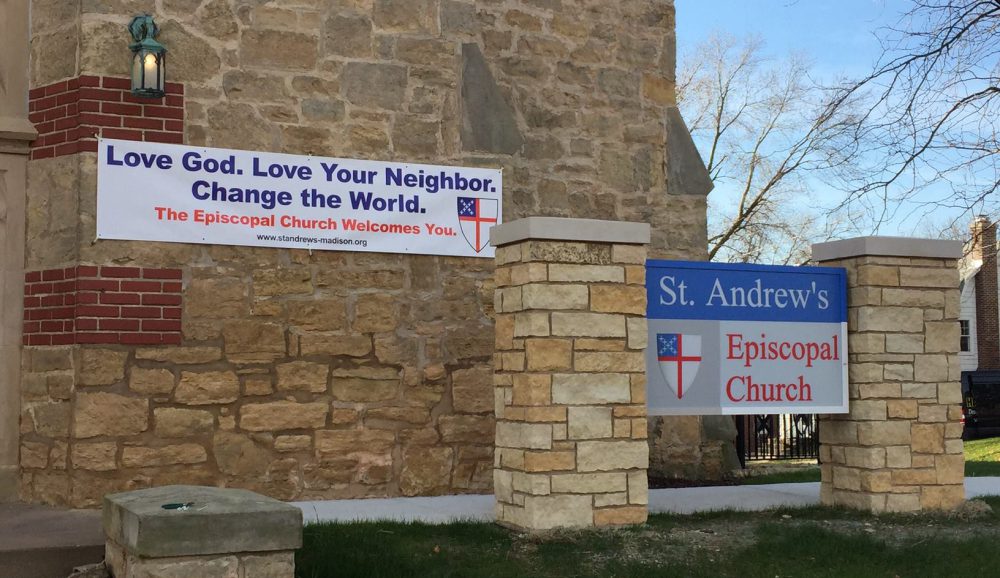
The Blessing of Same Sex Relationships in the Diocese of Milwaukee: An Update

The Clergy of the Diocese met on Thursday to hear Bishop MIller’s decision on the use of the trial rite for the blessing of same sex relationships that were approved at last summer’s General Convention.

It was a difficult day.  Truth was spoken.   A variety of perspectives, understandings, beliefs, and concerns were aired.  People were honest and passionate.  There were some tears shed.

Bishop MIller has decided not to authorize the blessing rite approved by General Convention.  He feels that the rite itself has serious flaws that make it unworkable.  He also has concerns about the theology of a “blessing” and the possibility that this rite would create an injustice by establishing a “second tier” of relationships within the life of the church.

Prior to last year’s General Convention Bishop MIller posted a theological reflection on his blog arguing that we should not be talking about blessing same sex relationships, but should instead be talking about same sex marriage.  In that paper he outlines his concerns with the Rite and the theology that undergirds it.  You can find that paper here.

I took the rejection of the blessing rites authorized by General Convention very hard.

I have been very involved in the effort to open this sacrament to all of God’s children. I was a member of the task force assembled by the Standing Commission on Liturgy and Music in Atlanta, I worked hard to share the liturgy and the theology behind it with the poeple of this diocese, and I was a deputy to General Convention last summer when our deputation voted unanimously to approve the rites for trial use. I have engaged in this work with the faces of gay and lesbian friends whose relationships bear the fruit of the spirit and whose relationships serve the ends and purposes of marriage as described in our Book of Common Prayer ever before me. I long to be able to tell them that their church, the church they love, recognizes their relationships as a gift from God, holy, life giving, sacramental – an outward and visible sign of an inner and spiritual grace.

I am grieving for those friends and for the countless poeple I have never met who will experience this decision as a rejection. I am grieving the hurt that our church continues to perpetuate by our failure to give freely to all what has been given to us. And I am grieving my inability to change something that I believe must be changed.

And yet there is some good news coming out of Thursday’s clergy gathering.  In his letter to the Diocese Bishop MIller says”
“…. I am not authorizing the rite from A049 for use in the Diocese of Milwaukee at this time. However, I have arranged with Bishop Jeffrey Lee of the Diocese of Chicago, for clergy and couples from congregations within the Diocese of Milwaukee to go to the Diocese of Chicago to celebrate the rite, as long as they obtain Bishop Lee’s consent to such an action to take place within the bounds of that diocese. Doing so will result in no punitive or negative response whatsoever from me.  Furthermore, I stated my belief that the right to a civil marriage should be available to all people, regardless of sexual orientation and that I would support those seeking to overturn the ban on same-gender marriage in Wisconsin. I also shared that I have begun to permit partnered gay clergy to preside with the diocese, and that I am open to the potential call of any Episcopal cleric in good standing to a position here.

I am also aware that many of our clergy feel the need to offer a generous pastoral liturgical response to gay and lesbian couples. I have agreed to the formation of a task force within this diocese, comprised of people from across the spectrum on this issue, including openly gay and lesbian people living in monogamous relationships, to consider, and propose the same. At the end of the process, however, as the one given canonical authority to order the liturgical life of the diocese, the decision about the authorization of such a rite rests with me. In our polity, there can be no other way.”

You can find the full text of Bishop MIller’s letter here.

While these concessions do not represent the full and unconditional inclusion of Gay and Lesbian people in the life of our Diocese they do represent change and movement in the right direction.  Opening the doors of the Diocese of Milwaukee to Gay and Lesbian Clergy, arranging for clergy resident in this diocese to preside using the approved blessing rites an adjacent diocese, and the formation of a task force to propose a way to make a “generous pastoral response” to our gay and lesbian brothers and sisters and to the parishes and clergy who love them, represent significant change in the Diocese of Milwaukee.  The Spirit is moving and there is light on the horizon.

I am hoping to serve on the task force that will work to develop a “generous pastoral response” that will meet the Bishop’s approval.  And I pledge to you that I will continue to work towards full inclusion of all of God’s children in the life, ministry and sacraments of the church, continuing to proclaim that God’s love for us knows no boundaries because in Christ, “There is no longer Jew or Greek, there is no longer slave or free, there is no longer male and female, (there is no longer LGBTQ or straight); for all of you are one in Christ Jesus”  (Galatians 3:28).

Please, if this conversation has raised questions or concerns for you, do not hesitate to be in touch with me.  I am always available to listen, to talk, to pray, and to explore the ways that t holy Spirit is calling us forward to a more perfect understanding of God’s dream and vision for creation.  That is the vocation to which we The Body of Christ are called and it is my joy and my privilege to do that work with you.

Peace,
Andy+