Unknown's avatar

About Andy Jones

A retired Episcopal Priest living in Madison, Wisconsin.

Ashes To Go: A Retrospective

Last week Saint Andrew’s offered the Proper Liturgy for Ash Wednesday with Eucharist and Imposition of Ashes at 7:00 am noon and 7:00 pm.  All three services were profoundly powerful.  We began the season of Lent by confessing that we have hurt the one who loves us unconditionally and beyond measure.  We acknowledged that we are broken, and with broken hearts we began the work of reconciliation, promising to make amends with the one whom we love above all others; not in fear, not in shame, but with the hope and confidence that nothing we can ever do will separate us from the love of God, and with the desperate longing for reconciliation and the strength to love more fully.

So while the Gospel reading for Ash Wednesday urges us to “shut the door and pray to our father who is in secret,” I suggested that people leave the church with the ashes still clinging to their foreheads.  In our passage from the Gospel of Luke Jesus warns us not to pray like the “hypocrites.”   He warns us against public displays of piety that are designed to increase our rank or status in the community, that beg others to see us as “better than the rest,” that are meant not to serve God and our community but which serve us instead.  What would it be like, I asked, if we wore our ashes through the day and whenever someone pointed out the smudge on our forehead we replied that we are wearing these ashes because we are in love; because we have not been faithful to the one that we love, the one that loves us beyond measure; because we know that the one we love will never abandon us; and because we are working to love in the way that we ourselves have been loved?  Can you imagine how powerful that would be?  If we were to do that… the whole world might be…

“put in mind of the message of pardon and absolution set forth in the Gospel of our Savior, and the need of which all Christians continually have to renew their repentance and faith” (BCP page 265 – The Invitation to the Observance of a Holy Lent).

Grace, love, betrayal, repentance, forgiveness, a love that can never be broken…  It is a story of gift upon gift, a transformative story that has the power to change lives!  Imagine what might happen if word got out!

Well word did get out!  After our 7:00 am and noon services, still dressed in my alb and chasuble, I took some ashes and headed out to two very busy street corners a couple of blocks from the church.

From 8:30 – 9:30 I stood on the corner of Regent and Monroe Streets.  About 15 people stopped and asked for ashes.  Included in that number were two members of Saint Andrew’s who came by with their kids in the car and a cup of coffee for the Priest.  There were several people who were surprised and delighted to find us, saying that their work schedule was going to prevent their attending services at their own community, and who were grateful for the opportunity to participate in something that was very important to them.  While we were standing there a man approached us and said that he had five passengers in a paratransit van, none of whom were able to get out of the car without assistance.  I walked up the block, climbed into the van and administered ashes to five very grateful people.  The most moving experience during that hour was the woman who pulled over and parked her car, got out and told me that her mother had died that weekend, that she was running around making arrangements for the funeral and didn’t think she would be able to get to church that day.  I asked her mother’s name, she told me and began to cry, we prayed, and she received ashes.  It was a very powerful and moving moment.

After the noon service I stood on the plaza next to Trader Joe’s on Monroe Street.  A young mother from our parish brought her three year old to see me saying that she wanted to introduce her daughter to Ash Wednesday but knew that the full liturgy would be too long for her.   Meeting me “on the go” was a perfect solution.  Another parishioner who lives nearby walked over with a neighbor, a young woman who is in the middle of chemotherapy, to pray and receive ashes.  There were several elderly women who had read about us in the paper and had their children or friends bring them to the curbside where we chatted and prayed before administering the ashes.  I was trying to keep count but I lost track after a while.  I am sure that there were well over 30 people who participated during that hour.  I packed up my little table and brochures, my sign and my ashes, and still wearing my chasuble, got in the car and returned to the church sure that we had offered the Gospel to people there on the streets of Madison.


Some reflections:

I believe that most, if not all, of the people who received ashes from me last Wednesday were familiar with the tradition.  I didn’t ask them, and there was no sense that they had to be a member of a faith community to participate, but almost all of them told me that scheduling issues were going to keep them from participating in their own church’s observation of Ash Wednesday.

There were a couple of people who told me that they were without a spiritual home, some had just moved to Madison, others were struggling with the tradition they had grown up with.  They were all very grateful and excited to find a church that was reaching out to them.

I was asked by a reporter from the State Journal if we were demeaning the traditions of the church by offering ashes on street corners.  I told him, and he observed for himself, how quickly people seemed to move into “sacred space” as I said the familiar words and made the sign of the cross on their foreheads.  I pointed out that we were doing this with great reverence, that it was not a parody of slapstick and I challenged the idea that this practice was diminishing the tradition and ritual of the church in any way.

He went on to tell me that when he goes to church he likes to sit in the quiet, to step away from the busy ness that is his life, and to spend time in reflection and prayer.  He wondered if we were just accommodating a pace of life that doesn’t make room for the sacred and the holy.  I pointed out, and he observed that there were people who walked past me on that street corner who refused to make eye contact with me.  We believe that the traditions and rites of the church are transformative, that they have great value, that they can change people’s lives and even change the world.  If we sequester those traditions and rites inside the walls of the church we will have denied them to the people who would never walk through our doors.  Perhaps by meeting people where they are we will  give them a taste of what we have to offer, give them a sense that we are not the caricature of Christianity that gets all of the airtime in the media, and they might one day risk crossing our threshold.  I wasn’t sure that he was convinced when we parted so I was very pleased that the article he wrote proclaimed that the message of Ash Wednesday is still relevant, even on the street.


In Conclusion:

Ashes To Go has been “happening” around the church for several years.  This was the first time that I have participated.  As an introvert I was more than a little out of my comfort zone but I would definitely do this again!

Our ashes are a sign that we are in love.  They are a sign that we have not been faithful to the one that we love, the one that loves us beyond measure.  We dare to wear them because we know that the one we love will never abandon us and because we are working to love in the way that we ourselves have been loved.  We wear them because we know that no matter how far from home, no matter how lost we are, our God is always reaching out to us, offering us the opportunity to turn, to come home, to live in the light of God’s love.

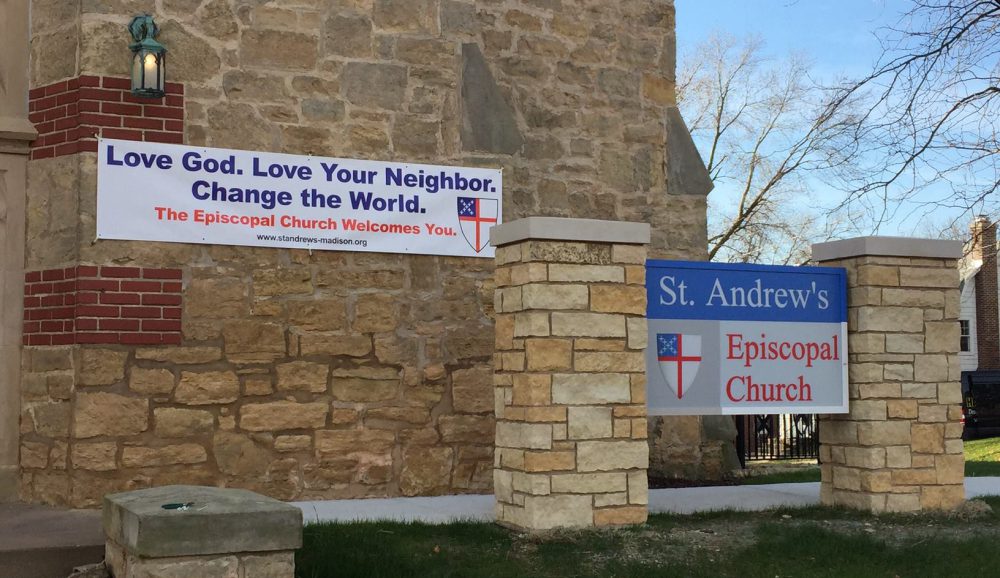
Ashes To Go are a sign to the world that the Episcopal Church welcomes you, no matter how far from home, no matter how lost you are, we are ready to walk with you, to hold you up, to share our deepest and most powerful experiences with you, so that you too can live in this light that is a gift beyond measure.


A Sermon for the Fourth Sunday after the Epiphany – An audio file of Sunday’s sermon at Saint Andrew’s

I am trying something new today, uploading an audio file of this week’s sermon.  A transcript will be posted soon.

This sermon is based on the readings for the Fourth Sunday after the Epiphany year C in the Revised Common Lectionary.

Those readings can be found here.

Here is the sermon.  Clicking on this link will open a new tab in your browser where the file will play.

Sermon 2-3-2013

And There’s Nothing You Can Do About It: A Sermon for the Third Sunday of Epiphany

This sermon is based on the readings for the Third Sunday in Epiphany, Year C, in the Revised Common Lectionary.

You can find those readings here.

It’s easy to get confused.  We miss the first episode of the new season, or even just last week’s installment, and we turn on the television at eight o’clock on Sunday night and we don’t have any idea what is going on with our favorite characters in the show.  The same thing can happen here in church.  We open the bible and read a short passage and, unless we know what is happening in the greater narrative, we aren’t sure what is really going on or how to interpret it.  This morning is a case in point.  So it’s going to be very important for us to set the stage a little before we dive into today’s Gospel reading from Luke.

Let’s back up a little.  Jesus is baptized by John in the River Jordan, “the heaven was opened, and the Holy Spirit descended upon him in bodily form like a dove.  And a voice came from heaven, ‘You are my Son, the Beloved; with you I am well pleased’” (Luke 3:21,22).

Then Jesus is led by the spirit in the wilderness where, with his identity firmly established, he makes some decisions about how he will live out his vocation and mission as the Son of God.  Jesus declines to win over “followers” by turning stones into bread and buying their allegiance by meeting their physical and bodily needs.   He declines to gather people to his cause through the use of might and force.  And he declines to make our belief in him a matter of science by throwing himself from the pinnacle of the temple so that the angles will bear him up keeping him from dashing his foot against a stone, thereby proving who he is.  Jesus chooses to offer us the opportunity to Love, something that cannot be bought forced, or proven.  So the devil departs from him until an opportune time (Luke 4:1-12).

That brings us to today’s Gospel…  “Then Jesus, filled with the power of the Spirit, returned to Galilee, and a report about him spread through all the surrounding country”  (Luke 4:14).  Jesus begins to preach and teach and then he goes home.  He goes to the synagogue, stand up to read, and when the scroll is handed to him he reads them a beloved passage from the prophet Isaiah.  He says,  “I have been ‘anointed,’ I have been ‘sent,’ to proclaim good news to the poor and release to the captives, to give sight to the blind, and to let the oppressed go free.”  Jesus chooses this passage of scripture to tell us that something new is happening; that God is breaking into the world in a powerful and transformative way: and that this is the day, the moment for which we have all longed.

Now if this was Matthew’s Gospel we might have heard this story a little differently.  Matthew had a tendency to spiritualize Jesus’ words, to make them less earthy and present.  While Luke’s version of the Beatitudes say:

“Blessed are you who are poor, for yours is the kingdom of God” (Luke 6:20a).

Matthew’s version of the Beatitudes say:

“Blessed are the poor in spirit, for theirs is the kingdom of heaven” (Matthew 5:3).

Luke has a particular passion for the poor, the marginalized, for women in his society.  Luke is concerned with the people on the periphery.  Luke says blessed are you who are hungry “now,” blessed are you who weep “now,” for you shall be filled and laugh.   When Jesus, quoting Isaiah, says “I have been anointed,” and “I have been sent,” and “Today this scripture has been fulfilled in your hearing” he is not talking about someday, in the future, in the next life.  He is making a pragmatic, earthly statement about the impact that his presence will have on us today.

Here in his “inaugural address” Jesus is laying out his agenda for the next three years of his ministry and he is doing it in Nazareth, the place where he was brought up.

Now, even in your hometown, this would be a pretty aggressive and ambitious agenda for an inaugural address, even if you had been elected with a huge mandate from the people.  It would take someone with a lot of influence, the ability to work the halls of power…  In first century Palestine it would have taken a king to pull all of that off!

But that’s not the path that Jesus chose when he went into the wilderness to decide his path forward.  Time and again we see Jesus reject and avoid the kind of power it would take to make the kind of changes that would bring good news to the poor, release the captives, give sight to the blind, and free the oppressed.  Jesus refused in the wilderness to accept that kind of power and, in the end, he chooses instead to allow us to nail him to a tree.

So how does this work?  Jesus is describing his vocation and mission as being about how we live together in this world, how we relate to one another, how we relate to God, how we relate to the world around us and yet he declines, again and again, to assume the power he needs to bring that mission to fruition.

Let’s go back that decision Jesus made in the wilderness just before our reading for the morning began.  Love cannot be bought, forced, or proven.  “If you can’t say ‘no,’ it isn’t love.”  Jesus chose allow us to say “no” and he allowed us to nail him to a tree, to exhibit and manifest the very worst that we are capable of, to erase all doubt from our minds.  If you will allow me to play with Paul’s words just a little:

“For I am convinced that neither death nor life, nor angels, nor rulers, nor things present, nor things to come, nor powers, nor height , nor depth nor anything else in all creation…”

even experiencing the stark reality of all that we are capable of at our very worst

“…will be able to separate us from the love of God in Christ Jesus our Lord” (Romans 8:38,39).

So what does this have to do with the here and now, with the way that we relate to one another, the way that we relate to God and the world around us?  Everything!  Jesus came to show us that nothing can separate us from God’s love and Grace.  Our salvation, our place in God’s embrace is secured!  We are saved!  As my friend Tom Ferguson, former chaplain at Saint Francis House says, “God loves you and there’s nothing you can do about it.”

So just take a moment and let that sink in.  Let it wash over you and see how it feels.  I know.  It’s hard!  We would almost prefer to think that we can somehow earn, deserve, or merit out place at the banquet table.  To accept it as a gift is to give up control and power.  But we say it all the time… maybe in the deep dark recesses of our ego we don’t really believe it… but we say it is by God’s grace that we are forgiven, redeemed, and saved.

So do you have it?  Are you feeling it?  Good!  Now that we have been relieved of the burden of our own salvation, now that we have given that responsibility to the only one who can actually effect it… let’s get back to that ambitious agenda that Jesus laid out in his inaugural address.

The poor will hear the good news, the captives will be released, the blind will see and the oppressed set free when we are transformed by the truth that Jesus came to share with us.  When we know and proclaim that we have all been saved, that God’s grace and love extends to all of creation, that we are beloved of God before we can even begin to respond… we will be the ones proclaiming that good news, releasing the captives, giving sight to the blind, and setting the oppressed free.  It is the good news of Christ’s ongoing presence among us, God’s refusal to abandon us even when we are at our absolute worst, that will transform us and, in turn, empower and enable us to transform the world.

I don’t know if you’ve seen it but there has been a lot of chatter in the media, polls results released, studies done, all of which point to the fastest growing faith denomination in the country… the “nones.”  I said that at the early service today and someone, on their way out, told me they thought I was talking about a rush of people joining convents.  Nope.  N o n e s are people who claim that they have no religious affiliation at all.  They get to that question in the poll where it asks them to check their religious affiliation and the check the box next to the word “none.”  Somehow a growing segment of our population believes that what we have to say, what we have to offer, the Good News that we proclaim isn’t important, doesn’t matter, is irrelevant to their lives.

That just doesn’t make sense to me!  How can the truth that God loves you, that God has always loved you, that God will never, no matter what happens or what you do stop loving you be irrelevant to someone’s life?  How can the proclamation that we are all included in the grace and light of God’s love be of no matter?  How can the transformation that all of this makes possible be unimportant?  It can’t!

So here’s what I think…  If the “nones” are the fastest growing “faith denomination” in our nation it is because we haven’t done a good enough job telling people that they are in!  We haven’t done a good enough job telling people, and maybe it’s because we don’t even really believe it of ourselves, that God already loves them and that nothing will ever change that!  If the “nones” are the fastest growing “denomination it is because we have spent way too much time and energy worrying about whether we, and the people around us, have managed to secure our own salvation!

I hope and pray, that here in the season of Epiphany when we recollect and celebrate God made manifest in the world, that we are able to proclaim god’s presence in ourselves and in one another.  I hope that we can look one another in the eye and say, I know that I have a place at the table.  I know that you have a place at the table.  I know that all of creation will be at the table.  And, thanks be to God, there is nothing that we can do about it!

Amen

Ask not where God was. Ask instead where we were as our children were dying…

In her Christmas Letter to the Diocese of Washington DC Bishop Marianne Edgar Budde writes:

In the aftermath of the violence that unfolded at Sandy Hook Elementary School, we would be made of stone if our faith in a loving God didn’t falter. “Where was God?” we ask. “How could God let this happen?”

Yet the more compelling question isn’t where God was last Friday morning, but rather, where we were. As St. Teresa of Avila once wrote, “Christ has no body on earth but ours. Ours are the feet with which he walks, ours the hands with which he blesses, our the eyes with which looks on this world with compassion.”

And she calls us all to action”

In the days before Christmas, please write or call your congressional representatives, Senators, and President Obama. Express your grief, concerns and longing for an end to gun violence.  You don’t need to be an expert; our strength is in moral and spiritual clarity. Speak from your faith and love of children. Invite your family and friends to do the same. Here is how you can contact them: http://www.usa.gov/Contact/Elected.shtml

If you’d like to speak of specific action, there is an emerging spiritual and moral consensus that the following steps need to be taken:

1. A clear ban on all semi-automatic weapons and large rounds of ammunition

2. Tighter controls on all gun sales

3. Mental health care reform, including improved care for our most vulnerable citizens

4. A critical look at our culture’s’ glorification of violence.

This is the kind of leadership that the church and the world are looking for as we make our way through the Wilderness, the devastation, of into which we have been thrust in this season of Advent.

Please add your voice to the growing call for an end to the violence.  Demand sane gun laws that close the background check loopholes and allow people access to battlefield weapons and large capacity ammunition clips.  Demand that We begin a conversation about the realities of mental illness education people and removing the stigma that surrounds the illness and those who seek treatment.  Demand that access to mental health care be improved for all people.

The Gospel calls us to protect the poor, orphans, and widows, the cold, the hungry and the homeless.  We are called to love the Lord our God with all of our hearts, souls, mind and strength, and our neighbors as ourselves.  The Gospel calls us to action.  It is time to walk the walk.

There’s a Voice in the Wilderness Crying: It is Time to Walk the Walk!

This post is pretty close to the sermon that I preached on Sunday, December 16th.  This presentation of that sermon has benefited however from two additional days of reflection and statements by several public figures, most notably President Barak Obama.

The Word of God came to John and he began to preach, proclaiming a baptism of repentance for the forgiveness of sins and the crowds came out to be baptized.  They came to the wilderness, a desolate place that the people of Israel sometimes referred to as “the desolation.”  Why would they do that?  They had a perfectly good temple right there in Jerusalem; a temple with a long history and tradition, with mystery and ritual, with clergy in beautiful vestments, with comfortable seats…  Why would they go out into that desolate place, the “devastation” instead of to their local parish?  I think that the conversation John has with them when they arrive in that terrible spot sheds some light on their motivation.

John says to the crowds that came out to be baptized “Whoever has two coats must share with anyone who has none; and whoever has food must do likewise.”  TO the tax collectors that come out to be baptized he says, “Collect no more than the amount prescribed for you.”  To the soldiers who come he says, “Do not extort money from anyone by threats or false accusation, and be satisfied with your wages.”  John says to all of them, “Bear fruits worthy of repentance. Do not begin to say to yourselves, ‘We have Abraham as our ancestor’; for I tell you, God is able from these stones to raise up children to Abraham.”  John stands there in the River Jordan, a wild man in a wild place, and tells them all it’s not enough to talk the talk, to claim righteousness and the Kingdom of God as your inheritance and privilege.  You have to walk the walk.  You have to “bear fruits worthy of repentance” and bear witness to the truths that you claim and proclaim.   You can’t make a claim to righteous living and oppress the weak, cheat the poor, and ignore the people around you who are suffering and alone.  If you say that we are all called to love the Lord our God with all our hearts, soul, strength and mind, and our neighbor as ourselves, then you ought act as if you love the Lord your God with all your heart, mind, soul and strength and your neighbor as yourself!  the People went out to John, to the wilderness, to the devastation, because in him they were hearing something authentic, they recognized his call to integrity, and they went out to be baptized.

This past week The Episcopal Café, a web site that covers the Episcopal Church, ran a story excerpting an article entitled “Why Don’t People Come to Church?’  Here is what it said:

Why don’t people go to church?

David L. Hansen writing in The Lutheran finds out why people don’t go to church:

Ask any group in your church: “Why do people not come to worship? What keeps people away from church?” You might hear:

• “We need a better youth program.”• “We have to have a different style of worship service.”

• “We need to advertise.”

• “If only we had a nursery for young children.”

….These are the answers that church people give when they try to figure out why people don’t go to church. Friends, we could not be more wrong.

I recently spent a week using social media to “listen” to people who do not go to church — listening to their explanations for why they stay away. I didn’t argue with them. I didn’t defend the church. I just listened. And what I heard broke my heart.

The No. 1 thing that keeps people away from the church is the people who are in the church.
….

It’s not that people outside the church have low expectations of Christians. It’s the opposite. They expect us to actually live out the things we proclaim on Sunday. They expect us to love our neighbor, care for the least of these and love our enemies.

They have high expectations for us, and we have disappointed them. Instead they have been insulted, hurt and broken by us.

Programs are at the bottom of the list for why people don’t come to church.


The number one reason people don’t come to church is the people in the church!   We talk the talk pretty well.  We claim that we love the Lord our God with all of our heart soul, mind and strength and our neighbors as ourselves but people don’t see us walking the walk!  John stands there in the River Jordan and calls us to bear fruits worthy of repentance to open our doors to all people, to freely share what has been freely given to us, to stop fighting amongst ourselves, and to stop trying to second guess what Jesus said when he told us to love our neighbor, and our neighbor’s neighbor, and our neighbor’s neighbor’s neighbor as ourselves.

We are there with John, in the wilderness, that desolate place that is “the desolation” and people are watching us very closely.  We are talking the talk.  Are we prepared and willing to walk the walk?  If and when we are we will see the “whole Judean countryside and all of Jerusalem” coming to hear what we have to say about the way that God calls us to live together in God’s Kingdom .  Imagine how that might change the world!

I think that poeple are watching us particularly closely right now.  We have all been thrust into the wilderness, that desolate place, the devastation by the horrific loss of life in Newtown Connecticut last week.  We are all reeling from the news, trying to make sense of something that makes no sense at all.  The world is waiting for a word…  Do we have something to offer?  Is John the Baptizer here?

Here is some of what I have heard this week.  The Huffington Post reports that Mike Huckabee, a man who ran for President of the Unites States and who claims to represent the Christian faith and belief said this,

“We ask why there is violence in our schools, but we have systematically removed God from our schools.  Should we be so surprised that schools would become a place of carnage?” 

Bryan Fisher of the American Family Association said, ”

“We’ve kicked God out of our public school system. And I think God would say to us, ‘Hey, I’ll be glad to protect your children, but you’ve got to invite me back into your world first. I’m not going to go where I’m not wanted. I am a gentlemen.'”

And today I read that James Dobson, founder of Focus on the Family, has said,

“And a lot of these things are happening around us, and somebody is going to get mad at me for saying what I am about to say right now, but I am going to give you my honest opinion: I think we have turned our back on the scripture and on God almighty and I think he has allowed judgment to fall upon us. I think that’s what’s going on.”

No wonder the eyes of the world are turned upon us!  Here we are in the devastation and this is what we hear?  No wonder people don’t come to church!  Where is the authenticity?  Where is the integrity?  Where is John the Baptizer?

Here in the wilderness there is only one choice for us.  We have to stop looking for someone else to speak like, to act like, to be John.  We have to speak, act and be the voice in the wilderness crying!

We have to stand up to those awful voices who claim to speak for the church, who dare to claim to speak for God and share the truth.  It would be so much easier if we could explain suffering.  It would be much more comfortable if we could tie it all up in a neat package and explain why we suffer and offer a prescription to prevent it.  But we can’t.  Go back to the book of Job and read how Abraham’s descendants wrestled with the reality of suffering.  It was a mystery then and it is a mystery now.  We just don’t know.  What we do know is that God is with us in our suffering.  Even in our darkest moments, we are never alone.  And we know that God does not inflict suffering on God’s children.  It is impossible to reconcile the Cross, God’s willingness to die at our hands to show us how much God loves us, with the idea of a God who kills children to exact vengeance upon us for our sins.  When we hear people say that children died in Newtown, or Oak Creek, or Aurora because God has abandoned or rejected us we need to stand up an say that they are wrong.  The world is watching!  If we don’t walk the walk poeple aren’t going to listen to us when we try to talk the talk.  And walking the walk means speaking out against that kind of bigotry, fear mongering and hurt.  We have to stand there in that river with John and “proclaim the good news to the poeple!”

Walking the walk also means working to make sure that we never find ourselves desolated, in this wilderness again.  How many children have to die before we find the courage to demand an end to the gun violence that has become so routine that it takes an atrocity like the one we experienced last week in Newtown to bring us to our senses?  We talk the talk, claiming that we love our children.  We even claim that we love our neighbor’s and our neighbor’s neighbor’s children.  But are we walking the walk?  The seemingly endless acts of violence committed against our children speak louder than words.  We are not walking the walk.

If I had heard these words before Sunday morning I would have read them from the pulpit.  Standing here in the wilderness, devastated by what we have witnessed, I couldn’t have said it any better than this.  I am not sure that John could have either.

“We can’t tolerate this anymore. These tragedies must end. And to end them, we must change. We will be told that the causes of such violence are complex, and that is true. No single law — no set of laws can eliminate evil from the world, or prevent every senseless act of violence in our society.

But that can’t be an excuse for inaction. Surely, we can do better than this. If there is even one step we can take to save another child, or another parent, or another town, from the grief that has visited Tucson, and Aurora, and Oak Creek, and Newtown, and communities from Columbine to Blacksburg before that — then surely we have an obligation to try.”

Surely we have an obligation to try.  As people who claim to be followers of Christ, who claim to love the Lord our God and our neighbors as ourselves, we have an obligation to speak up and out, to push our leaders to engage in a conversation about gun violence and sane gun control laws.  If we don’t fight to make sure that no child, not teacher, no parent ever finds themself in this particular wilderness again then we really are just another brood of vipers standing on the sidelines looking for affirmation and justification from those who have the courage to speak with authenticity and integrity.

Surprised by Christmas

In the past two weeks several people have asked me about the season of Advent.  Why do we wait to sing Christmas Carols?  Why don’t we decorate the church for Christmas at the beginning of December?

The following is a reflection on the season of Advent that I wrote in 2004.  This reflection also appeared as the cover article for the Saint Andrews Episcopal Church newsletter, The Crossroads, in December of 2007.  I hope that you find this useful as we wait together for the Miracle of Christmas.


Advent can be a difficult season of the Church year to understand and to keep.  The world around us is buzzing with excitement, catalogs arrive in the mail every day, carols blare from the speakers in the malls, and everyone is caught up in the excitement of Christmas.  But in church on the first Sunday of Advent, the weekend after Thanksgiving when the stores will be open before the Churches on Sunday morning, we will not sing carols.  In fact we will not sing carols in church until Christmas Eve and while the rest of the world is caught up in a frenzy of consumerism indulgence we will be told to wait, to pray to listen and to prepare.

Why should we wait?  We know what is coming!  We are preparing to celebrate the birth of Jesus Christ, the Messiah, the Son of God!  O come, O come Emanuel?  He has already come and we know that God Is With Us!   So why should we wait to begin the celebration?  Why should we listen?  We already know how he story ends don’t we?

Well the people of Israel though that they knew how the story would end too.  They were waiting for a Messiah King to deliver them from the hands of Rome, to restore the throne of David and return the kingdom to its former glory.  Boy did they get a surprise!  The Messiah who came was not the God that they had expected.  The Messiah who came was not he God that they had planned for.  The Messiah who came was not the God that they had imagined.

It is in this first coming of God among us that we find the reason and the model for Advent.  The people of Israel did not get the God that they had imagined but they got the God that they needed.  The people of Israel knew the shortcoming of idols.  An idol, conceived by human imagination, fashioned from our own self understanding, and created by human hands cannot be God.  God must be beyond our ability to imagine, fashion or create because God must speak to us from beyond our selves.

We turn to God or answers to ultimate questions.  What is my purpose in life?  Why am I here?  Am I worthwhile?  Can I be forgiven for my sins?  Am I, despite all of the things that I am and am not, loveable, worth loving?  Any answers to these questions that come from within us do nothing to answer the questions for us.   That word of purpose, that word of meaning, of affirmation and of absolution must come from beyond ourselves, from outside of who and what we are.  They must come from a God that is not us and not of us.  If the people of Israel had gotten the God that they imagined they would not have gotten God.  They would have gotten an idol of their own making.

Why do we wait in Advent?  Why don’t we rush to celebrate the coming of the God who has come and continues to come?  It is because we need to make room to be surprised by that coming.  Who will God be, what will God be when God comes to me?  If I do not wait to see who God will be then perhaps I am assuming that God will be who I expect, imagine, and in some ways create for myself.  If we are unwilling to be surprised the God who comes to us can become an idol, carved in stone, unchanging and cold, unable to speak to us from outside of ourselves because we already know the words that are going to be spoken.  The God we create for ourselves is no God at all.

Who will God be?  Advent tells us to wait, to pray and to prepare, for we may be surprised by the advent of God among us.  Who knows?  To crush the arrogance of our assumptions and to turn the expectations of the world upside down, to be a voice that can speak a word of purpose, affirmation and absolution God may even come as a defenseless baby, born in poverty in a stable in a town lit only by the light of the star that calls us to seek him.

Not To Be Served But To Serve

It was one of those moments that preachers hope for; that flash of insight, the sudden revelation, the line that connects all of the dots that have been dancing around in your head.  And it was one of those moments that preachers dread.  It came at 11:00 on a Saturday night as I was struggling with a sinus infection and trying to fall asleep.  You look for these moments on Thursday morning, when there is still plenty of time to pull it all together. Saturday night is really pushing it.

I record my sermons now so that I can transcribe them and post them to my blog, so I know that I didn’t do a great job of incorporating this last minute insight into the sermons that I preached this past Sunday.  It wasn’t until after I was home from the doctor on Monday, antibiotics on board and neti pot in hand, that I felt like I was doing this justice.  So, with apologies to all of you who sat through the drafting process on Sunday, here is the Sermon that I would have liked to have preached!

This Sermon is based on the Gospel reading for Proper 24 in Year B of the Revised Common Lectionary.

You can find that text here.

All week long I have been wrestling with James, John and the rest of the disciples.  How could they be so blind?  How can they not see?  Why don’t they understand what Jesus is saying to them?  This is, after all, the third time that he has told them that he was going to be handed over to the authorities, crucified, die, and on the third day rise again.  How many times does he have to say it before they catch on?  What does he have to do to make them see?

It’s hard to watch.  Here he is telling them who he really is and what is going to happen to him and what happens?  James and John come to him, like two little children, and try to trick him into making them a promise.  “Teacher, we want to you to do whatever we ask of you.”  It seems so surreal!  Now granted, we have a little bit of an advantage over James and John.  We know the end of the story.  We know that when Jesus asks if they can rink from the same cup as him he is talking about his suffering on the cross.  And we know that the baptism that he is referring to is his passing through death into life.  The Disciples haven’t experienced Jesus’ resurrection, his ongoing presence among us but Jesus has told them three times.  Shouldn’t they be getting the idea by now?

All week long I wrestled with this dimwitted bunch of followers, trying to figure out how to make their story, their lack of understanding, their lack of, ok…  if we want to cut them a little slack… their lack of experience and historical perspective, with regard to Jesus’ vocation and mission relevant to us today?  We know how the story ends.  In fact, Mark told us right at the very beginning of his Gospel who Jesus is, “The beginning of the Good News of Jesus Christ, the Son of God.”  There’s the rub.  The preacher is supposed to help us all understand how this story about people and events some two thousand years ago is actually about us, is actually our story?   How does the story of the Disciples lack of understanding become our story?  It was 11:00 on Saturday night when it finally hit me.  I had been focusing on the wrong part of the story.  I was focusing on the set up and not the punch line.

The first time that Jesus tells the Disciples that he is going to die Peter begins to rebuke him and Jesus says, “Get behind me Satan.  For you are setting your mind not on divine things but on human things.”  The second time that he tells them that he is going to die the Disciples get into an argument on the road about which of them is the greatest.  Now that he is told them for a third time James and John come and ask to be seated at his right and left hand in his “glory!”  I don’t think that the Disciples were stupid.  I think that they were afraid!

They had their minds on “human things…” the things of the flesh, this stuff that we are made of, this stuff that wants its own way, that is always looking out for itself first, this stuff that, even when we are operating out of the best of intentions wants to be recognized, affirmed, and held up.  James, John and the rest of the Disciples weren’t stupid.  They heard what Jesus was saying and it frightened them.  They were looking for an earthly “glory,” an earthly kingdom where their positions would accrue some significant benefits.   That’s not what Jesus was offering them.  Jesus has told them three times that he is going to suffer at the hands of that earthly kingdom, that he is going to die on a cross, and that he is going to be raised again.  In some ways this passage is a reiteration of that theme.  As it turns out, that reiteration of the theme isn’t the point.  It is the set up.  The real point, the punch line is the last line of today’s Gospel:  “…whoever wishes to become great among you must be your servant, and whoever wishes to be first among you must be slave of all. For the Son of Man came not to be served but to serve, and to give his life a ransom for many.”

A servant?  Slave of all?  Following in Jesus’ footsteps, participating in his kingdom means serving others and not being served?  James, John and the rest of the Disciples found what Jesus was saying to be so abhorrent that they were trying to remake the kingdom in their image.  They were trying to shift it back to the model that they were familiar with.  They would have preferred a kingdom of “glory” where their place in the hierarchy assured them of status, rank, privilege and power.  They weren’t stupid.  They were fighting against the model that Jesus was proclaiming, and they were fighting with all they were worth.

I told you that all of this started to unfold in my head at 11:00 on Saturday night.  I am going to admit to you now that this isn’t the first time that this has happened to me.  I won’t say how exactly how many times it has happened, but it has happened more than once.  Usually I am pretty good at synthesizing the new idea, incorporating the inspiration, weaving in sudden revelation in a way that allows me to go back to sleep.  That wasn’t what happened this time.  The idea that the Disciples were trying to remake the Kingdom of God into an earthly kingdom was troubling enough that it kept me awake for most of the night.

We tell these stories, we stand here in church on Sunday mornings and we “proclaim” the Word of God as our own story. We tell these stories because they help us to know and understand the God who creates, redeems, and sustains us.  We also tell these stories because they reveal deep truths about who we are, about the people God created us to be, and about the ways that we have fallen short of God’s dream for us.  So this story about James and John is a story about us.  This story of the Disciples wanting something other than what Jesus was offering is about us.  This story of the Disciples trying to twist God’s vision for their lives into something they wanted…  tells us something about ourselves.  This story is our story and we tell it to remind ourselves that we are called to sacrificial living and that we are called not to be served but to serve.

I may get myself into hot water here, it wouldn’t be the first time, but I found this to be very troubling and with your permission I am going to trouble you.

I wonder what Jesus would say about the ways that we, his Disciples, have built and structured his church?  I wonder what he would say about the ways we fight with one another over who is in and who is out.  I wonder what he would say about our need to manage, control, and “protect” the gifts that he has given us.

I am troubled by the possibility that we have created the church to our own ends in an effort not to serve but to be served.

We need some structure.  We need some order.  We need a framework that will allow us to explore our scripture, our tradition and our experience of God and the world.  We need a common language and some common understanding about the ways that we will be in relationship to and with one another.

But when that structure, order, framework and language cease to be our “means” and becomes our “end,” when we use it as an excuse to point at people and treat them as “other…” excluding them from full inclusion and participation in the church and its sacraments, this Gospel passage calls us out and asks us who is being served?  Are we serving in the way that Christ calls us to serve, becoming the servant and slave of all, or are we seeking to preserve our position, to secure at place at Jesus’ right and left hand so that we might be seen in the light of his glory?

This summer at General Convention, at the first gathering of the movement called The Acts 8 Moment, we were asked to finish the phrase, “I dream of a church…”  I sat and listened to people stand at the microphone and respond to that prompt but couldn’t quite get find the words… or maybe it was the courage that I couldn’t find, to express what I was thinking.  I had it the next morning though…

I dream of a church where we have the courage to give ourselves away.

I dream of a church that has the courage to stop being defensive, to stop trying to protect God as if God were somehow vulnerable and at risk of becoming dirty by association with some of us.  I dream of a church that is ready to offer itself on the cross, a ransom for many and to shine God’s light and love into the world.  I dream of a church where we can stop looking for reasons and ways to keep people out and begin to look earnestly for ways to fling wide the doors and bring them in.

I dream of a church that seeks not to be served but to serve.

Amen.

In Just Five Minutes!

This reflection is the cover article of the October edition of Crossroads, the monthly newsletter of Saint Andrew’s Episcopal Church.  You will find that newsletter on our web site at: http://www.standrews-madison.org/the-crossroads

It’s hard for me to believe that it is September already!  And by the time that you all read this it may well be October…  Where did the summer go?  I was talking to someone the other day, expressing that sentiment and they told me that they felt like they had not yet had a summer.  The school  year has started, we are back at work, the appointments and the commitments have ratcheted back up, and here we are, on the treadmill, pushing into a headwind once again…

That’s where I was the other day as I went blazing through my day, doing things I love to do but feeling overwhelmed and out of breath.  What to do next?  Which item on my lengthy list should I attempt to check off in the few minutes that I had between the bolded items on my calendar?  I only had about five minutes.

It’s easy to get sucked into the whirlwind and spin through the day, doing everything on our list, trying not to let anyone down, working to keep everyone happy, their expectations met, their work flow uninterrupted by our failure to produce according to the timeline we have imposed upon ourselves.  It’s all so important.  It would be wrong to stop, even for a moment…

Or would it?  I found myself in just this place earlier this week.  There was too much to do.  It wasn’t all going to get done in the time available.  I couldn’t see a way out.  And so out of exhaustion and despair I sat down.  I was on my way through the church, heading for my car, going as fast as I could and I stopped and sat.

It is so easy to forget.  It is so easy to relegate the thing that we most need to the bottom of our to do list. Maybe that’s because our culture doesn’t see it as productive.  Maybe it’s because it feels like we are cheating, taking away from the time available to accomplish the “real” work of the day.  It is so easy to forget that in just five minutes we can find ourselves in a place where the work feels manageable, where we have less anxiety, and where we can remember that we have some control over the way we approach our “list.”

I sat in my chair in the church and took some deep breaths.  I tried to relax by shoulder and neck.  I place my feet squarely on the floor and moved my spine in to a neutral posture.  I took a few more deep breaths.  And I began to pray.

Attention and intention.  If we take a few minutes to pay attention to our bodies, to direct our intention to that moment of sacred space that lies within us, to find ourselves in the presence of God we can find ourselves renewed, refreshed, able to see things more clearly.  We may even discover that our anxiety is without real merit or cause, that we do have the time and the energy to accomplish the things on our list.  We may even come to remember that we have chosen the work we are engaged in and that we are doing it, and doing it well, fulfills us and brings us joy.

Ok.  Maybe I just went over the top a little…  But if the tings that we are doing, that are taking up all of our time, that are causing us to rush through your day, anxious and exhausted are not, at the core, things that give us joy and fulfillment, then maybe we need to look for other things to do!  There are things that we “have” to do, things that are required of us, perhaps because of choices that we made long ago.  There are things that we cannot jettison just because we don’t love to do them any more.  But there have to be things in our lives that meet us where we are, that nourish and sustain who and what we are.   We need to have those moments of “vocation” that help to keep us balanced and healthy.  We need to focus our attention and our intention on pursuits and in ways that fulfill us and make us whole.

In just five minutes?  Nope probably not.  But those five minutes are a start.  We can’t begin to understand the ways that we are being called to fulfillment and wholeness in one five minute pause, one five minute breath, one five minute prayer.  But if we do it often enough, and refuse to let the anxiety that the unrelenting pressures and pace of our lives breeds deep within us push our real hopes, dreams, and longings to the bottom of our list we might begin to see the light at the end of the tunnel.  We might even discover that there are lights all around us that we hadn’t taken the time to notice.  We might even realize that we have a light within us that will sustain and light the path as we journey on together!

I have several “favorite” prayers that I say when I remember to focus my attention and intention for those precious five minutes.  One of them is psalm 63:1-8.  Take another five minutes and look for it.  Speak the words softly as you read it.  Read it more than once and let your attention, your intention turn inward as you relax your body and breathe.  Then let your attention and intention turn outward to God, and feel yourself come home.

Peace,

Andy+

Psalm  63 Deus, Deus meus

1   O God, you are my God; eagerly I seek you; *

             my soul thirsts for you, my flesh faints for you,

             as in a barren and dry land where there is no water.

 2   Therefore I have gazed upon you in your holy place, *

             that I might behold your power and your glory.

 3   For your loving-kindness is better than life itself; *

              my lips shall give you praise.

 4   So will I bless you as long as I live *

             and lift up my hands in your Name.

 5   My soul is content, as with marrow and fatness, *

            and my mouth praises you with joyful lips,

 6   When I remember you upon my bed, *

            and meditate on you in the night watches.

 7   For you have been my helper, *

            and under the shadow of your wings I will rejoice.

 8   My soul clings to you; *

            your right hand holds me fast.

Give me the head of John the Baptist! A sermon for July 15, 2012

The Very Rev. Andy Jones

July 15, 2012

This Sermon is based on the readings for Proper 10 Year B in the Revised Common Lectionary.  You will find those readings here.

This story is full of graphic and sensual images.  I would imagine that, thanks to multiple artists, playwrights and composers, none of us in this room has any difficulty conjuring up this scene.  A dimly lit space, stone pillars supporting an ornately carved ceiling, powerful people reclining on richly embroidered cushions while women in “exotic” dress move in and out serving platters of spicy food and drink.  There are open braziers in the corners and the smell of smoke and incense fill the room.

Then the music changes, a young girl enters the room, and she begins to dance.  The dance starts out slowly and then gains momentum and power.  The room is transfixed.  All eyes are upon her.  No one even tries to disguise his or her stares.  She has them all in the palm of her hand. And then she turns her gaze upon the king.

We jump now to a cell where John the Baptist has been imprisoned.  The guards storm in and before he can begin to defend himself they pin him to the floor and swing a sword.

The banquet hall falls silent as a platter is carried in and presented to the girl; a platter bearing the head of John the Baptist.

A visual, sensual and graphic story that comes easily to mind, complete with special effects and a soundtrack.  Mark, our Gospel writer, is a master of his craft and in this passage he has constructed a true work of art.  And yet all of the details, the sights, sounds, smells, that rush to mind when we hear this story can be problematic.  They can distract us from the real point of this story; a point that would be easy to miss unless we know a little history.

The Herod of our story is Herod Antipas, the son of Herod the Great.  It was Herod the Great who ordered the slaughter of the innocents when the Magi told him that a King had been born to the People of Israel.  This same Herod the Great had two of his sons executed in order to secure his throne as King of Judea.  Another of sons was convicted of trying to poison him.  At this point, with three older brothers removed from the line of succession, Herod Antipas, who appears in our gospel reading this morning, became heir to the throne.  But on his deathbed, in the last days of his illness, Herod the Great revised his will and divided the kingdom between Herod Antipas and two of his remaining brothers.  The three of them to their case to Rome, and despite an early disposition towards Herod’s argument of sole succession, in the end he inherited only a small portion of what he thought would be his.

In a family like his, in a time where accession to power happens through the blade of a knife, a poisoned cup, the clash of armed men, Herod’s hold on his rule must have felt tenuous and insecure.  Everyone in that room with him was a potential threat, a would be assassin, coveting his throne, status, and power.

Into this highly charged setting comes a girl, his wife’s daughter, who beguiles everyone in the room and seduces Herod into an extravagant promise.  “Ask me for whatever you wish, and I will give it.” And he solemnly swore to her, “Whatever you ask me, I will give you, even half of my kingdom” (Mark 6:22b,23).  She runs to consult her mother and when she returns she says, “Oh father, I am but a child.  I would never presume to ask you for half of your kingdom.  Please, I would ask for something much less significant.  Give me the head of John the Baptizer, that evil gadfly who has been making my mother’s life miserable.  Give me his head on a platter!”

Here is the real crux of this story.  Herod has divorced his own wife and married the wife of his brother while his brother is yet alive.  John has been condemning Herod in public, saying that it is not lawful for him to have his brother’s wife.  The wife, Herodias, has been asking Herod to have John killed.  But Herod, until now, has refused and has protected John.  John’s words perplex and challenge him but the Gospel tells us, he thought John a Holy and Righteous man and he liked to listen to his words.  He must have recognized the truth in what John was saying, even if it did make him uncomfortable and make his wife angry.  But now Herod was in real trouble.

I am sure that when Herod made his promise to his daughter the crowd sucked in their breath.  This was an impetuous, even foolish promise.  What if she did ask for half the kingdom?  Would Herod make good on his vow?  When she came back into the room and told them that all she wanted was the head of John the Baptist the crowd probably laughed.  “Silly little girl.  She let him off too easily.  Well at least he can finally be rid of that tiresome preacher and make his wife happy.”

In this moment the trap is sprung, the set up is complete, and Herod is in a bind.  The Gospel tells us that “out of regard for his oaths and for his guests” he could not refuse the girl’s request.  If he had refused this easy way out of his predicament his guests would have seen it as a crack in his armor, a sign of weakness.  In this moment Herod is confronted with a choice.  With a little historical perspective we begin to see the true nature of that choice.  Does he continue to protect John?  Does he continue to wrestle with John’s words?  Does he stand up and defend the Truth?  Or does he do the politically expedient thing, grant the girl’s request, and protect his own power, status, and rank, and prestige?

Our Gospel passage this morning asks us the same question.  When we are offered the an opportunity to stand up for the truth; that all of creation is beloved of God, that we are all one, that the people on the fringes of our culture and society, the poor and the disabled are our brothers and sisters…  will we stand up for that truth or will we choose to protect the power we believe we have and our vain need to be in control?  Look again at our Epistle reading for the day,  “With all wisdom and insight he has made known to us the mystery of his will, according to his good pleasure that he set forth in Christ, as a plan for the fullness of time, to gather up all things in him, things in heaven and things on earth”  (Ephesians 1:8b-10).  All things!  It is God’s good pleasure that all things, all people, and all of creation, live in Him.  Do we open our hearts, our minds and our doors to the “other” and embrace them as co inheritors of God’s love and grace?  Do we proclaim the good news and insist that everyone receive the benefits of the garden?  Or do we cast our eyes aside, take the politically expedient path, defend the status quo and thereby protect our own position in the smoky filled, dimly lit room as we recline on the cushions in Herod’s palace?

This is the same Herod who later in the Gospel will send Jesus back to Pilate to be condemned.  Today Herod is confronted with the truth in John the Baptist.  In a few chapters he will be confronted by the Truth in the person of Jesus.  When we recognize the parallel in this story, when the weigh of what is happening as the girl makes her request of Herod, everything else in the room should melt away leaving the spotlight to just two people…  Herod and… Jesus.

What would have happened if Herod had encountered Jesus before he encountered John?  Of course we can’t know that but I can’t help but wonder.  Having made the decision to protect our own status, position, power and rank, once we have denied and betrayed the truth, do we become locked into a pattern of behavior that is almost impossible to escape?  When we have chosen ourselves over the truth we become complicit in the crucifixion.  “Repenting,” turning back to the truth would require us to confront and to acknowledge our past behavior.  It is a slippery slope.  If we can’t be faithful to the truth in the small things, who will we be faithful to the truth in the big things?

I said a few moments ago that when Pilate is asked for the head of John the Baptist everything else in the room should melt away.  We suddenly understand that the lavish imagery that we have constructed is a distraction, and maybe a dodge.  There is a lot more at stake here than a vengeful unfaithful wife, a conniving despot and the girl who has become their tool.  Through the artistry of his writing Mark has dragged us into the spotlight as well.  Jesus stands before us asking Herod to choose and he is asking us to choose as well.  Will we in acquiesce, make the politically expedient and safe decision, or will we risk it all by opening the door to John’s prison cell and setting the truth free to transform the world?

Peace, Andy+