This is What God’s Law, God’s Justice Look Like: A Sermon for Good Friday 2013

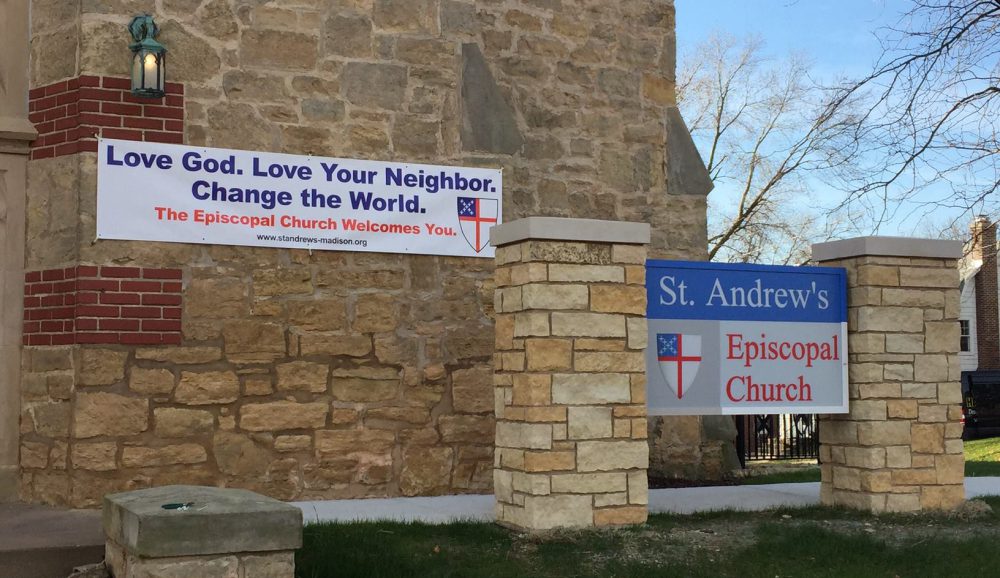
This sermon, preached at Saint Andrew’s Episcopal Church on Good Friday, March 29th 2013, is based on the readings for Good Friday in the Revised Common Lectionary.

You can find those readings here.

There is a dream that we cling to, one that we long to see come to fruition, a dream so powerful and life giving that we have pursued it for as long as we can remember.  That dream goes something like this”

“The wolf shall live with the lamb,
the leopard shall lie down with the kid,
the calf and the lion and the fatling together,
and a little child shall lead them.
The cow and the bear shall graze,
their young shall lie down together;
and the lion shall eat straw like the ox.
The nursing child shall play over the hole of the asp,
and the weaned child shall put its hand on the adder’s den.
They will not hurt or destroy
on all my holy mountain;
for the earth will be full of the knowledge of the Lord
as the waters cover the sea”
(Isaiah 11:6-9).

We long for a world where all things, all people live in harmony, where peace reigns and where God is always present.  But it is important to remember that this dream, this vision does not originate with us.

This is God’s dream, God’s vision for creation, for all of humankind and for all things.  God, the one who spoke all things into being; God, who created order from the void, the chaos; God who gives light, life, and meaning to all things; this dream, this vision of the created order comes from the one in whom we live and move and have our being.

This is God’s wish for us.

“They will not hurt or destroy
on all my holy mountain;
for the earth will be full of the knowledge of the Lord
as the waters cover the sea”

And to that end…

“from the primal elements God brought the human race, and blessed us with memory reason and skill.  God made us the rulers of creation.  But we turned against God, and betrayed God’s trust, and we turned against one another…  Again and again God called us to return.  Through prophets and sages God revealed God’s righteous law” (BCP p. 370).

But we are a stiff necked and rebellious people.  Again and again we put our own needs, our own desires ahead of God’s dream and ahead of the neighbors we have been called to love.  Our need to be “first,” to be in control leads us to exploit the people around us as we seek our own benefit, the advancement of our own agenda and needs, as we seek what looks and feels to this world like power.

“And so, in the fullness of time God sent God’s only Son, born of a woman, to fulfill God’s righteous law, to open for us the way of freedom and peace” (BCP p. 370)

But…

“He was in the world, and the world came into being through him; yet the world did not know him.  He came to what was his own and his own people did not accept him” (John 1:10,11).

And so…

“For our sake he was crucified under Pontius Pilate; he suffered death and was buried” (The Nicene Creed).

And,

“By his blood, he reconciled us.  By his wounds we are healed” (BCP p. 370).

By “his” blood he reconciled us?  By “his” wounds “we” are healed?  How can that be?  How does that make sense?

He was,

“Incarnate by the Holy Spirit, born of the virgin Mary, he lived as one of us, yet without sin.  To the poor he proclaimed the good news of salvation; to prisoners freedom; to the sorrowful joy” (BCP p. 374).

So how does this death, the death of one who bore no fault, no shame, who lived without sin, reconcile and heal us?  Why is that that we sit here today, at the foot of the cross, an instrument of torture and death – prepared to claim and venerate this moment as our own?  What sense does it make to say that this innocent man died for our sins?

We are the ones who are at fault.  We are the ones who have betrayed God’s trust and turned against God and one another.  We are the ones who should bear the consequences of our choices, out actions, our betrayals because we are the ones who have fallen into sin.

How does this make sense?  Let’s think back a little, to the Gospel of John to that well beloved passage people so often quote,

For God so loved the world that God gave his only Son, so that everyone who believes in him my not perish but have eternal life” (John 3:16).

Now push on to the next verse, one that is extremely important as we consider the cross,

“Indeed, God did not send the Son into the world to condemn the world, but in order that the world might be saved through him” (John 3:17).

Jesus came into the world, preached, taught, showed us the way to heaven and then died for us, for our sake, in order that the world might be saved.  “Saved,” that our offense, our betrayals, that our sins be forgiven that we may live in the light of God’s love.

That our sins might be forgiven…   “Forgiven” think about that word for a minute.  What does it mean to forgive?  If I have been wronged then I am entitled to justice.  I am entitled to redress, to compensation.  If I have been wronged I have a right to demand that the one who has harmed me pay a penalty for the indignity to which they have subjected me.  If I have been wronged then it is only fair that the person who has offended me suffer the same hurt that I have experienced.  We would call that fair.  We would call that justice.

To forgive means to forgo the satisfaction that is due the injured party.  To forgive is to receive the hurt, the offense, the injury without retaliating and without nurturing the wound or fostering a grudge.  To forgive is to be willing to suffer at the hands of those who have wronged us and to refuse to inflict suffering in return.  To forgive is to step out side of the “eye for an eye” approach to life and to enter instead into a mutualistic relationship that is transformative for both the offender and the offended.  To forgive is to risk being changed and to risk the possibility that the future might be different than the past.

We have fallen short of God’s vision, God’s dream for creation.  Left to our own devices we have become stuck in a cycle of violence that consumes the lamb, the kid, and the fatling; returning violence for violence, escalating and multiplying the hurt, building pain upon pain.  We have created the world in our own image and our need for power and control has loosed bears who rend and destroy, lions who devour the innocent, and adders who seem to strike without warning or mercy.

God came into this broken world, not to condemn us for our failure to live in God’s light and love; not to demand justice, compensation and ransom; but to lift us out of the darkness by putting an end to our endless cycle of rage, retribution, and violence.  God came into this world to offer us forgiveness, something that would “fulfill God’s law and to open for us the way of freedom and peace” (BCP p. 370).

To fulfill God’s law…  It doesn’t make much sense to us because God’s law and God’s justice don’t look much like ours.  But this is what God’s law, God’s justice looks like…  It looks like Jesus, God on a cross.  God’s law, God’s justice is a love so great, so deep and so wide that it is willing to suffer; to endure hurt, wrong, and betrayal.  God’s law, God’s justice is manifested in a willingness to forgive in the hope that we will choose the way of freedom and peace.  And that transformed by the gift of forgiveness that has been given to us and by the demonstration of the power of love over sin and death we will begin to live out our vocation as the church, “to restore all people to unity with God and each other in Christ” (BCP p. 855).

Amen.

This sermon is indebted to Charles Hefling and his article “Why the Cross” published March 11, 2013 in the Christian Century.  You can read his article here.

A Sermon for the Second Sunday in Lent

This sermon draws on the readings appointed for use on the Second Sunday in Lent.  It is focused on Luke 13:31-35.

You can find those readings here.

Jesus said that he longed to gather the children of Israel under his wings like a mother hen gathers her brood under her wings…  Is Jesus really talking about… chickens?

I grew up in the Maryland suburbs of Washington, DC.  I don’t know a lot about chickens.  In fact, the summer after I graduated from college, the little bit I do know about chickens only served to cement my status as a “city kid” with my co-workers in central Pennsylvania.  Having spent the whole summer trying to disabuse them of that notion I completely blew it one day when, confronted by my first flock of live chickens I stood there, fascinated, trying to figure out where the drumstick was!  A little bit of knowledge can be a dangerous thing!

I don’t know a lot about chickens but I do have a pretty good idea of what happens when a fox gets into the hen-house.  a Fox in the hen-house means panic, voices raised in terror and pain.  A fox in the hen-house means the sound of running feet, carnage, blood, death.

And when a fox enters the hen-house there is nothing a Mother Hen can do but rush to her chicks defense, sacrificing herself to save them from the jaws of the destroyer.

In today’s Gospel Jesus is responding to a group of Pharisees who have come to tell him that Herod wants him dead.  Jesus’s response to that threat is dismissive.  He doesn’t seem to be worried about his own life.  But the language that he uses, the pictures that he invokes, his cry of lament over the children of Jerusalem, tell us that there is a greater threat here than the one posed by Herod.

Jesus is pointing out that the children of Israel have a choice to make and that they have, for a long time, chosen to follow not the loving mother hen, but the fox!

Herod Antipas, the fox who wants to kill Jesus, rules Galilee as a client sate of Rome.  He is a traitor, a collaborator, a participant in the oppression of his own people.  He is also the son of Herod the “Great.”  It was Herod the “Great” who had the innocents slaughtered in an attempt to eradicate the newly born King of the Jews that the Magi were seeking.  Herod the “Great” had his own children executed for fear that they were plotting to steal his throne.  So, Herod Antipas came from a long line of people willing to do anything, including killing their own chicks and the chick of others to maintain their hold on status, rank, privilege and power.  You would think that a threat from this man would be enough to grab the attention of an itinerant preacher as he makes his way through Herod’s domain and yet even here, with his life threatened by the “fox,” Jesus keeps himself focused on a much larger concern.

When Jesus refers to himself as a mother hen, and laments the history of Jerusalem as “the city that kills the prophets and stones those who are sent to it” (Luke 13:34), we realize that the “fox” he is referring to is something bigger than Herod Antipas, first century Palestinian Jew.  Jesus is really talking about an understanding of the world and it’s power structures that stands in opposition to the vision, the dream of God for creation.  The “Fox” in this parable represents our tendency to take what we need and want, to subjugate others to our agenda, to marginalize and to ride roughshod over the poor, the weak, and anyone else who doesn’t have or can’t wield the power that we think we have and deserve.  Jesus is telling us that the “fox” is already in the hen-house and that there is a choice to be made.  Are we going to align ourselves with the fox in the hopes that we might be spared by the preservation of the status quo, that we might be allowed to continue to run our own corner of the hen-house; or are we going to cast our lot with the mother hen who has been trying for so long to gather us under her wings and shelter us from the power that would destroy us?

There is a choice to be made and, given the choice between the fox and the Mother Hen the fox might seem like a better choice.  On the surface the Fox seems more powerful and attractive.  The Fox offers perks and benefits, privilege and status, rank and recognition.  The Fox would seem better equipped to defend itself and us.  Surely we can cultivate and tame the fox’s rage and penchant for blood, using it to our own benefit.

But there is that little problem with putting your trust in the Fox.  The Fox has a tendency to sneak in when no one is looking, in the dead of the night, seeking to slake its hunger.  When we finally wake up and take stock we will see that some of us are missing, or injured, trampled into the hard scrabble of the hen-house floor by the Fox’s destructive rampage.  Once we have let the fox into the hen-house there is just no telling who might be deemed disposable, be discarded, be left out or even go missing altogether.  Yes, the fox is powerful, but in the end, no one is safe when there is a fox in the henhouse.  But here Jesus is, telling us that our hen-house is “left to you,” another way of saying “left desolate” because we have refused to shelter in the shadow of the wings of the mother hen.  Why are we so unwilling to turn our backs on the fox and cast our lot with the love of the Mother Hen?

It is a frightening thing to reject the fox.  It is even more frightening to step into the shadow of the Mother Hen’s wings because, as Jesus is pointing out when he shifts the definition of “fox” away from Herod towards a view of the systems and structures that dominate and shape our lives, the choice we make will ultimately define the way that we live together.

In an article published by the Christian Century in 1985 Barbara Brown Taylor, one of our most gifted and treasured preachers asked,

“If you have ever loved someone you could not protect, then you understand the depth of Jesus’ lament. All you can do is open your arms. You cannot make anyone walk into them. Meanwhile, this is the most vulnerable posture in the world –wings spread, breast exposed — but if you mean what you say, then this is how you stand.”

Hmmm…  one of our most gifted and treasured preachers asked?  That quote didn’t end with a question mark.  It ended with a period.  But then, the question in this morning’s story about Jesus and the Pharisees didn’t end with a question mark either.  Did it?  The question was implicit in the clear distinction between two ways of seeing, and living in the world.

Jesus is asking us to turn from the way of the fox; to stop participating in structures that oppress, crush and destroy; to recognize that the fox under whose standard we stand will not recognize our past loyalty and support but will destroy as all without regard or distinction.  Jesus is asking us to take courage from his example; to have faith in God’s love and promise; and to stand, as he did, wings spread, breast exposed, and to gather his children under our wings.  To fly at the fox in defense of the weak and the poor the widow and the orphan, the forgotten stranger, the marginalized, the other…  Jesus is asking us to gather under the shadow of his wings and to let him rescue our humanity from the hard scrabble of the hen-house floor.

Amen.

And There’s Nothing You Can Do About It: A Sermon for the Third Sunday of Epiphany

This sermon is based on the readings for the Third Sunday in Epiphany, Year C, in the Revised Common Lectionary.

You can find those readings here.

It’s easy to get confused.  We miss the first episode of the new season, or even just last week’s installment, and we turn on the television at eight o’clock on Sunday night and we don’t have any idea what is going on with our favorite characters in the show.  The same thing can happen here in church.  We open the bible and read a short passage and, unless we know what is happening in the greater narrative, we aren’t sure what is really going on or how to interpret it.  This morning is a case in point.  So it’s going to be very important for us to set the stage a little before we dive into today’s Gospel reading from Luke.

Let’s back up a little.  Jesus is baptized by John in the River Jordan, “the heaven was opened, and the Holy Spirit descended upon him in bodily form like a dove.  And a voice came from heaven, ‘You are my Son, the Beloved; with you I am well pleased’” (Luke 3:21,22).

Then Jesus is led by the spirit in the wilderness where, with his identity firmly established, he makes some decisions about how he will live out his vocation and mission as the Son of God.  Jesus declines to win over “followers” by turning stones into bread and buying their allegiance by meeting their physical and bodily needs.   He declines to gather people to his cause through the use of might and force.  And he declines to make our belief in him a matter of science by throwing himself from the pinnacle of the temple so that the angles will bear him up keeping him from dashing his foot against a stone, thereby proving who he is.  Jesus chooses to offer us the opportunity to Love, something that cannot be bought forced, or proven.  So the devil departs from him until an opportune time (Luke 4:1-12).

That brings us to today’s Gospel…  “Then Jesus, filled with the power of the Spirit, returned to Galilee, and a report about him spread through all the surrounding country”  (Luke 4:14).  Jesus begins to preach and teach and then he goes home.  He goes to the synagogue, stand up to read, and when the scroll is handed to him he reads them a beloved passage from the prophet Isaiah.  He says,  “I have been ‘anointed,’ I have been ‘sent,’ to proclaim good news to the poor and release to the captives, to give sight to the blind, and to let the oppressed go free.”  Jesus chooses this passage of scripture to tell us that something new is happening; that God is breaking into the world in a powerful and transformative way: and that this is the day, the moment for which we have all longed.

Now if this was Matthew’s Gospel we might have heard this story a little differently.  Matthew had a tendency to spiritualize Jesus’ words, to make them less earthy and present.  While Luke’s version of the Beatitudes say:

“Blessed are you who are poor, for yours is the kingdom of God” (Luke 6:20a).

Matthew’s version of the Beatitudes say:

“Blessed are the poor in spirit, for theirs is the kingdom of heaven” (Matthew 5:3).

Luke has a particular passion for the poor, the marginalized, for women in his society.  Luke is concerned with the people on the periphery.  Luke says blessed are you who are hungry “now,” blessed are you who weep “now,” for you shall be filled and laugh.   When Jesus, quoting Isaiah, says “I have been anointed,” and “I have been sent,” and “Today this scripture has been fulfilled in your hearing” he is not talking about someday, in the future, in the next life.  He is making a pragmatic, earthly statement about the impact that his presence will have on us today.

Here in his “inaugural address” Jesus is laying out his agenda for the next three years of his ministry and he is doing it in Nazareth, the place where he was brought up.

Now, even in your hometown, this would be a pretty aggressive and ambitious agenda for an inaugural address, even if you had been elected with a huge mandate from the people.  It would take someone with a lot of influence, the ability to work the halls of power…  In first century Palestine it would have taken a king to pull all of that off!

But that’s not the path that Jesus chose when he went into the wilderness to decide his path forward.  Time and again we see Jesus reject and avoid the kind of power it would take to make the kind of changes that would bring good news to the poor, release the captives, give sight to the blind, and free the oppressed.  Jesus refused in the wilderness to accept that kind of power and, in the end, he chooses instead to allow us to nail him to a tree.

So how does this work?  Jesus is describing his vocation and mission as being about how we live together in this world, how we relate to one another, how we relate to God, how we relate to the world around us and yet he declines, again and again, to assume the power he needs to bring that mission to fruition.

Let’s go back that decision Jesus made in the wilderness just before our reading for the morning began.  Love cannot be bought, forced, or proven.  “If you can’t say ‘no,’ it isn’t love.”  Jesus chose allow us to say “no” and he allowed us to nail him to a tree, to exhibit and manifest the very worst that we are capable of, to erase all doubt from our minds.  If you will allow me to play with Paul’s words just a little:

“For I am convinced that neither death nor life, nor angels, nor rulers, nor things present, nor things to come, nor powers, nor height , nor depth nor anything else in all creation…”

even experiencing the stark reality of all that we are capable of at our very worst

“…will be able to separate us from the love of God in Christ Jesus our Lord” (Romans 8:38,39).

So what does this have to do with the here and now, with the way that we relate to one another, the way that we relate to God and the world around us?  Everything!  Jesus came to show us that nothing can separate us from God’s love and Grace.  Our salvation, our place in God’s embrace is secured!  We are saved!  As my friend Tom Ferguson, former chaplain at Saint Francis House says, “God loves you and there’s nothing you can do about it.”

So just take a moment and let that sink in.  Let it wash over you and see how it feels.  I know.  It’s hard!  We would almost prefer to think that we can somehow earn, deserve, or merit out place at the banquet table.  To accept it as a gift is to give up control and power.  But we say it all the time… maybe in the deep dark recesses of our ego we don’t really believe it… but we say it is by God’s grace that we are forgiven, redeemed, and saved.

So do you have it?  Are you feeling it?  Good!  Now that we have been relieved of the burden of our own salvation, now that we have given that responsibility to the only one who can actually effect it… let’s get back to that ambitious agenda that Jesus laid out in his inaugural address.

The poor will hear the good news, the captives will be released, the blind will see and the oppressed set free when we are transformed by the truth that Jesus came to share with us.  When we know and proclaim that we have all been saved, that God’s grace and love extends to all of creation, that we are beloved of God before we can even begin to respond… we will be the ones proclaiming that good news, releasing the captives, giving sight to the blind, and setting the oppressed free.  It is the good news of Christ’s ongoing presence among us, God’s refusal to abandon us even when we are at our absolute worst, that will transform us and, in turn, empower and enable us to transform the world.

I don’t know if you’ve seen it but there has been a lot of chatter in the media, polls results released, studies done, all of which point to the fastest growing faith denomination in the country… the “nones.”  I said that at the early service today and someone, on their way out, told me they thought I was talking about a rush of people joining convents.  Nope.  N o n e s are people who claim that they have no religious affiliation at all.  They get to that question in the poll where it asks them to check their religious affiliation and the check the box next to the word “none.”  Somehow a growing segment of our population believes that what we have to say, what we have to offer, the Good News that we proclaim isn’t important, doesn’t matter, is irrelevant to their lives.

That just doesn’t make sense to me!  How can the truth that God loves you, that God has always loved you, that God will never, no matter what happens or what you do stop loving you be irrelevant to someone’s life?  How can the proclamation that we are all included in the grace and light of God’s love be of no matter?  How can the transformation that all of this makes possible be unimportant?  It can’t!

So here’s what I think…  If the “nones” are the fastest growing “faith denomination” in our nation it is because we haven’t done a good enough job telling people that they are in!  We haven’t done a good enough job telling people, and maybe it’s because we don’t even really believe it of ourselves, that God already loves them and that nothing will ever change that!  If the “nones” are the fastest growing “denomination it is because we have spent way too much time and energy worrying about whether we, and the people around us, have managed to secure our own salvation!

I hope and pray, that here in the season of Epiphany when we recollect and celebrate God made manifest in the world, that we are able to proclaim god’s presence in ourselves and in one another.  I hope that we can look one another in the eye and say, I know that I have a place at the table.  I know that you have a place at the table.  I know that all of creation will be at the table.  And, thanks be to God, there is nothing that we can do about it!

Amen

There’s a Voice in the Wilderness Crying: It is Time to Walk the Walk!

This post is pretty close to the sermon that I preached on Sunday, December 16th.  This presentation of that sermon has benefited however from two additional days of reflection and statements by several public figures, most notably President Barak Obama.

The Word of God came to John and he began to preach, proclaiming a baptism of repentance for the forgiveness of sins and the crowds came out to be baptized.  They came to the wilderness, a desolate place that the people of Israel sometimes referred to as “the desolation.”  Why would they do that?  They had a perfectly good temple right there in Jerusalem; a temple with a long history and tradition, with mystery and ritual, with clergy in beautiful vestments, with comfortable seats…  Why would they go out into that desolate place, the “devastation” instead of to their local parish?  I think that the conversation John has with them when they arrive in that terrible spot sheds some light on their motivation.

John says to the crowds that came out to be baptized “Whoever has two coats must share with anyone who has none; and whoever has food must do likewise.”  TO the tax collectors that come out to be baptized he says, “Collect no more than the amount prescribed for you.”  To the soldiers who come he says, “Do not extort money from anyone by threats or false accusation, and be satisfied with your wages.”  John says to all of them, “Bear fruits worthy of repentance. Do not begin to say to yourselves, ‘We have Abraham as our ancestor’; for I tell you, God is able from these stones to raise up children to Abraham.”  John stands there in the River Jordan, a wild man in a wild place, and tells them all it’s not enough to talk the talk, to claim righteousness and the Kingdom of God as your inheritance and privilege.  You have to walk the walk.  You have to “bear fruits worthy of repentance” and bear witness to the truths that you claim and proclaim.   You can’t make a claim to righteous living and oppress the weak, cheat the poor, and ignore the people around you who are suffering and alone.  If you say that we are all called to love the Lord our God with all our hearts, soul, strength and mind, and our neighbor as ourselves, then you ought act as if you love the Lord your God with all your heart, mind, soul and strength and your neighbor as yourself!  the People went out to John, to the wilderness, to the devastation, because in him they were hearing something authentic, they recognized his call to integrity, and they went out to be baptized.

This past week The Episcopal Café, a web site that covers the Episcopal Church, ran a story excerpting an article entitled “Why Don’t People Come to Church?’  Here is what it said:

Why don’t people go to church?

David L. Hansen writing in The Lutheran finds out why people don’t go to church:

Ask any group in your church: “Why do people not come to worship? What keeps people away from church?” You might hear:

• “We need a better youth program.”• “We have to have a different style of worship service.”

• “We need to advertise.”

• “If only we had a nursery for young children.”

….These are the answers that church people give when they try to figure out why people don’t go to church. Friends, we could not be more wrong.

I recently spent a week using social media to “listen” to people who do not go to church — listening to their explanations for why they stay away. I didn’t argue with them. I didn’t defend the church. I just listened. And what I heard broke my heart.

The No. 1 thing that keeps people away from the church is the people who are in the church.
….

It’s not that people outside the church have low expectations of Christians. It’s the opposite. They expect us to actually live out the things we proclaim on Sunday. They expect us to love our neighbor, care for the least of these and love our enemies.

They have high expectations for us, and we have disappointed them. Instead they have been insulted, hurt and broken by us.

Programs are at the bottom of the list for why people don’t come to church.


The number one reason people don’t come to church is the people in the church!   We talk the talk pretty well.  We claim that we love the Lord our God with all of our heart soul, mind and strength and our neighbors as ourselves but people don’t see us walking the walk!  John stands there in the River Jordan and calls us to bear fruits worthy of repentance to open our doors to all people, to freely share what has been freely given to us, to stop fighting amongst ourselves, and to stop trying to second guess what Jesus said when he told us to love our neighbor, and our neighbor’s neighbor, and our neighbor’s neighbor’s neighbor as ourselves.

We are there with John, in the wilderness, that desolate place that is “the desolation” and people are watching us very closely.  We are talking the talk.  Are we prepared and willing to walk the walk?  If and when we are we will see the “whole Judean countryside and all of Jerusalem” coming to hear what we have to say about the way that God calls us to live together in God’s Kingdom .  Imagine how that might change the world!

I think that poeple are watching us particularly closely right now.  We have all been thrust into the wilderness, that desolate place, the devastation by the horrific loss of life in Newtown Connecticut last week.  We are all reeling from the news, trying to make sense of something that makes no sense at all.  The world is waiting for a word…  Do we have something to offer?  Is John the Baptizer here?

Here is some of what I have heard this week.  The Huffington Post reports that Mike Huckabee, a man who ran for President of the Unites States and who claims to represent the Christian faith and belief said this,

“We ask why there is violence in our schools, but we have systematically removed God from our schools.  Should we be so surprised that schools would become a place of carnage?” 

Bryan Fisher of the American Family Association said, ”

“We’ve kicked God out of our public school system. And I think God would say to us, ‘Hey, I’ll be glad to protect your children, but you’ve got to invite me back into your world first. I’m not going to go where I’m not wanted. I am a gentlemen.'”

And today I read that James Dobson, founder of Focus on the Family, has said,

“And a lot of these things are happening around us, and somebody is going to get mad at me for saying what I am about to say right now, but I am going to give you my honest opinion: I think we have turned our back on the scripture and on God almighty and I think he has allowed judgment to fall upon us. I think that’s what’s going on.”

No wonder the eyes of the world are turned upon us!  Here we are in the devastation and this is what we hear?  No wonder people don’t come to church!  Where is the authenticity?  Where is the integrity?  Where is John the Baptizer?

Here in the wilderness there is only one choice for us.  We have to stop looking for someone else to speak like, to act like, to be John.  We have to speak, act and be the voice in the wilderness crying!

We have to stand up to those awful voices who claim to speak for the church, who dare to claim to speak for God and share the truth.  It would be so much easier if we could explain suffering.  It would be much more comfortable if we could tie it all up in a neat package and explain why we suffer and offer a prescription to prevent it.  But we can’t.  Go back to the book of Job and read how Abraham’s descendants wrestled with the reality of suffering.  It was a mystery then and it is a mystery now.  We just don’t know.  What we do know is that God is with us in our suffering.  Even in our darkest moments, we are never alone.  And we know that God does not inflict suffering on God’s children.  It is impossible to reconcile the Cross, God’s willingness to die at our hands to show us how much God loves us, with the idea of a God who kills children to exact vengeance upon us for our sins.  When we hear people say that children died in Newtown, or Oak Creek, or Aurora because God has abandoned or rejected us we need to stand up an say that they are wrong.  The world is watching!  If we don’t walk the walk poeple aren’t going to listen to us when we try to talk the talk.  And walking the walk means speaking out against that kind of bigotry, fear mongering and hurt.  We have to stand there in that river with John and “proclaim the good news to the poeple!”

Walking the walk also means working to make sure that we never find ourselves desolated, in this wilderness again.  How many children have to die before we find the courage to demand an end to the gun violence that has become so routine that it takes an atrocity like the one we experienced last week in Newtown to bring us to our senses?  We talk the talk, claiming that we love our children.  We even claim that we love our neighbor’s and our neighbor’s neighbor’s children.  But are we walking the walk?  The seemingly endless acts of violence committed against our children speak louder than words.  We are not walking the walk.

If I had heard these words before Sunday morning I would have read them from the pulpit.  Standing here in the wilderness, devastated by what we have witnessed, I couldn’t have said it any better than this.  I am not sure that John could have either.

“We can’t tolerate this anymore. These tragedies must end. And to end them, we must change. We will be told that the causes of such violence are complex, and that is true. No single law — no set of laws can eliminate evil from the world, or prevent every senseless act of violence in our society.

But that can’t be an excuse for inaction. Surely, we can do better than this. If there is even one step we can take to save another child, or another parent, or another town, from the grief that has visited Tucson, and Aurora, and Oak Creek, and Newtown, and communities from Columbine to Blacksburg before that — then surely we have an obligation to try.”

Surely we have an obligation to try.  As people who claim to be followers of Christ, who claim to love the Lord our God and our neighbors as ourselves, we have an obligation to speak up and out, to push our leaders to engage in a conversation about gun violence and sane gun control laws.  If we don’t fight to make sure that no child, not teacher, no parent ever finds themself in this particular wilderness again then we really are just another brood of vipers standing on the sidelines looking for affirmation and justification from those who have the courage to speak with authenticity and integrity.

Not To Be Served But To Serve

It was one of those moments that preachers hope for; that flash of insight, the sudden revelation, the line that connects all of the dots that have been dancing around in your head.  And it was one of those moments that preachers dread.  It came at 11:00 on a Saturday night as I was struggling with a sinus infection and trying to fall asleep.  You look for these moments on Thursday morning, when there is still plenty of time to pull it all together. Saturday night is really pushing it.

I record my sermons now so that I can transcribe them and post them to my blog, so I know that I didn’t do a great job of incorporating this last minute insight into the sermons that I preached this past Sunday.  It wasn’t until after I was home from the doctor on Monday, antibiotics on board and neti pot in hand, that I felt like I was doing this justice.  So, with apologies to all of you who sat through the drafting process on Sunday, here is the Sermon that I would have liked to have preached!

This Sermon is based on the Gospel reading for Proper 24 in Year B of the Revised Common Lectionary.

You can find that text here.

All week long I have been wrestling with James, John and the rest of the disciples.  How could they be so blind?  How can they not see?  Why don’t they understand what Jesus is saying to them?  This is, after all, the third time that he has told them that he was going to be handed over to the authorities, crucified, die, and on the third day rise again.  How many times does he have to say it before they catch on?  What does he have to do to make them see?

It’s hard to watch.  Here he is telling them who he really is and what is going to happen to him and what happens?  James and John come to him, like two little children, and try to trick him into making them a promise.  “Teacher, we want to you to do whatever we ask of you.”  It seems so surreal!  Now granted, we have a little bit of an advantage over James and John.  We know the end of the story.  We know that when Jesus asks if they can rink from the same cup as him he is talking about his suffering on the cross.  And we know that the baptism that he is referring to is his passing through death into life.  The Disciples haven’t experienced Jesus’ resurrection, his ongoing presence among us but Jesus has told them three times.  Shouldn’t they be getting the idea by now?

All week long I wrestled with this dimwitted bunch of followers, trying to figure out how to make their story, their lack of understanding, their lack of, ok…  if we want to cut them a little slack… their lack of experience and historical perspective, with regard to Jesus’ vocation and mission relevant to us today?  We know how the story ends.  In fact, Mark told us right at the very beginning of his Gospel who Jesus is, “The beginning of the Good News of Jesus Christ, the Son of God.”  There’s the rub.  The preacher is supposed to help us all understand how this story about people and events some two thousand years ago is actually about us, is actually our story?   How does the story of the Disciples lack of understanding become our story?  It was 11:00 on Saturday night when it finally hit me.  I had been focusing on the wrong part of the story.  I was focusing on the set up and not the punch line.

The first time that Jesus tells the Disciples that he is going to die Peter begins to rebuke him and Jesus says, “Get behind me Satan.  For you are setting your mind not on divine things but on human things.”  The second time that he tells them that he is going to die the Disciples get into an argument on the road about which of them is the greatest.  Now that he is told them for a third time James and John come and ask to be seated at his right and left hand in his “glory!”  I don’t think that the Disciples were stupid.  I think that they were afraid!

They had their minds on “human things…” the things of the flesh, this stuff that we are made of, this stuff that wants its own way, that is always looking out for itself first, this stuff that, even when we are operating out of the best of intentions wants to be recognized, affirmed, and held up.  James, John and the rest of the Disciples weren’t stupid.  They heard what Jesus was saying and it frightened them.  They were looking for an earthly “glory,” an earthly kingdom where their positions would accrue some significant benefits.   That’s not what Jesus was offering them.  Jesus has told them three times that he is going to suffer at the hands of that earthly kingdom, that he is going to die on a cross, and that he is going to be raised again.  In some ways this passage is a reiteration of that theme.  As it turns out, that reiteration of the theme isn’t the point.  It is the set up.  The real point, the punch line is the last line of today’s Gospel:  “…whoever wishes to become great among you must be your servant, and whoever wishes to be first among you must be slave of all. For the Son of Man came not to be served but to serve, and to give his life a ransom for many.”

A servant?  Slave of all?  Following in Jesus’ footsteps, participating in his kingdom means serving others and not being served?  James, John and the rest of the Disciples found what Jesus was saying to be so abhorrent that they were trying to remake the kingdom in their image.  They were trying to shift it back to the model that they were familiar with.  They would have preferred a kingdom of “glory” where their place in the hierarchy assured them of status, rank, privilege and power.  They weren’t stupid.  They were fighting against the model that Jesus was proclaiming, and they were fighting with all they were worth.

I told you that all of this started to unfold in my head at 11:00 on Saturday night.  I am going to admit to you now that this isn’t the first time that this has happened to me.  I won’t say how exactly how many times it has happened, but it has happened more than once.  Usually I am pretty good at synthesizing the new idea, incorporating the inspiration, weaving in sudden revelation in a way that allows me to go back to sleep.  That wasn’t what happened this time.  The idea that the Disciples were trying to remake the Kingdom of God into an earthly kingdom was troubling enough that it kept me awake for most of the night.

We tell these stories, we stand here in church on Sunday mornings and we “proclaim” the Word of God as our own story. We tell these stories because they help us to know and understand the God who creates, redeems, and sustains us.  We also tell these stories because they reveal deep truths about who we are, about the people God created us to be, and about the ways that we have fallen short of God’s dream for us.  So this story about James and John is a story about us.  This story of the Disciples wanting something other than what Jesus was offering is about us.  This story of the Disciples trying to twist God’s vision for their lives into something they wanted…  tells us something about ourselves.  This story is our story and we tell it to remind ourselves that we are called to sacrificial living and that we are called not to be served but to serve.

I may get myself into hot water here, it wouldn’t be the first time, but I found this to be very troubling and with your permission I am going to trouble you.

I wonder what Jesus would say about the ways that we, his Disciples, have built and structured his church?  I wonder what he would say about the ways we fight with one another over who is in and who is out.  I wonder what he would say about our need to manage, control, and “protect” the gifts that he has given us.

I am troubled by the possibility that we have created the church to our own ends in an effort not to serve but to be served.

We need some structure.  We need some order.  We need a framework that will allow us to explore our scripture, our tradition and our experience of God and the world.  We need a common language and some common understanding about the ways that we will be in relationship to and with one another.

But when that structure, order, framework and language cease to be our “means” and becomes our “end,” when we use it as an excuse to point at people and treat them as “other…” excluding them from full inclusion and participation in the church and its sacraments, this Gospel passage calls us out and asks us who is being served?  Are we serving in the way that Christ calls us to serve, becoming the servant and slave of all, or are we seeking to preserve our position, to secure at place at Jesus’ right and left hand so that we might be seen in the light of his glory?

This summer at General Convention, at the first gathering of the movement called The Acts 8 Moment, we were asked to finish the phrase, “I dream of a church…”  I sat and listened to people stand at the microphone and respond to that prompt but couldn’t quite get find the words… or maybe it was the courage that I couldn’t find, to express what I was thinking.  I had it the next morning though…

I dream of a church where we have the courage to give ourselves away.

I dream of a church that has the courage to stop being defensive, to stop trying to protect God as if God were somehow vulnerable and at risk of becoming dirty by association with some of us.  I dream of a church that is ready to offer itself on the cross, a ransom for many and to shine God’s light and love into the world.  I dream of a church where we can stop looking for reasons and ways to keep people out and begin to look earnestly for ways to fling wide the doors and bring them in.

I dream of a church that seeks not to be served but to serve.

Amen.

Give me the head of John the Baptist! A sermon for July 15, 2012

The Very Rev. Andy Jones

July 15, 2012

This Sermon is based on the readings for Proper 10 Year B in the Revised Common Lectionary.  You will find those readings here.

This story is full of graphic and sensual images.  I would imagine that, thanks to multiple artists, playwrights and composers, none of us in this room has any difficulty conjuring up this scene.  A dimly lit space, stone pillars supporting an ornately carved ceiling, powerful people reclining on richly embroidered cushions while women in “exotic” dress move in and out serving platters of spicy food and drink.  There are open braziers in the corners and the smell of smoke and incense fill the room.

Then the music changes, a young girl enters the room, and she begins to dance.  The dance starts out slowly and then gains momentum and power.  The room is transfixed.  All eyes are upon her.  No one even tries to disguise his or her stares.  She has them all in the palm of her hand. And then she turns her gaze upon the king.

We jump now to a cell where John the Baptist has been imprisoned.  The guards storm in and before he can begin to defend himself they pin him to the floor and swing a sword.

The banquet hall falls silent as a platter is carried in and presented to the girl; a platter bearing the head of John the Baptist.

A visual, sensual and graphic story that comes easily to mind, complete with special effects and a soundtrack.  Mark, our Gospel writer, is a master of his craft and in this passage he has constructed a true work of art.  And yet all of the details, the sights, sounds, smells, that rush to mind when we hear this story can be problematic.  They can distract us from the real point of this story; a point that would be easy to miss unless we know a little history.

The Herod of our story is Herod Antipas, the son of Herod the Great.  It was Herod the Great who ordered the slaughter of the innocents when the Magi told him that a King had been born to the People of Israel.  This same Herod the Great had two of his sons executed in order to secure his throne as King of Judea.  Another of sons was convicted of trying to poison him.  At this point, with three older brothers removed from the line of succession, Herod Antipas, who appears in our gospel reading this morning, became heir to the throne.  But on his deathbed, in the last days of his illness, Herod the Great revised his will and divided the kingdom between Herod Antipas and two of his remaining brothers.  The three of them to their case to Rome, and despite an early disposition towards Herod’s argument of sole succession, in the end he inherited only a small portion of what he thought would be his.

In a family like his, in a time where accession to power happens through the blade of a knife, a poisoned cup, the clash of armed men, Herod’s hold on his rule must have felt tenuous and insecure.  Everyone in that room with him was a potential threat, a would be assassin, coveting his throne, status, and power.

Into this highly charged setting comes a girl, his wife’s daughter, who beguiles everyone in the room and seduces Herod into an extravagant promise.  “Ask me for whatever you wish, and I will give it.” And he solemnly swore to her, “Whatever you ask me, I will give you, even half of my kingdom” (Mark 6:22b,23).  She runs to consult her mother and when she returns she says, “Oh father, I am but a child.  I would never presume to ask you for half of your kingdom.  Please, I would ask for something much less significant.  Give me the head of John the Baptizer, that evil gadfly who has been making my mother’s life miserable.  Give me his head on a platter!”

Here is the real crux of this story.  Herod has divorced his own wife and married the wife of his brother while his brother is yet alive.  John has been condemning Herod in public, saying that it is not lawful for him to have his brother’s wife.  The wife, Herodias, has been asking Herod to have John killed.  But Herod, until now, has refused and has protected John.  John’s words perplex and challenge him but the Gospel tells us, he thought John a Holy and Righteous man and he liked to listen to his words.  He must have recognized the truth in what John was saying, even if it did make him uncomfortable and make his wife angry.  But now Herod was in real trouble.

I am sure that when Herod made his promise to his daughter the crowd sucked in their breath.  This was an impetuous, even foolish promise.  What if she did ask for half the kingdom?  Would Herod make good on his vow?  When she came back into the room and told them that all she wanted was the head of John the Baptist the crowd probably laughed.  “Silly little girl.  She let him off too easily.  Well at least he can finally be rid of that tiresome preacher and make his wife happy.”

In this moment the trap is sprung, the set up is complete, and Herod is in a bind.  The Gospel tells us that “out of regard for his oaths and for his guests” he could not refuse the girl’s request.  If he had refused this easy way out of his predicament his guests would have seen it as a crack in his armor, a sign of weakness.  In this moment Herod is confronted with a choice.  With a little historical perspective we begin to see the true nature of that choice.  Does he continue to protect John?  Does he continue to wrestle with John’s words?  Does he stand up and defend the Truth?  Or does he do the politically expedient thing, grant the girl’s request, and protect his own power, status, and rank, and prestige?

Our Gospel passage this morning asks us the same question.  When we are offered the an opportunity to stand up for the truth; that all of creation is beloved of God, that we are all one, that the people on the fringes of our culture and society, the poor and the disabled are our brothers and sisters…  will we stand up for that truth or will we choose to protect the power we believe we have and our vain need to be in control?  Look again at our Epistle reading for the day,  “With all wisdom and insight he has made known to us the mystery of his will, according to his good pleasure that he set forth in Christ, as a plan for the fullness of time, to gather up all things in him, things in heaven and things on earth”  (Ephesians 1:8b-10).  All things!  It is God’s good pleasure that all things, all people, and all of creation, live in Him.  Do we open our hearts, our minds and our doors to the “other” and embrace them as co inheritors of God’s love and grace?  Do we proclaim the good news and insist that everyone receive the benefits of the garden?  Or do we cast our eyes aside, take the politically expedient path, defend the status quo and thereby protect our own position in the smoky filled, dimly lit room as we recline on the cushions in Herod’s palace?

This is the same Herod who later in the Gospel will send Jesus back to Pilate to be condemned.  Today Herod is confronted with the truth in John the Baptist.  In a few chapters he will be confronted by the Truth in the person of Jesus.  When we recognize the parallel in this story, when the weigh of what is happening as the girl makes her request of Herod, everything else in the room should melt away leaving the spotlight to just two people…  Herod and… Jesus.

What would have happened if Herod had encountered Jesus before he encountered John?  Of course we can’t know that but I can’t help but wonder.  Having made the decision to protect our own status, position, power and rank, once we have denied and betrayed the truth, do we become locked into a pattern of behavior that is almost impossible to escape?  When we have chosen ourselves over the truth we become complicit in the crucifixion.  “Repenting,” turning back to the truth would require us to confront and to acknowledge our past behavior.  It is a slippery slope.  If we can’t be faithful to the truth in the small things, who will we be faithful to the truth in the big things?

I said a few moments ago that when Pilate is asked for the head of John the Baptist everything else in the room should melt away.  We suddenly understand that the lavish imagery that we have constructed is a distraction, and maybe a dodge.  There is a lot more at stake here than a vengeful unfaithful wife, a conniving despot and the girl who has become their tool.  Through the artistry of his writing Mark has dragged us into the spotlight as well.  Jesus stands before us asking Herod to choose and he is asking us to choose as well.  Will we in acquiesce, make the politically expedient and safe decision, or will we risk it all by opening the door to John’s prison cell and setting the truth free to transform the world?

Peace, Andy+

I Will Bless You, and You Will Be a Blessing: A Sermon for the 6th Sunday of Easter

The Very Rev. Andrew B. Jones

May 13th, 2012

Saint Andrew’s Episcopal Church – Madison, Wisconsin

This sermon is based on the readings for the 6th Sunday of Easter in year B of the Revised Common Lectionary.  You can find those readings here.

Our reading from the Acts of the Apostles this morning is only a few short lines.  So as we read through it we may be tempted to rush ahead to our Gospel text of the day.  Baptizing Gentiles doesn’t seem like such a big deal to us in this day and age so let’s just jump straight to what Jesus has to say about love!  But if we take another look at the reading from Acts and read it in its context, read it thinking about the themes of the book of Acts, we begin to recognize that this is a passage fraught with conflict: fraught with potential and hope.  It is a passage that demands our attention today.

It says in this passage that the Holy Spirit descended upon a group of people and Peter said, “Can anyone withhold the water for baptizing these people who have received the Holy Spirit just as we have?” (Acts 10:47)  Apparently, someone has been saying that the Gentiles should not be baptized.  We get another clues as to what has been happening when we go back a few more lines and read that “The circumcised believers who had come with Peter were astounded that the gift of the Holy Spirit had been poured out even on the Gentiles…” (Acts 10:45) people who they thought were on the “outside.”  The leaders of “The Way, this new faith, this new idea about how to be in relationship with God were in conflict with one another.  Should converts to the faith be required to be circumcised according to the Jewish tradition and Mosaic Law in order to participate in this community?

There was a lot at stake here for Peter and the leaders of the early church.  They are members of a new and growing movement trying to understand how to live out their new faith and their new understanding and to integrate that with their Jewish identity.  At the same time this new movement is under the scrutiny and suspicion of Rome who is very concerned about this movement’s ability to claim people’s allegiance and to subvert their fealty to the Emperor.  This new way of being is also being regarded with great suspicion and hostility by the temple authorities, the Scribes and the Pharisees who, even as we approach the day of the destruction of the Temple and the end of Temple Judaism, are concerned and angered by claims that Jesus is the Messiah.  They are anxious about the competing claims of this new group in their midst.  They are also angry about the ministry and preaching of that radical, liberal malcontent who is claiming that God’s love and grace is open to everyone… even to the Gentiles.  You know… that radical, liberal malcontent Paul!

Paul, whose ministry and teaching is in conflict with the Temple authorities, is also in conflict with Peter and the leaders of the early church.  Paul is saying that people who are converted to the faith from outside of Judaism should not be required to undergo circumcision in order to become members, and Peter and the leaders of the church have been fighting him.  But here, in this moment, Peter meets a group of Gentiles and he learns that he must in fact offer them the sacrament that forms us as the church, and that he must offer that sacrament without asking them to become circumcised.

What evidence do Peter and his group of “circumcised believers” find that causes them to change their minds?  After all, in the seventeenth chapter of Genesis God makes a covenant with Abraham and in that covenant makes a lot of promises to Abraham and to the people of Israel through him:

I will make you exceedingly fruitful; and I will make nations of you, and kings shall come from you. 7I will establish my covenant between me and you, and your offspring after you throughout their generations, for an everlasting covenant, to be God to you and to your offspring after you. 8And I will give to you, and to your offspring after you, the land where you are now an alien, all the land of Canaan, for a perpetual holding; and I will be their God” (Genesis 17:6-8).

These promises are so deeply imbedded within the people of Israel that even as they come to this new faith they are clinging to them, to the reality and to the understanding that this is not something new, this is not something drastically different.  This is a fulfillment of the faith and the promises that were established in their forefathers, the faith that they have understood and held all of their lives.

In that seventeenth chapter of Genesis God goes on and tells Abraham that his part in this covenant is to circumcise every male among his people.

You shall circumcise the flesh of your foreskins, and it shall be a sign of the covenant between me and you” (Genesis 17:11).

And a few short lines later God says:

“Any uncircumcised male who is not circumcised in the flesh of his foreskin shall be cut off from his people; he has broken my covenant” (17:14).

So as Peter and the leaders of the church, in this new and evolving culture and context, with hostility from the synagogue and from Rome confronting them on every side, trying to understand how to be faithful and to live out the teachings of Jesus, are confronted by people who have not been circumcised and yet want to be baptized… they are deeply troubled.

What could make them change their minds?  All along they have been saying “no” to requests like this one.  Something must have shifted their position!   What, short of the very teachings of Jesus himself, could have led them to affect this radical shift in their understanding?

But if you go back and read through the Gospels, through Jesus’ teachings, Jesus doesn’t say anything about circumcision!  We know that he himself was circumcised.  We have that story in our sacred texts.  And we know that Jesus says through his words and actions, over and over again, that the Kingdom of God is for all people.  But Jesus himself does not address the specific issue of circumcision.  He doesn’t ever say whether or not circumcision is a requirement for being a member of his Body, the Church.  So by what evidence do Peter and his colleagues abandon this requirement that is as old as the book of Genesis?

Go back to our passage from the book of Acts and we will see that it was the presence of the Holy Spirit in those who sought the sacrament of Baptism that convinced Peter that he must in fact offer them this blessing.  The people there began to speak in tongues and to extoll God.  Peter and his friends saw this as evidence of the Holy Spirit in these people.  God was already there.  God was already present in these people.  How could they possibly refuse to baptize them?

Now that may seem like a radical thing to do: to overturn all those years of tradition and that sense of scripture based on what seems to be their subjective observation of an event in their lives there in that moment.  But there is scriptural warrant for this kind of interpretation and this kind of change.

In the 14th chapter of the Gospel of John, Jesus says:

 ‘I have said these things to you while I am still with you. But the Advocate, the Holy Spirit, whom the Father will send in my name, will teach you everything, and remind you of all that I have said to you” (John 14:25-31).

Two chapters later in the Gospel of John Jesus says:

 “I still have many things to say to you, but you cannot bear them now.  When the Spirit of truth comes, he will guide you into all the truth; for he will not speak on his own, but will speak whatever he hears, and he will declare to you the things that are to come” (John 16.12-13).

Jesus himself says that revelation will be on going, that the holy Spirit will come and will guide us into change, that the Holy Spirit will move us forward, and that God is not done speaking yet.

So when Peter and his colleagues encounter these Gentiles who begin to speak in tongues and to extoll God, and they perceive this to be a manifestation of the fruits of the spirit, they baptize them.

We are reading this morning from the 10th chapter of Acts and really, this is the beginning of the end of this conflict.  The conflict between Paul, with his radical liberal views, and Peter and the circumcised believers has been building for the first ten chapters of the book of Acts, in chapter 15 it comes to a head.  In chapter 15 Paul and Barnabas are talking to other church leaders in Antioch and we read:

“And after Paul and Barnabas had no small dissension and debate with them, Paul and Barnabas and some of the others were appointed to go up to Jerusalem to discuss this question with the apostles and the elders. So they were sent on their way by the church…” (Acts 15:2-3).

No small dissension and debate!  They were sent on their way to meet with Peter and the elders of the church.  Seems to me they were going to General Convention.  In the end Paul and Barnabas prevailed.  After a long and serious conversation Peter stood up and said to the rest of the church:

My brothers, you know that in the early days God made a choice among you, that I should be the one through whom the Gentiles would hear the message of the good news and become believers. And God, who knows the human heart, testified to them by giving them the Holy Spirit, just as he did to us; and in cleansing their hearts by faith he has made no distinction between them and us” (Acts 15:7-9).

So just to make sure we understand what we are talking about here… We have the early church struggling to find its way forward, struggling to define its mission and vocation to the rest of the world.  It is doing that in a context that is shifting dramatically and there is opposition from the culture around them, and from those in authority over the nation of Israel.  There is dissension within the church itself.  And then they are confronted with something that seems to go against the scriptures that they hold sacred and which challenges the very core of their beliefs.  These uncircumcised Gentiles have come seeking the sacrament of baptism, the sacrament that binds us one to another and makes us the church.  And in the face of that challenge, the church changes and offers that sacrament because of its faith and trust in the manifestation of the fruits of the Holy Spirit.

Just to make sure that we understand what we are talking about… we are talking about the sacrament of baptism.  But all week long, as I wrestled with these passages, I was confronted by the reality that we could just as well be talking about the sacrament of marriage.

On Tuesday night this week we gathered with a group of people here in Madison at Saint Luke’s, to talk about the materials that have been presented to General Convention by the Standing Commission on Liturgy and Music.  We looked at the thirty-eight year history of legislation in General Convention around the blessing of same gender unions.  We read through the theological points being offered for consideration by the Standing Commission on Liturgy and Music.  We looked at the materials they have developed to prepare people in same gender unions to have their union blessed.  We looked at the extensive study guide that they have prepared to help congregations and dioceses discern whether or not they are called to participate in the three-year trial use of the liturgy that they have developed.  And we sat together in that space and we read through the liturgy.

Before we began that reading there were people in the room who were uncomfortable with what we were doing.  They were uncomfortable with the idea that we were considering this at all.  There were other people who felt that this is not enough.  “It’s a blessing not a marriage and why can’t we have the same sacrament that everyone else has?”  By the time we finished reading that liturgy everyone in the room was in a very different place…

A very powerful experience, a liturgy that recognizes the covenantal nature of relationships and makes room for the church to offer it’s blessing on two people who have made life long monogamous commitments to one another in the kind of love and joy that is manifested by God’s relationship to us and by God’s relationship to the church.

It was particularly difficult to come home from that meeting on Tuesday night and to learn that the state of North Carolina had passed an amendment to its constitution banning same gender unions, and civil unions, and partnerships: stripping away hospital visitation rights and all sorts of things that married people take for granted.  It was a difficult and strange juxtaposition.

It was even stranger then the next night when I came home from an all day retreat with the Diocesan Executive Council and the Diocesan Strategic Planning Task Force, and heard my son exclaim from his room down the hall that he had just read on Face Book that President Obama had affirmed same sex marriages in a televised interview with a reporter from ABC.  It has been a difficult and tumultuous week.

This issue is not going away.  Our nation is grappling with it.  Our government is grappling with it.  And my brothers and sisters, denominations all across this country are wrestling with this issue right now.

We, and I say that because I believe this is true for most if not all of us,…  I can say without doubt that I know and love many people who love people of the same gender.  And I have perceived holiness of life and the movement of the Holy Spirit in many of those people.  I know many people who are in monogamous, lifelong committed partnerships with people of the same gender and I have seen the fruits of the Spirit and the ends and purposes of marriage served and made manifest in those relationships.  And I believe that we are confronted and convicted by that truth and that the manifestation of the Holy Spirit leading us and teaching us to a new thing.

This summer I am serving as a deputy to the General Convention of the Episcopal Church in Indianapolis.  Last April I went to a workshop in Atlanta sponsored by the Standing Commission on Liturgy and Music as it developed the materials and resources that are now available to all of us in “The Blue Book” so that we can prepare for this conversation at General Convention. I am proud to have been a part of that work.  And I will be voting to allow the three year trial use of this liturgy when we gather at General Convention this summer.

In the time between now and then, and while we are there, I will also be praying.  I will be praying that we in this church and that we in this diocese will be allowed to recognize, and to honor, and to bless the outpouring of the Holy Spirit that we experience in the same gender couples who are members of this parish, who are members of this community, who are members of the Body of Christ, and who are beloved children of God.  I will be praying because I believe, that faced with the evidence of the Spirit’s work among us, we must, must, bless what God is doing in our midst.

Amen.

Sermon for Easter

Sermon for Easter Day, year B

The Very Rev. Andy Jones

April 8, 2012

The sermon draws on the alternate Gospel reading for Easter Day, year B in the Revised Common Lectionary Cycle.

You can find that reading here.

Alleluia! Christ is risen!

The Lord is risen indeed!  Alleluia!

All over the world, in places much like this one, people are gathering to hear those words proclaimed!

That Jesus of Nazareth, who preached and taught that the Kingdom of God has come near, that we can experience that kingdom here and now…

Who preached and taught that the Kingdom of God is for all people, for the people on the fringes of society, for the people who have been overlooked by those in power,  for the people who had been thought to be less than acceptable, disposable…

Who preached and taught that the Kingdom of God is for sinners, even sinners like us!

That Jesus of Nazareth, who taught that those who believe in him might experience eternal life in the presence of God.

All over the world, in places much like this one, people are gathering to hear that Jesus of Nazareth who was dead, who was crucified under Pontius Pilate, who suffered death and was buried, who descended to the dead… Is Alive!  That he has been raised from the dead!  That he is still among us!  He has not abandoned us!

All over the world in places much like this one, people are gathering to hear and proclaim:

Alleluia! Christ is risen!

The Lord is risen indeed!  Alleluia!

And with these words the things that Jesus taught us, the things that he said and showed us, take on a new import and meaning.  Words that might have been lost to history, or if not lost, consigned to the pages of dusty tomes in the stacks of obscure libraries have become central to the way that we seek to live our lives.  They have become the center of a faith that has changed the world.  We have placed our trust in them and they have become our Truth, our Faith, our Life.

With those words we have been set free.  With our hope set in Christ’s resurrection we know that we will not die forever.  We will not be annihilated.  There is life beyond what we can see and touch, what we can smell and taste, what we can feel and experience here and now and that life has been promised to us by the one whose resurrected life we celebrate today.

We are set free to live our lives boldly in His name.  We are set free to teach and to proclaim the vision of the Kingdom that He has shown us.  We are set free to challenge injustice wherever we encounter it, to lift up the poor and lowly, to defend the widow and orphan, and to work to bring the kingdom that He described to fruition here and now.

With those words we are set free to risk ourselves for one another with the assurance that we will always be fully embraced and loved by the God in whom we long to live and move and have our being!

Alleluia!  Christ is risen!

The Lord is risen indeed!  Alleluia!

All over the world today become are gathering to hear and to proclaim those words.  I wonder…  are we here today to hear?  or to proclaim?

The women who went to Jesus’ tomb that morning were certainly there to hear.  It must have been awfully dark that morning.  I know that Mark tells us that they went in the morning when the sun had risen but I am sure that for them, the world was very dark.  They had lost their teacher, their Rabbi.  The person around whom they had built their lives had been taken from them, beaten, humiliated, and hung on a cross to die.  Try to put yourself in their sandals.  It is hard to imagine a darker place.  As they walked to the tomb they had nothing to proclaim but their grief and loss.  I am sure that they would have told you that the world, life, even God had treated them very badly.  Can you imagine anyone who needed to hear our Easter Proclamation more than they did?

Sometimes we arrive at the tomb filled with assurance; a clear and abiding sense of God’s love and presence, “convinced that neither death, nor life, nor angels, nor rulers, nor things present, nor things to come, nor powers, nor height, nor depth, nor anything else in all creation, will be able to separate us from the love of God in Christ Jesus our Lord” (Romans 8:38,39).  And so we stand outside the entrance of the tomb and cry to anyone who passes by that Christ is risen.  Sometimes we even dare to enter the tomb, of our own volition, where we proclaim with joy that he is risen indeed!

Other times we arrive at the tomb like, Mary Magdalene, and Mary the mother of James, and Salome, compelled, against our will, forced into the darkness by events outside of our own control.  Sometimes we arrive at the tomb unable to say the words ourselves, needing more than anything to hear someone else say them in a way that will invite us into the light where we just might be able to breathe once again…

“Do not be alarmed; you are looking for Jesus of Nazareth, who was crucified.  He has been raised; he is not here. Look, there is the place they laid him” (Mark 16:6).

The tomb is still empty and he is still out there waiting for us, just beyond the horizon.  Just beyond the limit of our ability to see right now.  Don’t be afraid.

 “…he is going ahead of you to Galilee; there you will see him, just as he told you” (Mark 16: 7).

All over the world today people are gathering to hear and proclaim these words.  And it should be clear at this moment that it isn’t just the words that are important.  The gathering is important too.  Being called out of the darkness can be a terrifying thing.  It can fill us with amazement and awe that might, in the absence of companions to help us make sense of it all, leave us mute and afraid.  It can also be a scary thing to stand in a world that sees no justification or rationale for the bold claims we make about the kingdom of God.  About its call for justice, dignity, and respect for even the least among us.  And for our need to proclaim the good news of God in Christ.  It can be terrifying to contemplate risking our selves and what we have to speak up for those who do not have the voice to speak for themselves.

We need one another here in this place, in the tomb where the darkness is overcome by the light.  We all need to be here together, those who need to hear and those who need to proclaim, the broken and the healed, the fallen and the lifted up, because it is all of our voices, joined as one, that represent the Body of Christ, left to die upon the cross, and yet alive, living amongst us, as one of us, now and forever as we proclaim;

Alleluia!  Christ is risen!

The Lord is risen indeed!  Alleluia!

Sermon for Good Friday

Sermon for Good Friday

April 6th, 2012

This sermon stands in the shadow of the Cross on Good Friday.  The Gospel reading for Good Friday is John 18:1 – 19:42.

You can find it here.


How has this happened?  How did we get here?  Jesus, the one whom we have been following, who has been teaching us about the Kingdom of Heaven, who has shown us a new way to see God, ourselves and one another…  Jesus whose entry into Jerusalem we celebrated with a parade as we waved palm branches and cried Hosanna… dead… dead on a cross… dead… at our own hands.  How could this have happened, Why did it happen?

We sit here today, our hearts broken, bereft, haunted by these questions as we recount once again the story of the passion.

It is a powerful story, one that has been told for generations, and so as each generation recalls this story as it’s own, it is a story that begins over and over again.  It is a story with many beginnings.

We began our telling of the story today in a garden across the Kidron valley, the place that Jesus took his disciples after he had shared a meal with them and washed their feet.  But if we are in search of answers to the questions that haunt us: how and why, we need to look back to another beginning, to a dream, to a dream that echoes the words of a prophet:

“…an angel of the Lord appeared to him in a dream and said ‘Joseph, son of David, do not be afraid to take Mary as your wife, for the child conceived in her is from the Holy Spirit.  She will bear a son, and you are to name him Jesus, for he will save his people from his sins.’  All this took place to fulfill what had been spoken by the Lord through the prophet: ‘Look, the virgin shall conceive and bear a son, and they shall name him Emmanuel,’ which means, ‘God is with us’” (Matthew 1:20-23).

God is with us, among us, as one of us.  This claim, this proclamation, this truth which lies at the very core of our faith has proven problematic to many: as Paul says in first Corinthians “a stumbling block to the Jews and foolishness to the gentiles” (1 Corinthians 1:23).  It was problematic to the early church as well.  There were schools of thought within the Christian Community that held that Jesus was not really, not fully human, and there were schools of thought that held that he was not fully God.  And while those movements were judged by the early church to be heresies it would be silly to say that we don’t continue to struggle with Jesus’ “dual citizenship” even today.

It seems after all to be a contradiction in terms, a matter of definition, of ontology.  How could God, from before time and forever, the holy immortal one, creator and ruler of all that is, be at the same time, flesh, bound in time and space to a body, profane, a creature like us?  How could these two incompatible ways of being exist at the same time, in one being without somehow annihilating one another?  Could God be among us as one of us and still be God?  Wouldn’t one somehow cancel the other out?

And yet, even as we sit here today, with Jesus dead on the cross, dead at our own hands, we have the audacity to say:

We believe in one Lord, Jesus Christ

the only Son of God

eternally begotten of the Father

God from God, Light from Light

true God from true God

begotten not made

of one being with the father.

Through him all things were made.

For us and for our salvation

he came down from heaven:

By the power of the Holy Spirit

he became incarnate from the Virgin Mary,

and was made man.


“Came down, became incarnate, and was made man…” Unpack these words, these verbs we use to describe Jesus’ life among us and the metaphysical mystery of Emmanuel, God with us, deepens.  It quickly becomes apparent that if these claims are true something has to move, to change.

If God has come down, become incarnate, been made man… if God has truly shared our nature then either:

God is no longer God: immortal, beyond space and time, holy, pure, and creator,

or

the creation, flesh, time and space, are no longer profane, apart from God, or “dirty,” as our definitions seem to demand.

No wonder “Emmanuel” has proven a stumbling block or foolishness to so many.

So what has changed, God or the World?  “For us and for our salvation he came down from heaven.”  We hear those words in a lot of ways.  Their meaning transcends the bounds of a single explication, of even a Good Friday sermon…  but the trajectory of this line of thinking helps us to narrow our focus a little.

Ours is an incarnational faith.  We believe that God inhabits God’s creation.  God’s presence among us, in the person of Jesus of Nazareth, in the person of the Holy Spirit, in the imprint of God’s very image on all that is, makes this world real, important, Holy.  The world that we experience is not, as some would say, an illusion or a veil that we need to move beyond.  The world that we experience is not a prison that we need to escape in order to experience God.  In Jesus, God from God, Light from Light, true God from true God, we see that God is here, in all that is, in the world that has been given into our care, and that God is present in us, our flesh, the very stuff of which we are made.

What has changed?  Neither God or the World!  It is our understanding of who and what we are, our understanding of the world around us that has changed.  “For us and for our salvation,” God has come into this world in a new and unique way, in a person, flesh and blood, just like you and I, so that we can finally see and understand who and what we are: beloved of God, God’s children, made in the image of God, sacred and Holy.  This has always been true, “God saw everything that he had made, and indeed it was very good.”

So now we begin to get to the “how and the why” that haunt us on this day.  Emmanuel, God among us, incarnate in the person of Jesus of Nazareth has died.  That is the way of all flesh.  In the words of a famous theologian, “To be flesh is to be continually dying before God.”  The Passion of Our Lord Jesus Christ did not begin on Palm Sunday.  It didn’t begin at the Last Supper when he sent Judas to do quickly what he had to do.  It didn’t being in the Garden of Gethsemane where he was betrayed and arrested.  The Passion began at the incarnation, when God committed to doing a new thing and became one of us and walked among us, flesh of our flesh and blood of our blood.  Even as an infant lying in a manger Jesus was already dying before God.

But why this death?  Why not just grow old together?  Why doesn’t the story end with Jesus, having spent his entire life teaching us, showing us the way to heaven, and modeling the kind of life that God created us for, dying peacefully in the arms of the beloved disciple, surrounded by his grieving but transformed friends and followers?  Why doesn’t the story end with Jesus being carried off in a whirlwind by a chariot and horses of fire like Elijah (2 Kings 2:11), or with him, having brought his people to the promised land, going off and dying alone in the presence of God to be buried in an unknown place like Moses (Deuteronomy 34:5,6)?  Why does Jesus die here, on a cross, in the prime of his life, at our own hands?  Who would have conceived a story with an ending like this?  What sense does it make?  What kind of God would demand such a thing?

Not God!  Flesh! God became flesh and walked among us as one of us and in so doing committed God’s very self to death.  All flesh dies and that reality, that truth, is to flesh abhorrent. It fills us with fear and trembling, with loathing and dread.  How can it be that I will die?  How can it be that I will cease to be?  And so the way of flesh, and Paul is very articulate about this, is to take matters into its own hands.  Our response to our own mortality is to struggle and to strive, to meet our own needs, to gratify ourselves and to build ourselves up.  We work hard to justify ourselves and to stand in a place where we can say that we have earned the right to an exemption: “we are dust and to dust we shall return?  No!  Surely I, of all people, will not go down to the pit forever…”

Our desperation to avoid the fate of all flesh is so great that we will even use and manipulate the people around us.  We will exploit them to accumulate treasure, to raise our status and profile, and to provide us pleasure in this transitory life.  We justify our willingness to raise ourselves at the expense of others because of the sense of scarcity that our own mortality creates in us.  Everything, including my time here on earth, is limited.  There isn’t enough to go around.  I had better get mine while I can and I have a right to build myself up even if it means that others have less than they need.

God comes among us, Emmanuel, and shows us that we are beloved, that we are made in God’s image, that we are holy and sacred and that nothing can separate us from the love of God.  That is the Good News of the Gospel!  “For God so loved the world that he sent his only son that those who believe in him may not perish but have eternal life.  Indeed, God did not send the Son into the world to condemn the world, but in order that the world might be saved through him” (John 3:16,17).  Surely this is the answer that our flesh so craves.  We will not be extinguished, annihilated!  God’s love for us is unlimited and unceasing we will not die but will live forever!

But flesh is not so easily appeased…  The Good news might be good enough if it were spoken “just to me.”  If God had spoken from heaven, if God had become incarnate and just spent a quiet evening “with me” over some nice seven grain bread and a good glass of sherry my flesh might have been satisfied.  But that isn’t what happened.  God came into the world and made the whole creation new.  It isn’t just me and my flesh that is holy and sacred.  It isn’t even just me and my family, my tribe, or my nation.  It isn’t even just people that bear God’s image and likeness, that are created and loved by God.  It is the whole of creation!  And the implications of that truth are staggering!

How does this happen? Why does it happen?  We sit here today, our hearts broken, bereft, haunted by these questions as we recount once again the story of the passion and we recognize that Jesus hangs on a cross before us because accepting who is, accepting the gift of grace that he offers, believing that the good news applies to us means that we must also believe that the gift of grace and good news that he brings also applies to everyone and everything in all of creation!  .  If we are to believe Jesus, and embrace the truth that he brings, we must learn to live with a sense of abundance, generosity and love.  We must proclaim the Good News of God in Christ to others, we must seek and serve Christ in all persons, loving our neighbor as ourselves, and we must strive for justice and peace among all people and respect the dignity of every human being!  Jesus hangs on the cross today because it is so hard for the flesh to let go of its insecurities and needs, of its own fears and anxieties.  Jesus hangs on a cross today because we would rather reject the gift that he is offering than learn to love God with all of our heart, soul, mind and strength.  How does this happen?  Why does this happen?  Jesus hangs on a cross today because we are so afraid to love our neighbors as ourselves.


A Sermon for Palm Sunday

This sermon is based on the Gospel Reading for Palm Sunday,Year B of the Revised Common Lectionary.

You can find that reading here


Hanging on a cross is a terrible and agonizing way to die.  Nails driven, not through the palms of the hand, where they would just rip out from between your fingers, but driven through your wrists, and nails driven through your feet, crucified, hanging in the hot sun, your full body weight pulling against those nails.  Between the blood loss, the dehydration, the exhaustion and the pain your diaphragm stops working and the only way that you can breathe is to push down against the nails in your feet, raising yourself up to inflate your lungs and lowering yourself to exhale.  When that becomes too painful, or you are just too exhausted to continue your lungs begin to fill up with fluid and you literally drown, hanging there on a cross.

This is how Rome put its enemies to death.  You may think, now that I’ve sent a chill through the room describing that awful death, that the Roman Empire really hated the people that it crucified.  But all of that pain, all of that agony, all of that terror that was inflicted through crucifixion wasn’t actually aimed at the person who hung there on the cross.  The roads in and out of Jerusalem, in fact the roads throughout all of occupied Palestine were lined with crosses where people had been crucified and where their bodies had been left.  The real victims of crucifixion were the people who had been left behind, alive, to see this symbol of terror and death.  Crucifixion was a tool that Rome used to keep the subjugated people in line.  It was merely a way to keep order and to show people what would happen to those who dared to defy Rome’s rules, laws and requirements.

Another symbol of Rome’s power and the way that Rome maintained control was evident on the day that Jesus rode into Jerusalem.  On that very day when Jesus rides in on a colt, being hailed as the one who comes in the name of the Lord, as people were strewing his path with palm branches, Pontius Pilate, Roman Governor of Judea, is returning to Jerusalem from his summer palace at Caesarea Philippi where he has gone to be by the water at the hottest part of the year.  It is the festival of the Passover and people are streaming in to Jerusalem from all over the country.  Rome knows that nationalism and a sense of outrage will be grow stronger among the people of Israel as they attempt to celebrate their most holy of feasts under Roman occupation.  So Pilate has left his comfortable summer residence to keep the peace by bringing a company of soldiers to stand in the streets and remind the people of the power of Rome and what happens to those who dare to defy its power.

On this morning as Jesus rides into Jerusalem and we wave our palm branches and we lay them on the road we dare to hope.  We hope that at long last we might be freed from this terrible tyranny and that this awful display of murderous rage might finally end, that the world might be put right and that God might come to reign in the land of Israel again, that we would know that we are God’s beloved people, and that these scenes of death might vanish from the land.  We dare to hope and dream and we focus all of this on Jesus as he rides into town and we celebrate with a festive parade.  And then something almost unbelievable happens.  The one upon whom we place our hopes and dreams is handed over to the ones whom we seek to escape and we are the ones who hand him over!  We hand Jesus over to Pilate, the symbol of that world that oppresses and dominates, the world that destroys and crucifies, the world that finds its power in manipulation, oppression and death.  The one that we had hoped would save us from these horrors is left in the hands of that terrible power and is abandoned by all who knew him and loved him.

We don’t get much information in this short reading today to explain how it is that this change is effected.  We know that the scribes and the Chief Priests and the Pharisees have been plotting to have Jesus arrested and killed and they have been looking for a way to do that.  We know that it is Judas Iscariot that gives them the information they need to finally arrest Jesus in a place without a large crowd of Jesus’ supporters who might have tried to save him.  But that same crowd that the chief priests, scribes and elders feared, when Jesus is brought before Pilate, turns against him and we stand and shout, “Crucify Him!  Crucify Him!”  How did this happen?  How could we have turned so quickly?  It may well be that Judas, the zealot, was hoping to force Jesus’ hand, to force him to finally come out in all of his power and glory and take charge of the situation and do away with their Roman adversaries.  It may well be that the people there in the crowd looked at Jesus beaten and bloodied bound there in the temple and thought “This isn’t what we thought!  He obviously isn’t going to save us from Rome.  Look, he’s not even carrying a sword!”  So in that moment of disappointment and anger at hopes raised in vain we yell, “Crucify Him!  Crucify Him!”  And send him to his death.  But how could we do this?  How could we betray him like this?

As I read this passage and I ponder all of these possibilities I keep coming back to the same conclusions.  It’s not that we are disappointed; it’s not that we are impatient, it’s not that we have been influenced by people who have been planted in the crowd to create this frenzy and lead us to call for Jesus’ death.  I think that the reason that we turn so quickly against the one that has come to love us is that we are much more comfortable with power that is asserted with force, that we are much more comfortable with power that is taken and assumed.  We are much more comfortable with power that comes by imposing the will of the stronger upon the will of the weaker.  We know how that kind of power works.  We have seen it in action.  It has been used against us and we know it works.  And we know that if we are lucky enough to be in a position of influence or authority we can wield this kind of power and get results right away.

Jesus rides into Jerusalem and declares that power comes in a different way.  Not through forcing people to obey, not through imposing penalties and sanctions not through demanding that people toe the line or die for daring to disobey.  Jesus comes and says to us that power comes through vulnerability, and being willing to offer yourself to those with whom you disagree, to those with whom you struggle, even to those who seem to hate you.  Jesus comes to teach us a different form of power, the power that guides and exists in kingdom of heaven.  But that is a power that is scarier to us even than the rows and rows of bodies that hang from crosses along the roads going in and out of the towns where we live and move and have our being.  It is a scary thing to follow Jesus on the way to the cross and believe that this is the way that we should behave towards one another, even if that other hasn’t adopted our methodology yet.  We have seen the fire hoses turned on our brothers and sisters.  We have seen the dogs loosed and we have seen the damage that a Billy club can do.  We know that people are imprisoned, that in some parts of this world they just disappear.  We know what it looks like when people attempt to change things in a non violent way.  A lot of people end up hanging from crosses.  So it is a scary thing to say that in a time of threat I will put down my weapons, that I will set aside the sharp sword that my tongue can become, I will lay aside my rhetorical tricks and my wit, my ability to talk my way around and through anything that you might say.  It is a hard thing to listen, and to invite you into a conversation, and to maybe give up some of the points that I hold dear so that we can find common ground where we might live and stand together.

It is a scary thing to stand with Jesus before Pilate and not become the very thing that we abhor.  On this day we see the result of giving in to that fear.  And in the week to come as we complete this journey moving ever closer to the cross and Good Friday we are called to examine our own lives and to look for the places where we may have become or conformed to that scary power wielding, death giving, world which we abhor.  What kind of power are we exercising?  Is it God’s power or is it our own?  When you get right down to it, it isn’t hard to tell the difference.  One looks like this (a raised and clenched fist) and the other looks like this (an open hand stretched out in love and compassion.)