This Sermon, offered during St Andrew’s online worship on January 31, 2021, is built around the readings for the Fourth Sunday After the Epiphany in Year B of the Revised Common Lectionary.
This sermon, offered during St Andrew”s Episcopal Church’s Online Worship on Sunday, January 10, 2021, is built around the readings for the First Sunday after the Epiphany in Year B of the Revised Common Lectionary.
This sermon, offered by The Rev. Andy Jones, at St Andrew’s Episcopal Church in Madison, Wisconsin, includes a reading of Barbara Brown Taylor’s sermon by the same name. Taylor sermon is published in a collection of her sermons entitled “Home by Another Way” published in 1999 by Cowley Publications, Boston, MA.
This sermon, delivered during St. Andrew’s Online service on Sunday, December 20th, is built around the readings for the Fourth Sunday in Advent in Year B of the Revised Common Lectionary.
Greetings favored one! The Lord is with you:A Sermon for the Fourth Sunday of Advent, 2020
The Rev. Andy Jones
I wasn’t going to go. I knew that everyone else would, and that I would be home alone for a while, but I wasn’t going with them. After all, I had gone off to school, I had taken classes like: Intro to Logic, The Greek Mind, Existentialism, Plato and Aristotle, and Modern Philosophical questions. So, I just didn’t see the need.
To top it all off, while I had been away at school studying all of those esoteric subjects my parents had separated and divorced. The people at the parish where I grew up had responded very poorly, taking sides, telling stories, making it all much worse for me and for my family. So, there was no way that I was going to go to church on Christmas Eve.
We were going to spend the night at my father’s house on Christmas Eve so Suzanne and I packed our bags, loaded presents into the car, and I put on my most comfortable pair of jeans and an old denim shirt.
As usual, when we crossed the mountains just west of Frederick, Maryland the presets on our car radio wouldn’t turn up anything but static so we began to run through the radio dial looking for something to listen to. What caught our attention was a radio drama. The voice actors were great, delivering their lines with emotion and enthusiasm and there were some well-done sound effects that made you feel like you were present in the story.
But the thing that drew us in, that captured us, was the story itself. We spent the second half of that drive listening to a radio play of The Annunciation, the story that we just read from Luke’s Gospel, about an angel’s amazing announcement to a young girl.
We were so caught up in the story that when we arrived at my father’s house before it was over we didn’t want to turn it off and go inside. So we sat in the driveway in our car and listened, while my family, my father and my brother and sisters stood in the windows of the house and waved at us, flicking the outdoor lights on and off in an attempt to get us to come inside. We finally decided that they probably thought we were having a fight so we had better go in and let them know we were ok. We reluctantly turned off the radio and went in.
The evening proceeded in a very predictable way. We gathered in the living room for hors d’oeuvres and drinks, then moved to the dining room table for dinner. Some time later, after a wonderful meal and a delicious desert, people began to leave the table and get ready for the walk to church. That was when something unexpected happened. I found myself saying to my father, “You know I wasn’t going to go to church so I didn’t dress up… do you have a tie that would go with this shirt?” With a twinkle in his eye he disappeared and came back with a tie that almost went with the denim shirt I had chosen for the evening. Then I did something really out of character. I asked him if he would tie the tie for me…
We walked the several blocks to the church there in Shepherdstown and, about half way into the service I was shocked to find tears running down my face. I was surprised, and a little frightened to find myself responding to the liturgy in this way but somehow I didn’t really want the tears to stop and I wasn’t concerned about hiding them from anyone.
My father must have noticed because as we were walking back to his house after the service he sidled up to me, elbowed me gently in the side and said, “Pretty powerful stuff there huh?” That was when I wanted to hide. I mumbled something affirmative, and we walked the rest of the way home in silence.
It was about three months later that I found myself responding to the sign that I had passed, without notice, on my way to and from work every day for the last seven years: The Episcopal Church Welcomes You. I ventured through the red doors one Sunday and it felt very much like a homecoming to me. It wasn’t long before I was there every Sunday, all morning, going to all of the services every week.
Now I wonder… If I were to ask you to trade places with me this morning, if you came up here and stood in this spot… and we asked you to tell us about yourself, what story would you tell? We wouldn’t be asking you to tell your favorite or most memorable Christmas Eve story and we wouldn’t be asking you to relate a conversion story. Just tell us about yourself…
The story of The Annunciation, of Christmas Eve, and a powerful liturgy…Those were all a part of the story that I just told… But there was a different story that played a central role in the experience that I just recounted. And that is the story that I am wondering about. The story that is called forth in this moment when we are confronted by an angel who says…
“Greetings, favored one! The Lord is with you. Do not be afraid… for you have found favor with God.”
We all have them, a story, a narrative that we tell to ourselves and to other people, a story or narrative that makes sense of all of the things that we have seem, experienced, and all of the things that we think we believe. That narrative takes all of our successes and failures, our joys and our pains, and creates a coherent, cohesive story that describes and defines who we are and what we believe.
That Christmas Eve, when I was in my early twenties, when I thought I wasn’t going to church, it was my narrative, my understanding of myself and the world around me that was being challenged, and I think it was the story of The Annunciation that made that challenge possible.
The Annunciation, probably one of the most beloved stories in the New Testament. There are hymns, paintings, poems, filled with wonder at a young woman who says yes… But you know… I believe that the enduring appeal of this story, the pull it has on our hearts and imaginations, isn’t really about those highly sentimentalized, domesticated, Hallmark Hall of Fame, Norman Rockwell images of an Angel and God’s call on the life of a young unmarried girl…
I think that it is this story’s challenge to our personal narrative that makes this story so important, so dear to us… because in this story we find hope that our narrative might be re written.
Mary was probably only about thirteen years old. She didn’t have all of the experiences, the pain, the joy the successes and the hurts to tie up in her narrative that I had accumulated over thirty some years. But a girl of thirteen was old enough to get married in her day and I am sure that she had a narrative to which she was very attached.
Mary was betrothed to a man named Joseph who was a carpenter. She was going to be married to a man with a trade, a man who was going to be able to provide for her and the children that she would bear to him. Mary had something very important, she had a sense of security, her prospects were bright, and she had vision, a plan, a narrative for the future that stretched before her. Then it all changed in an instant.
We all have a personal narrative, and it is fascinating the way our narrative describes us even as it begins to own us. Even as it describes who we have been, it begins to define, to proscribe, our possibilities, our hopes and dreams, what we might become….
As I look back I see that the narrative that I claimed for myself, the story that I would have told to describe who I was, what I believed, and what was important to me that Christmas Eve was not an especially attractive one. And I bet, at least I hope, that if I had been called upon to articulate that narrative twenty-nine years ago, I would have recognized its shortcomings, the ways in which it organized my past and constrained my future. But I was sure working hard to defend that narrative that evening.
We all do it. We have a story that we tell about ourselves, a narrative that makes sense of all that we have learned and experienced, all that we have done or left undone, and we work to protect that narrative. We don’t want that story called into question
because that would undermine the way that we see ourselves and our actions and we might just be confronted with something we don’t like or would rather not see in ourselves. We defend that narrative because we don’t want to change, or be changed.
And yet, it is the possibility that our narrative might be rewritten that draws us to this story. The angel comes to Mary and says, “Greetings favored one, the Lord is with you… You have found favor with God.”
Now that right there is enough to challenge your narrative.
Forget everything that you thought you knew about yourself. Let go of all of the things that you have done and left undone, the things that you work to hide from everyone, the ways that you feel inadequate and small because you are highly favored of God.
The Gospel says that, “she was much perplexed by his words and wondered what sort of greeting this might be.” I’ll bet she was perplexed! Her narrative was being challenged.
Favored of God? That meant re thinking everything!
But the angel didn’t stop there. He went on to say that everything that she thought she knew about her future, her plans, her dreams, they were wrong too. She was going to bear a child that would be a king and would change the world!
Mary’s narrative, the story that she told about her past, who she was, and her future, what she might become, was all wrong and was going to have to be rewritten.
There in that moment, with a light unlike any she had ever experienced filling the room, Mary bowed her head and said,
“Here am I, the servant of the Lord; let it be with me according to your word.”
We all work very hard to defend our narrative. We have a story to tell, one that has been fashioned through years of living, and we quail at the possibility that it might be wrong, that we might have to learn to tell our story differently.
Yet, at the same time we hear this story about a young girl whose life was changed, whose narrative was re written in a moment and we wonder, we wish, that the same thing could happen to us.
Can it happen to us? Can our narrative be rewritten, reshaped,
reinterpreted in a way that gets us closer to the truth of who we are who we were created to be, who we long to be?
In writing about the Annunciation her book, Amazing Grace, author Kathleen Norris helps us to see that it can… Norris quotes Thomas Merton from his work, Conjectures of a Guilty Bystander, and his discussion of the place that he seeks in his contemplative practice. She writes that Merton is seeking a
“’point vierge’ at the center of his being ‘a point untouched by illusion, a point of pure truth, which belongs entirely to God, which is inaccessible to the fantasies of our own mind or the brutalities of our own will. This little point… of absolute poverty,’ he wrote, ‘is the pure glory of God within us.’” 1
A ’point vierge’
A virgin place
A point within us which is inaccessible to the fantasies of our own mind or the brutalities of our own will as we struggle to create a story, a narrative that makes sense of all that we have experienced, learned and done… the pure Glory of God within us….
On this day when we hear the story of an angel’s visit to a young, unmarried girl, Merton, and Kathleen Norris help us to see that place within us, a virgin place, a place untouched, from which our story might be rewritten in a way that reveals us as the people whom God created us to be. We all sense that space within us. We all long to have our story spring from the glory of God, untainted by our own fantasies or the brutality of our own will.
This story of a young girl who allowed God to be born in and from that virgin place within her gives us hope that the impoverished stories that we tell about ourselves might be rewritten in a way that will make us whole.
For the last couple of weeks we have heard a lot about the need to prepare the way, to make room for Christ to be born within us. In our collect today we prayed,
“Purify our conscience, Almighty God, by your daily visitation, that your Son Jesus Christ, at his coming, may find in us a mansion prepared for himself”
Perhaps the way to prepare that room in our hearts is to lower our defenses, to open the door to that ’point vierge’ to hold at bay the fantasies of our own mind and the brutalities of our own will and to let the pure Glory of god that is within us be born into the world…
Standing here with a light unlike any we have ever experienced filling the room, we have the opportunity to say yes, to begin to reshape our understanding of what has been to rewrite the narrative to expand our possibilities. Because even now, even at this time, and even in this place an angel is speaking to us.
Listen! Can you hear it?
“Greetings, favored one! The Lord is with you.”
Amen
1 Kathleen Norris, Amazing Grace: A Vocabulary of Faith (New York, Riverhead Books, 1998) 74.
This sermon, offered during St Andrew’s Sunday service of Morning Prayer on November 8, is built around the readings for Proper 27 in Year A of the Revised Common Lectionary. You can find those readings here http://www.lectionarypage.net/YearA_R
This sermon was offered at St Andrew’s Sunday service of Morning Prayer on Sunday, October 28, 2020. It is build on the readings for Proper 25 in Year A of the Revised Common Lectionary. You can find those readings here: http://www.lectionarypage.net/YearA_R…
This sermon was offered at St. Andrew’s Sunday service of Online Morning Prayer on October 11, 2020. It is built on the readings for Proper 23 in year A of the Revised Common Lectionary.
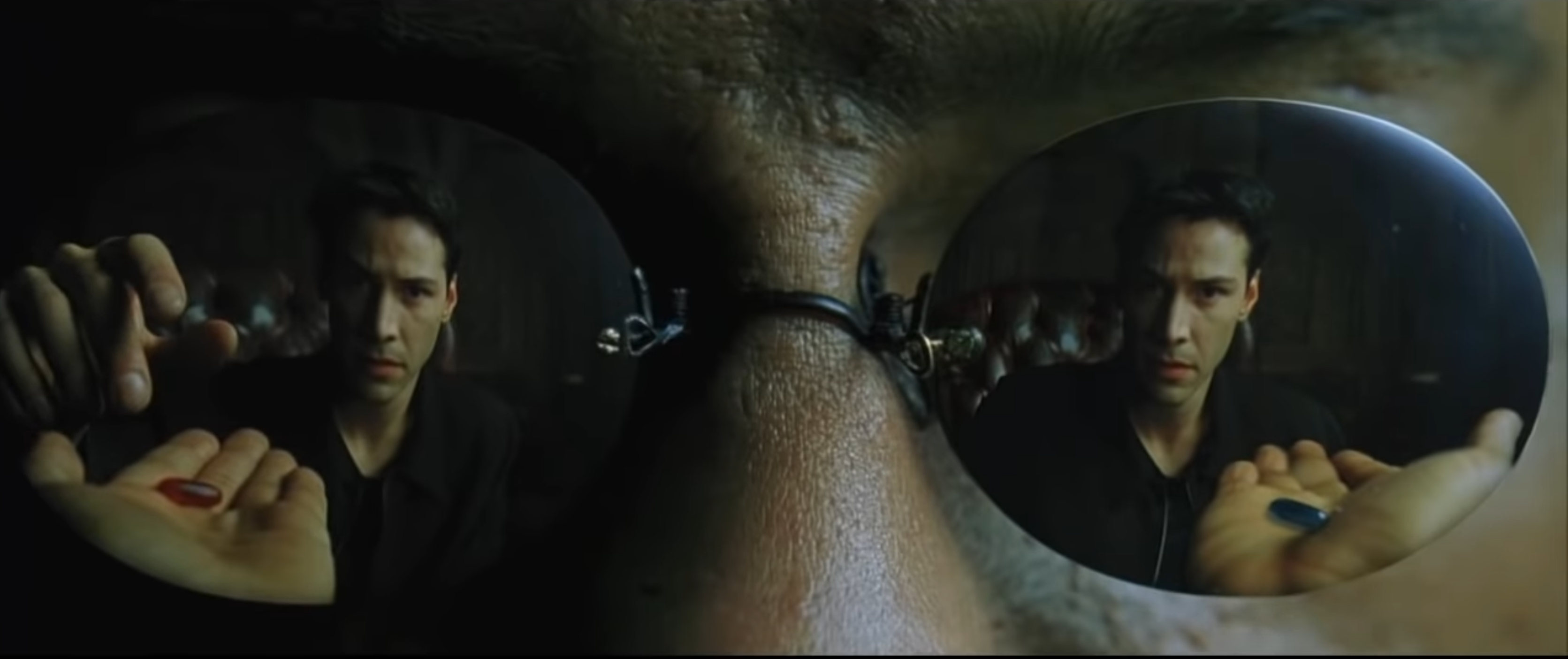
“This is your last chance. After this there is no turning back. You take the blue pill, you wake up in your bed and you believe whatever you want to believe. You take the red pill, you stay in wonderland, and I show you how deep the rabbit hole goes….”
In the movie The Matrix, placed in a moment of extreme peril, Neo had a choice; go back to the life he had constructed for himself, the fiction that had been constructed to keep him in line, or to open his eyes, to see the world as it truly was, to know the truth.
We, here in Madison, Wisconsin, have been in this place before. Michael Brown, Eric Gardner, Sandra Bland, Tamir Rice, Atatiana Jefferson, Philando Castile; The Race to Equity Report and the Annie E. Casey Foundation’s Report naming Dane County the worst place in the country to raise African American boys. And then, then there was Tony Robinson. Confronted by this seemingly endless litany of pain, grief, and justified anger, we were offered a choice…
“You take the blue pill, you wake up in your bed and you believe whatever you want to believe. You take the red pill, you stay in wonderland, and I show you how deep the rabbit hole goes….” Make no mistake. This is a moment of extreme peril. If we take the red pill, if we make our way into the rabbit hole, we may find that we need to change. We make need to recognize some hard truths about the society in which we live, about the myth that is American Exceptionalism, about the ways that many of us are denied access to that elusive American Dream… We may even have to recognize some hard truths about ourselves, about the ways that we wittingly or unwittingly support the systems which benefit from the oppression of others, about the advantages we have had because of the accident of our birth, about the people whose lives are bent and broken in ways we can’t even imagine, in support of our position, rank, and status. Taking the red pill might push us into a corner where we can no longer deny the need to relinquish some of our power and privilege, the knee that is on the neck of our black and brown brothers and sisters. It’s no wonder that so many of us have chosen to take the blue pill, choosing to wake up in our own beds, continuing to believe that which makes us comfortable and secure.
Neo had a choice. I don’t believe that we do. Not anymore. We might have been able to write those moments off as anomalies, the work of a few bad actors; to turn a blind eye to the systemic injustice and racism… and to pretend that in doing so, we weren’t refusing to believe the lived experience of the people in our communities who were suffering… Neo had a choice. But we don’t. Not anymore.
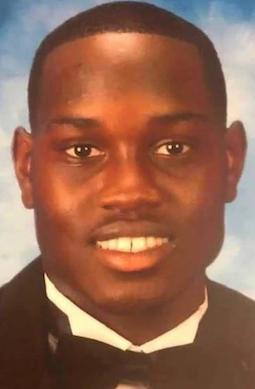
Ahmaud Marquez Arbery was shot to death on February 23 by two white men who pursued him in their pick up truck, blocked his way, and accosted him while carrying a shotgun. Ahmaud Arbery was jogging. It took two and a half months for the men who hounded, attacked and shot Ahmaud Arbery to be arrested. Officials in the local judicial system in Brunswick, Georgia, repeatedly advised the police department that no arrests should be made. The men involved in Arbery’s death were not arrested until the video of the encounter went viral and the public demanded an investigation. They were arrested on May 7th, two and one half months after they murdered Ahmaud Arbery.
Breonna Taylor was asleep in her own home on March 13th when the police executed a “no knock” warrant, bursting into the apartment, and in response to a shot fired by Taylor’s terrified boyfriend a licensed gun owner, fired 20 rounds of ammunition, hitting Taylor eight times, killing her in her own bed. The warrant that the police were serving was for a man who did not live in Taylor’s apartment building and whom the police had already arrested. Taylor’s boyfriend was arrested and charged with attempted homicide. The officers involved in Taylor’s death have not been charged or dismissed from the Louisville Kentucky Police Department. Breonna Taylor, an EMT who aspired to be a nurse, is dead.
On Monday May 22nd, Christian Cooper was bird watching in the Ramble, section of Central Park in New York City when he asked a white woman in the area to please comply with the rules and leash her dog. That woman, Amy Cooper told him that she was going to call the police and tell them that an African American man was threatening her and her dog. She made that call with a voice edged with hysteria and begged the 911 dispatch officer to “Please send the cops immediately. The horrifying aspect of this incident was in her clear understanding that she, a white woman, could weaponize the police against an African American man whom she knew the system would assume was guilty. Neither Christian Cooper or the woman who called the police were still in the park when the police arrived but the video of her calling the police has gone viral and been viewed over 40 million times.
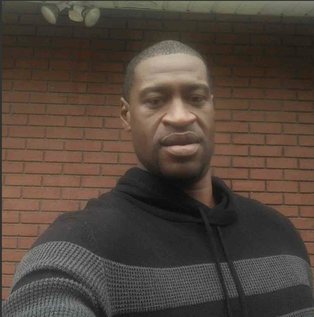
Last week, on May 25th, George Floyd died, on video, with a while police office kneeling on his neck. Three other officers stood by for over eight minutes while Officer Derek Chauvin chocked the life out of Floyd, who repeatedly said, “I can’t breathe.” The only way you might have missed seeing that video in the last week was to have turned your eyes away for fear of seeing something so ugly that it will leave scars on our eyes, our consciences and our souls. The four officers involved were dismissed from the police force the next day, but Chauvin wasn’t arrested until the 29th, four days after he had murdered George Floyd in the street in front of a convenience store, filmed in the act by a bystander who cried out for his life..
Is it any wonder that the movement to establish justice in this country goes by names like Black Lives Matter and Justified Anger? Murderers go unpunished, investigations are squelched, and the life of a black or brown person doesn’t seem to matter until thier death becomes an inconvenient public attraction.
Neo had a choice. We don’t. To take the blue pill, to choose to wake up in our own beds believing whatever we need to believe to alleviate our anxiety and maintain the status quo… is just not an option. And thanks be to God, the people whose lived experience we have been denying, the people whose lives have been bent and broken by our unwillingness to see and hear them, the people whose anger is justified beyond measure, they are stepping up to make sure that we can’t look away, we can’t deny what has been right in front of our faces for so long; that we can’t just pop another blue pill and go back to sleep. To do so at this point would be an offense from which we can never escape. With the events of the last week, the events of the last year, the four hundred year history of racism in this country laid bare, there is no claim of plausible deniability left to us.
In this country, the deck is unfairly stacked against black and brown people, people of color. The things that we, the white majority have, are not ours because we have done better than those we name as other. We have them on the backs of the people whose lives we have decided do not matter as much as ours. The racism in this society is systemic. It is built into our constitution, our legal system, and our social codes, written and unwritten. And that systemic racism is killing our black and brown brothers and sisters, even as it accrues benefits to us that we have been all too happy to receive, never asking why or questioning who was losing as we were winning.
It is time, a moment of great peril. We need to reach out our hand and, of our own volition, take the red pill and then with our eyes wide open, do the hard work. We need to listen to the stories, the lived experiences of the people around us and to accept them as the truth. We need to use the power we have to dismantle the system that gave us that power. We need to step to the margins and let the people who have lived there for so long fill in the gaps we leave behind. We need to make room for the rest of us to become all of us, so that we never need to turn avert eyes from the evening news for fear of seeing the truth, so that we never need reach for that blue pill to dull the pain in our consciences and in our souls, so that we might live together in peace.
Look to the leaders in the Black Community. Pay attention to what they are saying. Pay attention to the causes and issues they are talking about. Don’t go offering to be a friend. Friends aren’t what is needed right now. Go offering your help, your connections, your resources, the power that the system has bestowed upon you. Start making phone call to your elected representatives. Start writing letters. Go to the rallies and demonstrations, lend your body to the movement and shout “This must change and it must change now,” because until all of us can breath, none of us will be able to draw breath!
It’s not often that a preacher has four hours between the first and second delivery of a sermon, but a 7 am and a 12 noon celebration of the Proper Liturgy for Ash Wednesday afforded me that opportunity today. The sermon was delivered without notes from the center aisle at the seven o’clock, and after four hours of work, delivered from the pulpit, with a text at noon. I offer that second version of the sermon, and my apologies to those who helped me work through the draft I preached at 7:00.
This sermon is based on the texts assigned for Ash Wednesday, and uses the option from Isaiah as the first reading.
May the words of my mouth, and the meditations of our hearts, be always acceptable in your sight, Oh Lord, our strength and our Redeemer.
Amen.
Please be seated.
Remember that you are dust and to dust you shall return.
We’ve gathered here this day to hear those words and, kneeling at this rail, to enter the season of Lent; a season of self-examination and repentance, of fasting and self-denial, of reading and meditating on God’s holy Word.
Remember that you are dust and to dust you shall return.
In this season of Lent, we do something that we are usually loathe to do. We work to identify those places in our hearts and in our lives that we long to place in quarantine; that we long to hide from the people around us. The places that we somehow believe that through denial and self-deception, we can hide from ourselves. That we hope to hide, even from God.
Remember that you are dust and to dust you shall return.
It is a remarkable thing that we come here, in the middle of a work week, to hear those words, an acknowledgement of our own mortality, of the reality that are dust, and to dust we shall return.
It is perhaps, even more remarkable that we come here today to enter into this space, this season, of our own free will.
Why would we do that? When all of the world around us is seeking to deny its faults, to mask its blemishes, to claim innocence even in the face of undeniable evidence… Why would we risk coming here today, and daring to reveal ourselves to the light of God’s truth and the judgement of God’s gaze?
We are here today because we know that in this season, through these disciplines, through this honest appraisal of ourselves and of our lives, we have an opportunity to let God into the places in our lives and in our hearts which we dare not show to anyone else; and with all of our scars and warts on display, to discover that we are loved, that we have always been loved, and to realize once again the promise that nothing, nothing we have done or left undone; nothing we have thought, or said; nothing, nothing can separate us from the love of God in Christ Jesus.
Because of that promise, we enter this season willingly, with hope and even with some sense of joy, because we know that God promises us absolution and forgiveness; and because we know that, if we are faithful to this work, at the end of this season, we will be nearer to the one who loves us beyond measure; who loves us in ways that are beyond our ability to imagine or understand; who loves us in ways that can set us free to be the people God created us to be, the people we long to be, the people the world needs us to be.
There is great promise in this season, in these practices; in self-examination and repentance, in fasting and self-denial, in reading and meditating on God’s holy Word. God’s love and forgiveness can set us free to the people God created us to be, the people we long to be, the people the world needs us to be… but the path is not without some danger. Even the greatest gifts can be distorted, can be used in ways that pervert and twist them in ways that God never intended.
Listen again to the passage from Isaiah assigned for Ash Wednesday. God says to the people of Israel:
“Look, you serve your own interest on your fast day,
and oppress all your workers.
Look, you fast only to quarrel and to fight
and to strike with a wicked fist…” (Isaiah 58:3b-4)
“Will you call this a fast, a day acceptable to the Lord?” (Isaiah 58:5c)
In the reading from Matthew assigned for Ash Wednesday Jesus recognizes the danger to which Isaiah points and warns his followers,
“whenever you give alms, do not sound a trumpet before you, as the hypocrites do in the synagogues and in the streets, so that they may be praised by others…
And whenever you pray, do not be like the hypocrites; for they love to stand and pray in the synagogues and at the street corners, so that they may be seen by others…
And whenever you fast, do not look dismal, like the hypocrites, for they disfigure their faces so as to show others that they are fasting.”
While they have the power to set us free to be the people we long to be, the people God created us to be, we don’t, we can’t engage in self-examination and repentance, fasting and self-denial, reading and meditating on God’s holy Word, with an eye to accruing some benefit, some advantage to ourselves. We don’t engage in these practices, these disciplines, for ourselves alone.
Let’s return to Isaiah for a minute. God says to us:
“Is not this the fast that I choose:
to loose the bonds of injustice,
to undo the thongs of the yoke,
to let the oppressed go free,
and to break every yoke?
Is it not to share your bread with the hungry,
and bring the homeless poor into your house;
when you see the naked, to cover them,
and not to hide yourself from your own kin?” (Isaiah 58:6-7)
Jesus urges us to fast in secret and to greet our community with oil in our hair and our faces washed, because the point and purpose, the end and goal of our fast, of our Lenten practices and disciplines is to set us free to love the community around us; to draw us into God’s path and God’s ways so that we might serve others, and love others as God has loved us.
In The Invitation to the Observance of a Holy Lent, which Mother Melesa will read to us in as few minutes, we will hear the history of this liturgical season. We will hear that for the early church:
“This season of Lent provided a time in which converts to the faith were prepared for Holy Baptism. It was also a time when those who, because of notorious sins, had been separated from the body of the faithful were reconciled by penitence and forgiveness, and restored to the fellowship of the Church.” (BCP p. 265)
A season of preparation for entrance into the community through the rite of baptism; a season of restoration and return to community; a season of fellowship.
These are the true meaning, end, and purpose of this season and of the practices and disciplines in which we engage during Lent.
Yes, this season is an opportunity for us to identify and tear down the walls we build to hide the parts of ourselves that we are afraid to reveal to the people around us, to God, and even to ourselves. It is an opportunity for us put aside the things that hold us back, that pull us away from God, and distract our attention from the one who loves us beyond all measure.
It is an opportunity for us, through God’s grace and forgiveness, to be set free to be the people we long to be. But the meaning, end and purpose of Lent doesn’t end there with our own absolution and forgiveness.
The point of God’s absolution and forgiveness is to set us free to love one another as God has loved us. The point of God’s absolution and forgiveness is to restore us to community, so that we, as the beloved community, as the Body of Christ, can open our arms and welcome others to a life set free from fear, shame and bondage. The reason that God restores us, reconciles us, and sets us free, is so that we might do the same for others and build a world that brings God’s dream for all of creation to fulfillment here and now.
In a few minutes we will come forward to this rail and receive the mark of our mortal nature, ashes on our foreheads, so that we might enter this season well aware of who we are and whose we are, and there’s always some question as to whether or not we should wear the ashes on our forehead as we leave this place.
I can’t answer that question for you. That is a decision you will need to make for yourself.
But given what we have heard today, if we do wear those ashes into the world, we need to bear them, not as an emblem of our own piety, not to show others that we have participated in this fast day, not in an attempt to accrue some benefit to ourselves; but as a mark of our commitment to draw closer to God and in that process to draw closer to those around us. As a mark of our commitment:
to loose the bonds of injustice,
to undo the thongs of the yoke,
to let the oppressed go free,
and to break every yoke.
… to share our bread with the hungry,
and bring the homeless poor into our houses;
to cover the naked when we see them,
and not to hide ourselves from our own kin…
our own kin… our brothers and sisters in Christ Jesus… all of God’s beloved children.


 A Mad City Episcopalian